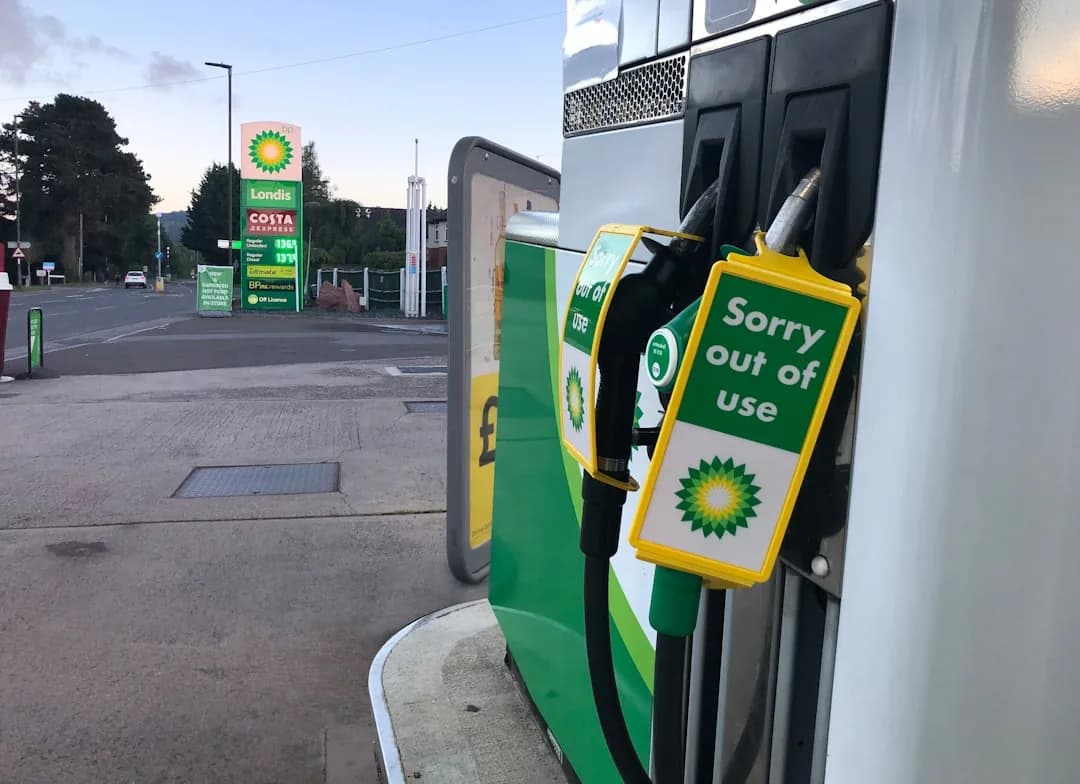
Fuel costs lift the annual rate to a one-year high
British consumer price inflation reached 3.6% in the year to October, up from 3.5% in September and the strongest reading in twelve months, according to the Office for National Statistics. The figure matched the forecasts of economists surveyed by Reuters. Motor fuel was the biggest single force behind the increase, with pump prices climbing 33.2% over the year, the sharpest annual jump since July 2022, when energy markets were convulsed by Russia's full-scale invasion of Ukraine.[S1][S2]
Petrol added 5.2 pence per litre between September and October to average 174.7p, a level last seen in August 2022. Diesel gained 7p to 199.5p a litre, the most expensive reading since the ONS series started in 1996. Because Britain imports more energy than it produces, it remains exposed to shocks such as the disruption to trade through the Strait of Hormuz. Crude prices have come down from wartime peaks above $100 a barrel but are still high.[S1][S2]
Grant Fitzner, the ONS chief economist, attributed the modest October pickup chiefly to fuel, and noted that the annual cost of raw materials and of goods leaving factories kept rising, pushed by crude oil and petrol respectively.[S1]
Energy bills and interest rates add to household pressure
The October data incorporated a 4% rise in the Ofgem energy price cap at the start of the month. Cornwall Insight, a consultancy, forecast on Wednesday that Great Britain's energy bills would climb 26% from January, equivalent to £2,166 a year for a typical household. The Bank of England expects inflation to peak close to 5% next year. Earlier this month it lifted interest rates from 3.75% to 4%, its first increase in three years, and said more tightening might be needed.[S1][S2]
Markets are pricing roughly an 80% chance of another hike at the Bank's final meeting of the year, and anticipate at least two quarter-point moves before the end of next year. Governor Andrew Bailey said in the November Monetary Policy Report that absent real progress toward settling the Middle East conflict, the risks to energy prices and therefore to inflation lean upward.[S1][S2]
Underlying price pressures were steadier. Core inflation, which strips out energy, food, alcohol and tobacco, held at 2.8%, as forecast, while services inflation stayed at 3.7%, just under the 3.8% expected in the City. Air fares rose 1.8% between September and October as long-haul tickets climbed, partly offset by cheaper European flights. Alcohol and tobacco prices increased 4.5%, shaped by the timing of a tobacco duty rise at the start of the month. Food inflation slowed to 0.9% from 1.3%, the weakest since September 2021.[S1]
Government support and the outlook
The government has promised help for households facing a renewed squeeze. At last month's budget, chancellor John Healey set out a £100 winter payment for 20 million households, due to land in bank accounts in January. Emma Reynolds, chief secretary to the Treasury, said the Middle East conflict and Russia's invasion of Ukraine had driven up costs globally, and described the payment as giving families breathing space while longer-term measures to cut energy costs take effect.[S1]
Scott Gardner, an investment strategist at JPMorgan Personal Investing, said the recent retreat in oil prices after the US midterm elections could ease future inflation readings, but cautioned that the wider outlook for UK inflation into 2027 remains difficult and that the Bank will be watching for a sustained pickup that proves persistent.[S2]