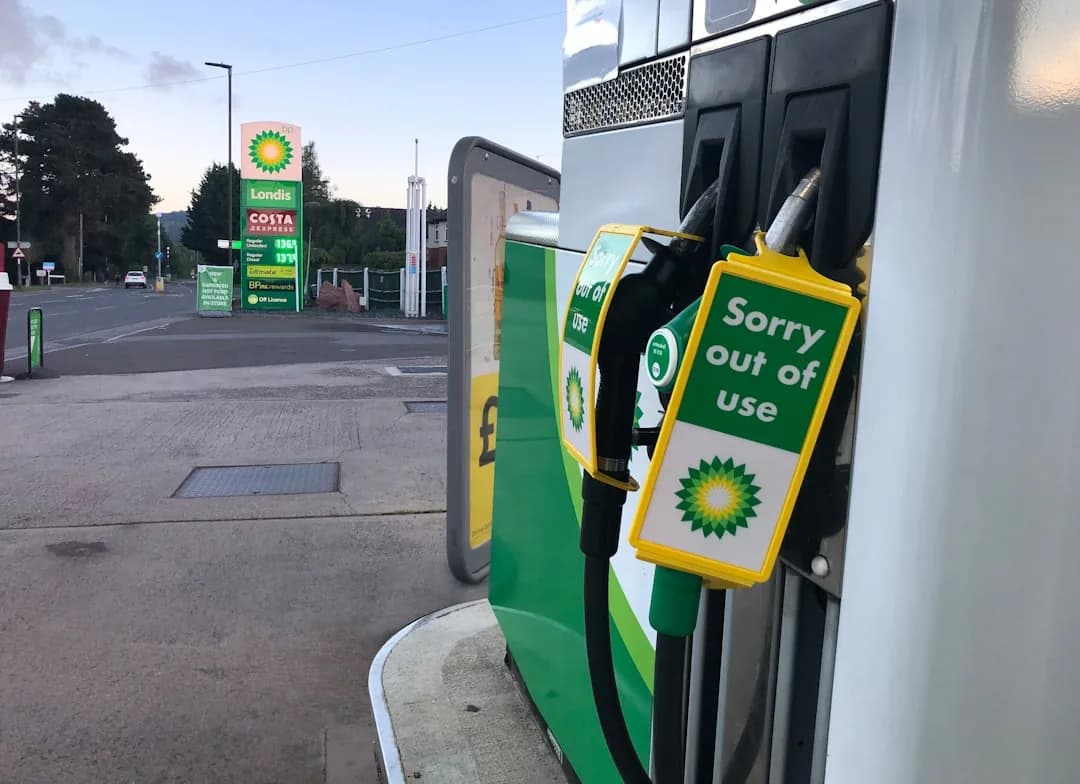
Fuel pushes inflation past forecasts
Annual consumer price inflation in the UK reached 3.5% in September 2026, the Office for National Statistics reported, up from 3.1% in August and above the 3.4% that economists surveyed by Reuters had projected. It was the highest reading in almost a year, continuing a climb from 2.9% in July. Transport made the biggest upward contribution, with motor fuel prices up 29.8% over the year, the sharpest rise since August 2022, when Russia's full-scale invasion of Ukraine disrupted energy markets.[S1][S2]
The ONS attributed much of the pressure to diesel, whose average price in September was the highest since July 2022, as the US-Iran war lifted petrol and diesel costs. Britain imports more energy than it exports, leaving it exposed to shocks such as the conflict and the difficulty of shipping oil through the Strait of Hormuz. Transport prices overall rose 6.6% year-on-year, compared with 4.6% a month earlier.[S1][S2]
Underlying measures also strengthened. Services inflation accelerated to 3.7%, core inflation excluding energy and food rose to 2.8% from 2.6%, and housing and household services climbed 5.3% while communication costs gained 5.8%. Food inflation held at 1.3%. On the month, consumer prices rose 0.4% after a 0.5% increase in August.[S1]
Markets brace for a November rate rise
The Bank of England's benchmark rate stands at 3.75% against a 2% inflation target, and traders expect policymakers to lift it at the 5 November meeting, which would be the first increase since 2023. LSEG data cited by CNBC put the probability of a quarter-point move to 4% at 98%, with most traders also pricing another rise of the same size at the December meeting. The pound and gilt yields moved little after the release.[S1][S2]
Danni Hewson, head of financial analysis at AJ Bell, said the energy price cap edged up in October and households should prepare for a steeper increase early next year. She linked expectations to rising service costs and to higher prices for the raw materials businesses buy and the goods they move. Hewson argued that awareness of tightening household finances will weigh on consumer confidence.[S1]
Understand this article deeper
Scott Gardner, an investment strategist at J.P. Morgan Personal Investing, said the recent rise in headline inflation had reversed spring progress. He argued that services inflation will draw the attention of rate-setters worried about second-round effects spreading beyond energy, and that the prolonged conflict is burdening the UK economy and strengthening the case for tighter policy.[S2]
Borrowing costs climb as debt passes a milestone
Separate ONS figures showed public sector net borrowing of £24.5 billion (€29.2 billion) in September, £1.8 billion (€2.1 billion) more than a year earlier and above market forecasts. The statistics agency said spending, including higher debt interest, grew faster than government income, partly because of inflation. Borrowing from April to September reached £97.8 billion (€116.5 billion), equal to 3.1% of GDP and £6 billion (€7.1 billion) above the Office for Budget Responsibility's forecast.[S1]
Public sector net debt was provisionally estimated above £3 trillion (€3.57 trillion) at the end of September for the first time, though as a share of the economy it slipped to 94% of GDP from 94.7% a year earlier. A global bond sell-off has pushed up yields, and UK 10-year gilts ended September just under 5.4% after touching a 19-year high earlier in the month.[S1][S2]
Chancellor of the Exchequer John Healey is due to present his first budget on 28 October, bound by fiscal rules inherited from the previous government that aim to curb public debt while easing cost-of-living pressure. Healey said he would keep fiscal discipline next week while pursuing growth and giving businesses and families some relief.[S1][S2]