Inflation Surge Driven by Fuel Costs
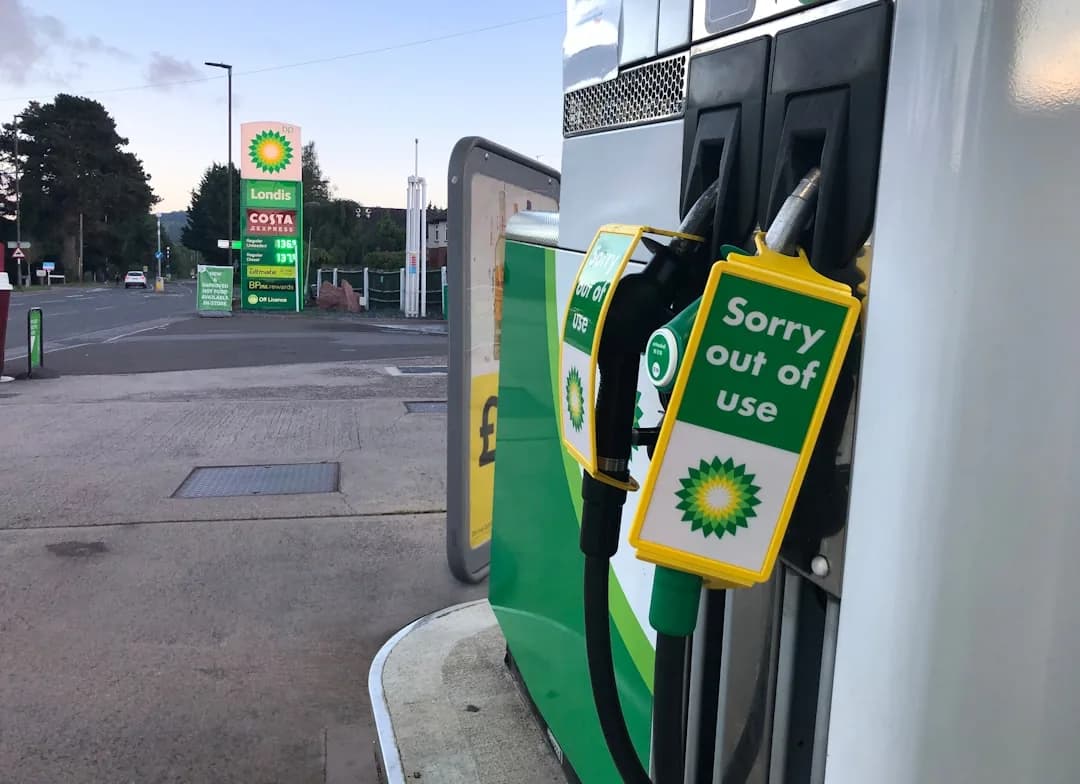
The UK's annual inflation rate climbed to 3.1% in August, up from 2.9% in July, according to the Office for National Statistics. This marks the first reading above 3% since March and aligns with economists' expectations. The primary driver was a 23% year-on-year surge in motor fuel prices, with the average petrol price rising by 9.1 pence per liter between July and August to 161.3 pence, the highest since November 2022. Diesel prices increased by 14.2 pence to 181.8 pence per liter. The ONS also noted a 6% year-on-year rise in electricity, gas, and other household fuel costs.[S1][S2]
The inflation spike is largely attributed to the Iran war, which has pushed crude oil prices above $100 a barrel and disrupted global energy markets. The UK, as a net energy importer, is particularly vulnerable to such external shocks. The conflict, now over six months old, continues to filter through to business input prices and household spending. Air fares also rose sharply, up 6.2% between July and August, especially for long-haul routes. The RAC reported that petrol and diesel prices have reached levels not seen in four years.[S1][S2]
Bank of England and Market Reaction
Thursday's Monetary Policy Committee gathering at the Bank of England follows the release of these inflation figures. LSEG data indicates traders assign better than an 80% probability that the central bank keeps its benchmark rate unchanged at 3.75%, while expecting an increase in November. The City anticipates no fewer than four hikes reaching 4.75% during the coming year. The ECB tightened policy last week, and the Fed is forecast to lift borrowing costs on Wednesday, its first such move since 2023. Gilt markets swung after the data: 30-year yields slipped almost 2 basis points to 5.907%, and 10-year yields fell nearly 3 basis points to 5.365%. Sterling held steady versus both the dollar and the euro.[S1][S2]
Economists offered mixed views. James Smith of ING said there was nothing in the data that screamed a need to hike rates, noting that energy-intensive categories showed falling inflation and food inflation slipped to 1.1%. Scott Gardner of J.P. Morgan Personal Investing said the increase was unlikely to convince the Bank to hike just yet but could raise concerns about the inflation outlook, with core and services inflation relatively resilient. Susannah Streeter of Wealth Club said pressure on the Bank to raise rates is mounting, though a hold is still expected. Bogdan Toma of McKinsey warned that high fuel prices could signal an uncertain golden quarter for consumers and retailers, with demand likely subdued.[S1][S2]
Economic and Political Implications
The jump in inflation piles pressure on incoming Prime Minister Andy Burnham, who has promised to ease the cost-of-living squeeze while keeping the public finances in order and reassuring bond investors. Britain continues to struggle with a cost-of-living crisis triggered by post-pandemic price rises and the energy shock that followed Russia's 2022 invasion of Ukraine. The Bank of England has cautioned that a worst-case Middle East outcome could lift inflation to a 4.5% peak by mid-2027. Economists described underlying price pressures as contained given a cooling labour market, though war fallout could bring the headline rate near 4%. Gardner pointed to AI-driven demand for metals and semiconductors as an underappreciated factor, with much hinging on how long the Middle East conflict lasts.[S1][S2]