Hero's farewell in Belgrade
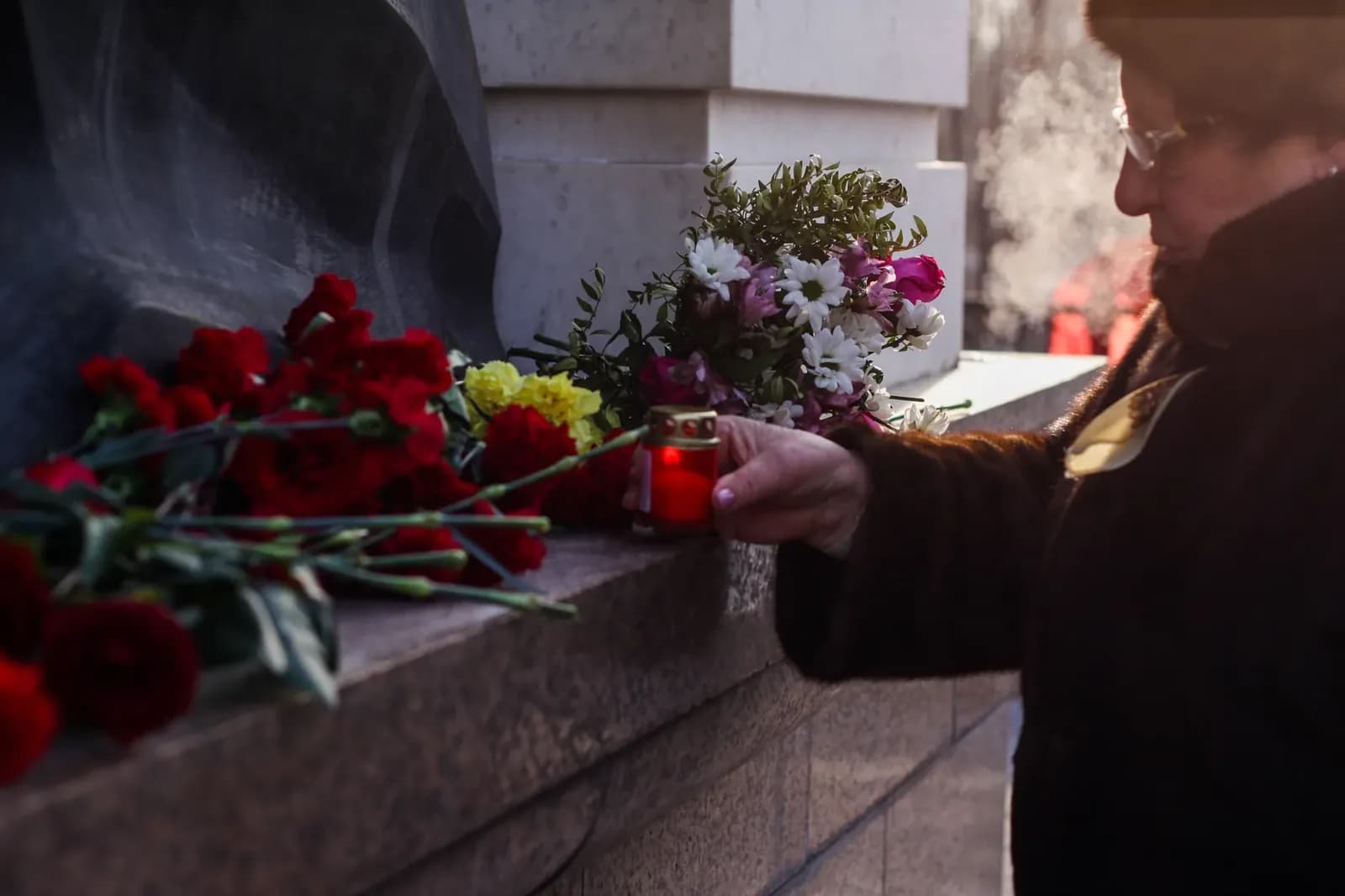
On Monday, a large crowd assembled in Belgrade to pay tribute to Ratko Mladić, the Serbian general convicted for his involvement in the 1990s Balkans conflict and often referred to as the 'Butcher of Bosnia'. Mladić passed away in prison in late August at the age of 84, where he was serving a life term for war crimes and crimes against humanity. His remains were transported to Serbia aboard a government aircraft, with the coffin draped in national flags and escorted by soldiers in uniform, while men along the route displayed banners in his honor.[S1]
At a modest church in Belgrade, military personnel stood watch over the casket, which featured his characteristic military cap and a sword, with medals displayed in front. Serbian flags were hung in the vicinity, and a large banner across the street proclaimed: 'Welcome, General, thanks be to your mother for bearing a hero.' The military honors sparked criticism from the European Union's enlargement commissioner, Marta Kos, who announced the cancellation of her planned visit to Serbia on Friday.[S1]
EU outrage and warning
Kos expressed on social media that the repatriation of his remains to Belgrade serves as a reminder of the darkest chapters in Europe's recent history. She emphasized that the glorification of Mladić is inconsistent with the principles underlying the EU integration process, which necessitates confronting the past, achieving genuine reconciliation, and honoring the victims of war crimes. An EU spokesperson reiterated this warning on Monday, asserting that any celebration of war criminals, denial of genocide, and historical revisionism are contrary to the core values of the EU and are unacceptable in both member states and candidate countries.[S1]
Crimes and legacy
Mladić played a pivotal role in the ethnic cleansing campaign during the Bosnian war, which resulted in over 100,000 deaths and the displacement of more than 2 million people. His actions included the 1,460-day siege of Sarajevo, during which relentless shelling and sniper fire claimed the lives of over 10,000 civilians. The conflict reached its peak with the 1995 massacre of at least 8,000 Bosniak Muslims in Srebrenica, a tragedy that horrified Europe, particularly because the town had been declared a UN 'safe haven'.[S1]
In Srebrenica, Mladić's troops were recorded distributing sweets to children and assuring them of safety before thousands of Bosnian men and boys were captured, executed, and buried in mass graves using bulldozers. Mladić was apprehended in Serbia in 2011 after evading capture for 16 years, and in 2017, a UN tribunal sentenced him to life imprisonment. The tribunal concluded that his objective was the forcible removal of non-Serbs to establish a 'Greater Serbia'. Serbia has been in EU accession talks since 2014, but progress has been slow under President Aleksandar Vučić.[S1]