The two rates side by side
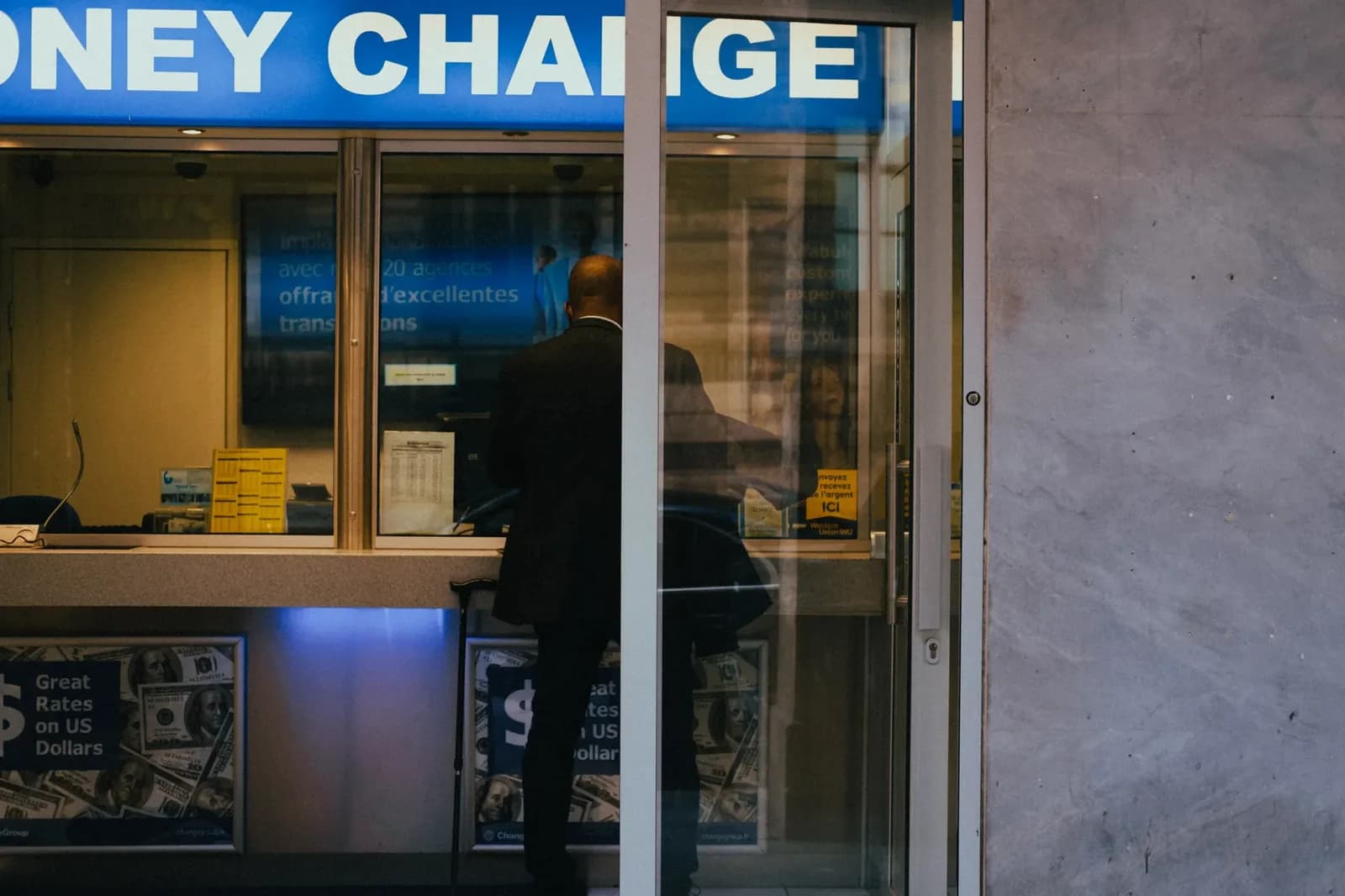
On Tuesday, November 10, 2026, Argentina's informal currency market priced the blue dollar at 1,535 pesos for purchase and 1,555 pesos for sale. The official rate published by Banco Nación for the same day stood at 1,520 pesos to buy and 1,570 pesos to sell. Because the parallel market operates outside regulated channels, its price sits above the official quotation, and the resulting spread remains a visible feature of the country's exchange landscape.[S1]
The blue dollar is not traded through banks or authorized exchange houses; it circulates in an unregulated segment of the market. Its quotation has no formally defined opening or closing time, although in practice it tends to settle between 3 p.m. and 4 p.m., roughly alongside the official rate, which closes at 3 p.m. from Monday to Friday. The official rate itself opens at 10 a.m. on business days under Central Bank oversight.[S1][S2]
Financial-market pressure builds
Over the past week, Argentina's country risk jumped 152 points, or 19.3%, closing at 939 units, the highest reading since the run-up to the 2025 legislative elections. On Monday, during a local holiday, it eased to 873 points but remained near maximum levels. The official dollar, by contrast, gained only 10 pesos, or 0.6%, at Banco Nación over the same stretch, and the wholesale rate stayed about 20% below the upper limit of the currency bands, the widest margin since the scheme began.[S2]
The contado con liquidación rate, obtained through bond transactions in the financial market, reacted somewhat more than the official exchange rate but stayed contained. It rose about 20 pesos, or 1.2%, over the week, closing near 1,674 pesos. The crypto dollar was quoted at 1,665.80 pesos in early trading, a 6.10% gap to the official rate and a 0.07% gain from the previous close, before slipping to 1,664.60 pesos, down 0.08%.[S2]
How the parallel market works
The blue dollar's name has several explanations. One holds that the English word blue can suggest something dark or shadowy, fitting an unregulated market. Another ties it to trades involving shares or bonds of companies known as blue chips. A third links it to the shade that appears when a marker is applied to detect counterfeit banknotes. The MEP dollar, by contrast, is a legal rate obtained by buying and selling shares or bonds, with the resulting foreign currency deposited domestically.[S1][S2]
Small-face hundred-dollar bills, issued before 1996 with a smaller portrait of Benjamin Franklin, have long been less welcome in formal channels, where banks and authorized exchange houses face savers who prefer the newer large-face notes. To operate in the MEP market, an investor opens an account on a platform, transfers pesos from a bank, selects the MEP option and enters the amount; the funds then land in the investor's dollar account automatically, since the regulator eliminated the holding period.[S2]