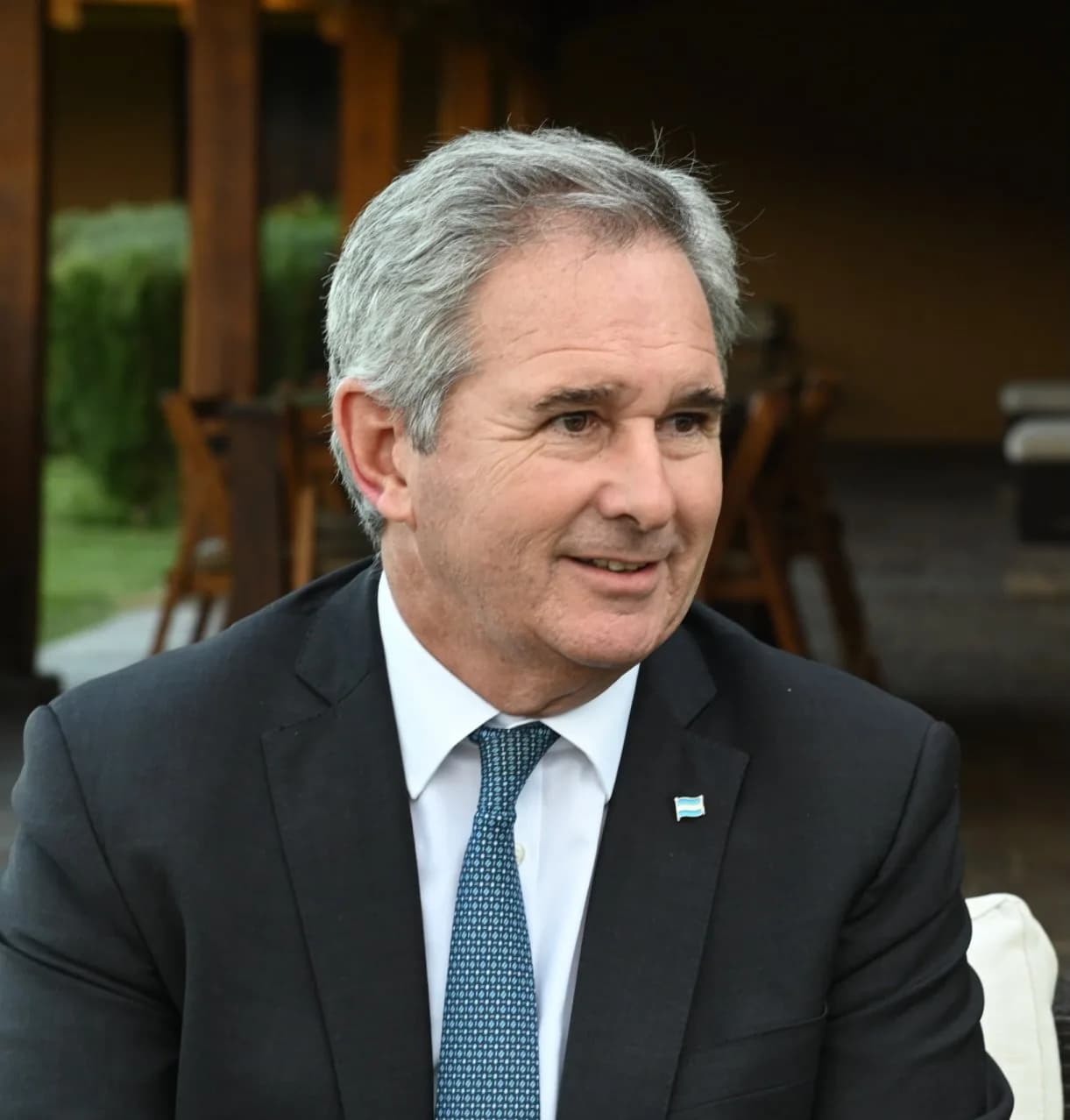
A ruling set for Saturday morning in Hamburg
The International Tribunal for the Law of the Sea will make public on Saturday its decision on the provisional measures Argentina requested to prevent the United Kingdom and companies under its jurisdiction from proceeding with hydrocarbon development in the North Falklands Basin without Argentine authorization. The ruling is scheduled to be read at 8 a.m. Argentine time by tribunal president Maurice Kamga, a Cameroonian judge, at a public session at the body's headquarters in the German city of Hamburg.[S1][S2]
The session will be streamed live on the tribunal's official website, which will later publish the full text of the decision. Argentina opened arbitration proceedings against the United Kingdom on September 28 under the United Nations Convention on the Law of the Sea, and on October 13 asked the tribunal to adopt provisional measures until the dispute is resolved. Public hearings took place on November 10 and 11, when delegations from both countries set out their legal arguments and final requests.[S1][S2]
The Sea Lion project at the center of the case
Argentina's claim centers on the Sea Lion oil project in the North Falklands Basin, roughly 210 kilometers north of the archipelago. The venture is operated by Israel's Navitas Petroleum, which holds 65%, and Britain's Rockhopper Exploration, with the remaining 35%. According to figures presented by Argentina's representatives at the hearings, the plan envisages drilling up to 26 wells and extracting more than 300 million barrels of oil over a 30-year production horizon.[S1]
Argentina asked the tribunal to block new drilling for production and the installation of infrastructure for hydrocarbon output, and to bar the use of information gathered during exploration work in ways that harm Argentine rights. It also sought guarantees that international obligations on protecting and preserving the marine environment are met, and that the United Kingdom refrain from further decisions that could aggravate the dispute.[S1][S2]
Legal grounds and the British response
Argentina's defense rested on the UN Convention on the Law of the Sea and on General Assembly resolutions 2065 and 31/49, which concern the sovereignty dispute over the Falkland Islands. The latter, approved in 1976, urges the parties to avoid unilateral changes to the situation while the controversy remains unresolved. Britain's representatives asked the tribunal to reject all the provisional measures, challenged the competence of the future arbitral tribunal and denied that urgency or risks of irreparable harm justified granting them.[S1]
The Argentine delegation was led by María Ibarzabal, legal and technical secretary of the presidency, and included the foreign ministry's legal adviser and Argentina's agent before the tribunal, Mario Oyarzábal, and international law specialist Marcelo Gustavo Kohen. The tribunal has a notable precedent for Argentina: in December 2012 it ordered the release of the frigate Libertad, which had been held in Ghana over a claim brought by an investment fund.[S1]
What the decision can and cannot settle
Saturday's ruling may grant all or part of the measures Argentina requested, set different measures of another scope, or reject the request, without amounting to a definitive finding on the sovereignty controversy between the two countries. On Thursday Foreign Minister Pablo Quirno said extraction is imminent and that Argentina cannot stand by while its resources are exploited, while noting the tribunal could order all or some of the requested measures or declare itself, in principle, without competence to intervene.[S1][S2]
Quirno said such an outcome would be a procedural decision that would not affect Argentine rights over the islands or halt the arbitration. He stressed that Saturday's proceeding does not address sovereignty, and said Argentina's filing had placed before an international court the existence of a dispute with the United Kingdom over South Atlantic natural resources. He added that the government is also using diplomatic, legal, economic and regulatory tools to defend national interests.[S1]