London Rejects Arbitration and Defends Oil Project
The British government on Wednesday rejected Argentina's decision to initiate international arbitration over hydrocarbon exploitation in the North Falkland Basin and defended the Sea Lion oil project, which is expected to begin production in the first quarter of 2028. Uma Kumaran, a Foreign Office minister for overseas territories, described Argentina's move as the latest attempt to undermine the rights and livelihoods of the islanders. She said the islanders have freely and democratically chosen their future and have the right to develop and manage their natural resources without intimidation, coercion, or interference from third parties.[S1][S2][S3]
The British statement said hydrocarbon activities on the islands' continental shelf are regulated by local legislation and are carried out in full compliance with international law, including UNCLOS, the convention Argentina invoked. London's position directly contradicts Argentina's argument that the exploitation is illegitimate because it lacks Argentine authorization. The dispute has become a central point of tension between Buenos Aires and London over the sovereignty of the Falkland Islands, known in Argentina as Las Malvinas.[S1][S2][S3]
Argentina's Legal Move and Request for Provisional Measures
Argentina's decision to pursue arbitration followed an instruction from President Javier Milei to the Foreign Ministry and legal teams to start proceedings under Annex VII of the United Nations Convention on the Law of the Sea. The government gave the United Kingdom a two-week deadline to take measures to prevent or halt hydrocarbon activities. Milei said on X that if the UK does not stop the illegitimate exploitation within two weeks, Argentina will go to the International Tribunal for the Law of the Sea. Foreign Minister Pablo Quirno confirmed that Argentina has formally notified London.[S1][S2]
Understand this article deeper
Argentina's immediate goal is not to wait for a final ruling, which could take years, but to seek a provisional measure from the International Tribunal for the Law of the Sea to stop the project's progress while the arbitral tribunal is constituted. The Casa Rosada argues that hydrocarbon exploitation involves the irreversible use of non-renewable resources, a point it will use to justify the urgency of any interim measure. The UK responded that the activities are legitimate, protected by island legislation, and compliant with the same convention Argentina cites.[S1]
Sea Lion Project Advances Despite Diplomatic Tension
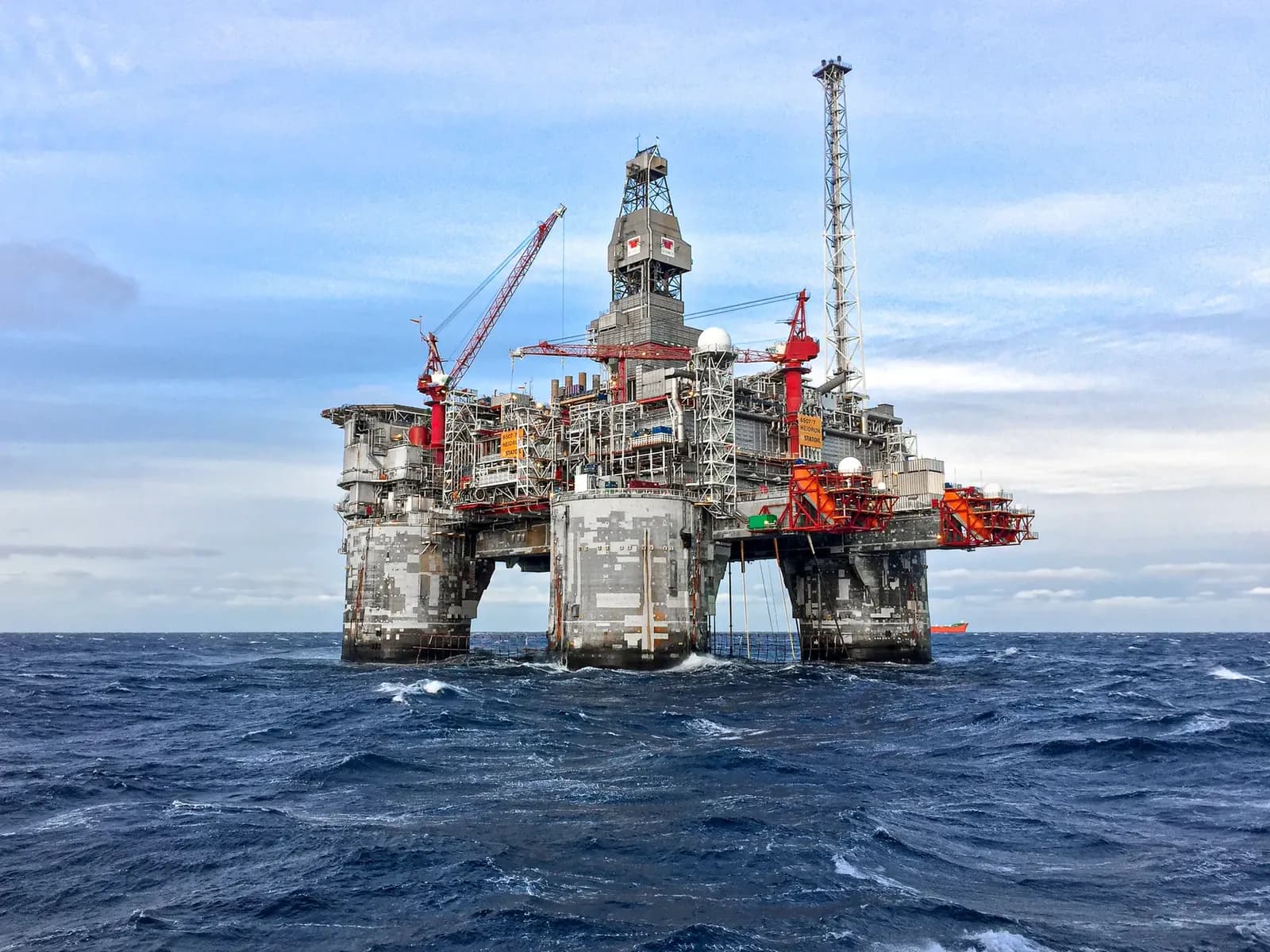
Sea Lion is no longer an exploratory project. Navitas Petroleum, the operator, holds a 65% stake, while Rockhopper Exploration controls 35%. The companies have taken a final investment decision and expect first production in the first quarter of 2028. The field is located about 220 kilometers north of the Falkland Islands. Its first phase involves subsea drilling and a floating production, storage, and offloading unit. Rockhopper's CEO, Samuel Moody, highlighted continued strong support from the UK and island governments and said the company has financing to advance to first production.[S1][S3]
Rockhopper said in its half-year report that recent Argentine measures generated increased political and media attention but are not expected to have a material effect on development activities or the Sea Lion schedule. Navitas, which operates the project, also maintains that the oil licenses were legally granted by island authorities. The UK government's rejection of arbitration and its warning about Argentina's reliability as a partner mark the most direct response from London since Buenos Aires announced the new legal step.[S1][S2][S3]