The official data arrives after a year of decline
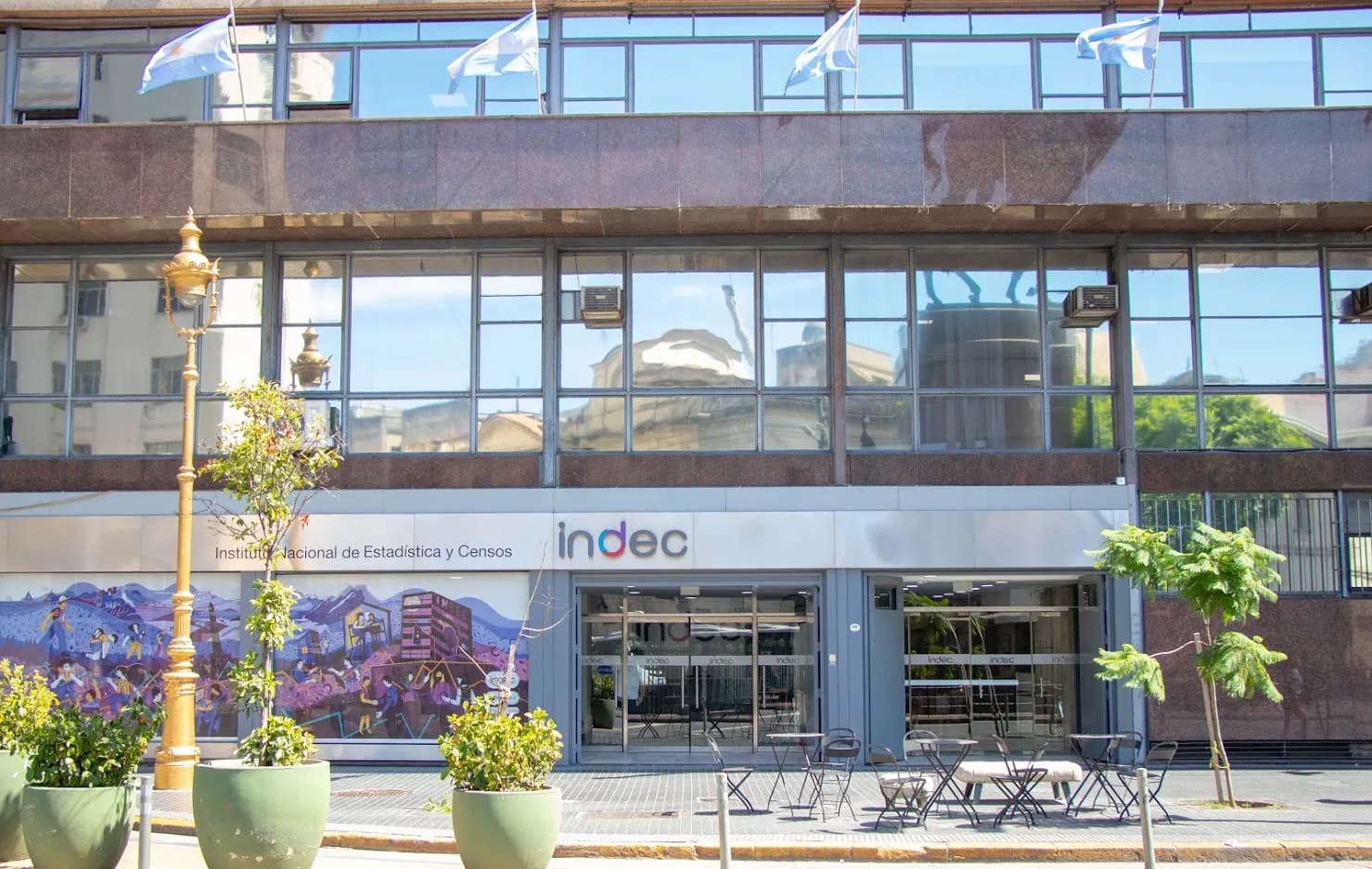
The National Institute of Statistics and Censuses will release on Thursday the official poverty and indigence figures for the first half of 2026, with the announcement scheduled for 4 p.m. The previous report, covering the second half of 2025, had recorded poverty at 28.2% of people and indigence at 6.3%; in that period, 21% of households fell below the poverty line and 4.8% below the indigence line. The new measurement follows a stretch of sustained improvement: during the first six months of the current national administration the indicator had reached 52.9%, before beginning a descent that brought it to 28.2% at the end of 2025.[S1][S2]
The release will determine whether that downward path was broken during 2026 and what social conditions the country currently faces. It will also establish the scale and impact of the economic policies of Javier Milei's libertarian government, which had showcased the reduction in poverty as one of its main results.[S1][S2]
What private projections anticipate
One of the main prior calculations comes from the economist Martín González-Rozada, of the Universidad Torcuato Di Tella, whose nowcast projected poverty at 31.4% for the first half of 2026 and indigence close to 6.9%. A separate estimate by the same researcher placed poverty at 31.3%, combining an estimated rate of 30% for March, 32.7% during the second quarter and 29.9% for the July-August period. These projections are prior estimates built from other economic indicators, not the official figure the INDEC will publish.[S1][S2][S3]
Should that scenario be confirmed, poverty would rise by more than three percentage points from the 28.2% reported for the second half of 2025, meaning that more than 1.5 million people would have fallen below the poverty line. Based on González-Rozada's calculation, the number of poor people would stand at around 14.6 million, while some 3.2 million would not manage to cover a basic food basket.[S1][S2]
The Observatorio de la Deuda Social Argentina of the Universidad Católica Argentina estimated that poverty reached 30% of the population in the first quarter of 2026, with indigence at 6.5%, and warned that the second-quarter result should be even higher. Agustín Salvia, who directs the observatory, placed poverty at 30% for the first half of 2026 and indigence at 6.5%, a reading that would mark a halt to the downward trend seen since the second half of 2024.[S2][S3]
Costs, informality and an uneven recovery
Specialists at the UCA point to the evolution of household incomes and the growing weight of service costs. In particular, higher electricity, gas, water and transport tariffs would have put greater pressure on household budgets by absorbing a larger share of available income. They also cite the advance of labour informality, a deterioration in job-market conditions and growth in underemployment, while economic activity would have slowed its pace of expansion.[S3]
Added to this is the evolution of the incomes of retirees, pensioners and beneficiaries of ANSES allowances. According to the analysis cited, these benefits are updated with a two-month lag behind inflation, which can affect their purchasing power against price increases.[S3]
The recovery of incomes did not occur evenly across the population. Although average incomes continued to recover against inflation and the projections keep poverty below the levels recorded a year earlier, higher-income sectors would have seen a more pronounced rebound than lower-income households. That difference widened the gap and left part of the families still below the poverty and indigence lines.[S3]