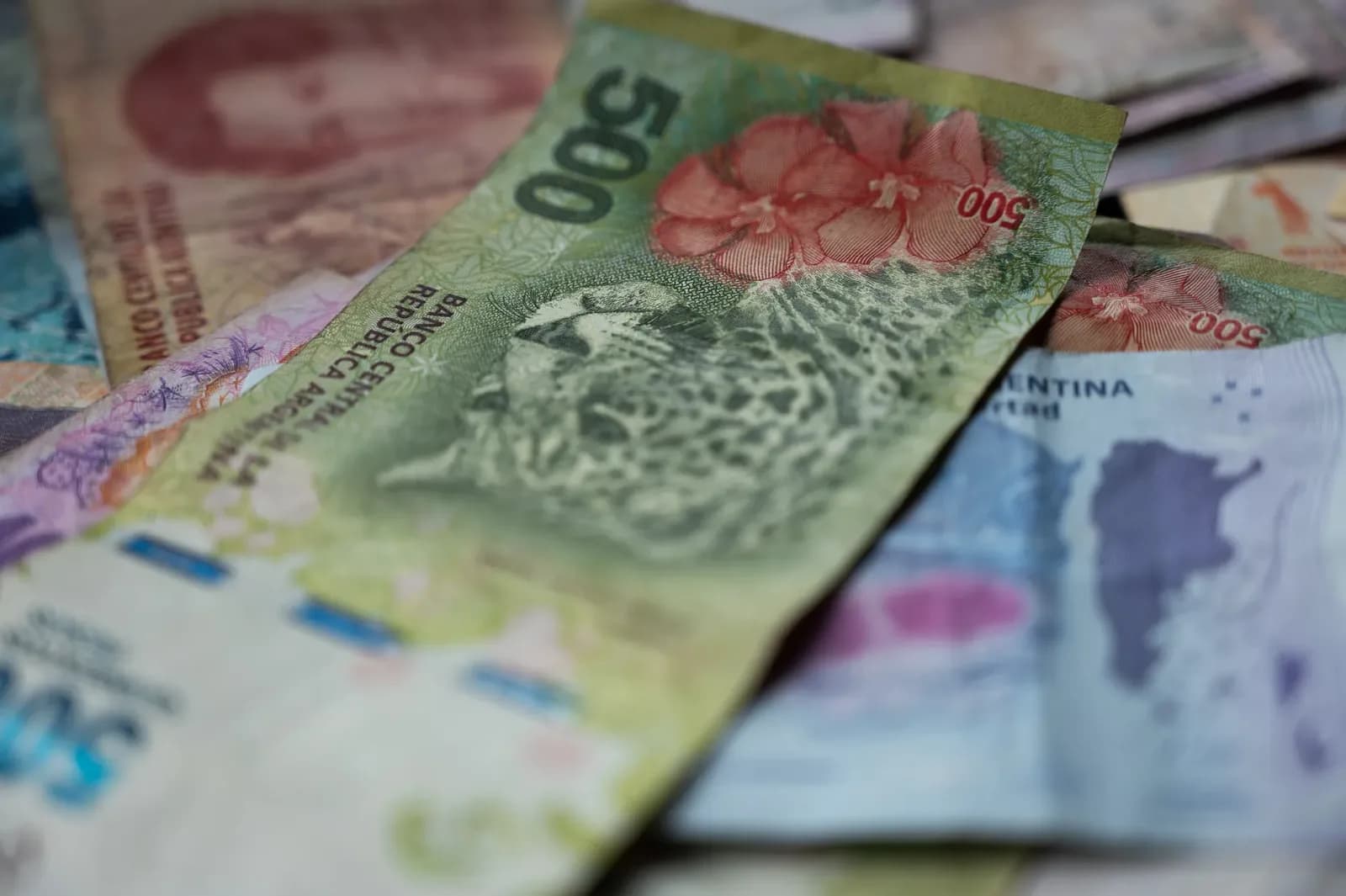
GDP Contracts 0.6% Quarterly
Argentina's gross domestic product fell 0.6% in the second quarter of 2026 compared to the first three months of the year, according to data released Thursday by the National Institute of Statistics and Censuses (INDEC). This marks the first negative quarterly reading in two years. Year-on-year, GDP grew 2%, and the accumulated growth for the first half reached 2.2% relative to the same period in 2025. The annual growth forecast is now narrowing to just above 2%, down from the 4.4% rebound in 2025 and the 1.3% decline in 2024.[S1][S2][S3]
The quarterly decline was driven by a broad deterioration in domestic demand. Private consumption dropped 2.4% from the previous quarter, its sharpest fall since the fourth quarter of 2023, while public consumption declined 2.3% and investment fell 0.8%. On a year-on-year basis, private consumption edged up 0.4%, but public consumption plunged 4.1% and investment plummeted 11.1%, marking the fifth consecutive quarterly drop. Exports of goods and services surged 13.7% year-on-year, partially offsetting the weakness in domestic demand, while imports fell 8.6% annually and 3.5% quarterly.[S1][S2][S3][S4]
Investment and Consumption Under Pressure
The investment decline was widespread. Within gross fixed capital formation, machinery and equipment purchases fell 15.2% year-on-year, with national goods down 15.5% and imported down 15.0%. Transport equipment suffered a 22.1% collapse, split between a 20.4% drop in domestic and a 24.9% fall in imported units. Other construction retreated 8.2%, while overall construction remained nearly flat with a 0.1% decrease. According to the consulting firm LCG, investment now stands at around 17% of GDP, the lowest level since the quarters following the December 2023 devaluation and, before that, since the pandemic.[S2][S4][S1]
The negative activity data coincided with a rise in unemployment to 7.9% and informality affecting 45% of workers. Economy Minister Luis Caputo chose to highlight the semiannual figure rather than the quarterly variation. On his X account, he posted that the economy accumulated 2.2% growth in the first half of the year compared to the same period in 2025, and noted that 13 of the 16 activity sectors in the GDP measurement recorded year-on-year growth in the quarter. He also emphasized that the trend-cycle indicator rose 0.8% quarterly, similar to the first quarter, reaching a new historic high.[S1][S3][S5]
Sectoral Performance: Agriculture and Mining Lead
Of the 2% year-on-year increase in economic activity, three-quarters of the growth was explained by agriculture (6.2%) and mining (16%). These two sectors more than compensated for declines in manufacturing (-2.1%) and commerce (-2%), which subtracted 0.6 percentage points from the overall variation. Fishing led the expansion with a 44.7% year-on-year rise, followed by mining and quarrying at 16.4%, and agriculture, livestock, hunting, and forestry at 6.9%. Electricity, gas, and water generation grew 5%, and financial intermediation rose 4.8%. Hotels and restaurants, as well as transport, storage, and communications, each increased 1.6%.[S1][S3][S5]
On the negative side, other community, social, and personal services fell 0.9%, public administration and defense dropped 1.4%, and manufacturing contracted 2.1%. Wholesale and retail trade and repairs showed no year-on-year variation. Taxes net of subsidies increased 1.8%. According to the consulting firm ACM, the composition of growth shows a less widespread recovery than in 2025, driven mainly by agriculture, mining, and some services, while manufacturing continued to show weaker performance. ACM also noted that the main point of attention is the dynamics of gross fixed capital formation, which has accumulated five consecutive quarters of decline in seasonally adjusted terms.[S5][S1]
Outlook and Projections
LCG projects that the year will close with 2% expansion and expects only 2.5% for 2027. The 2027 Budget projects 3% annual growth. LCG argues that with a carryover of 1.2% measured to June, reaching 3% annually would require assuming a monthly growth of 3.5% in the second half, which looks very optimistic. ACM warns that the continuity of the expansion will depend on whether the improvement in real wages and credit can restore investment, compensating for the reduced impetus from public works and some sectors intensive in domestic demand. Aldo Abram, executive director of the Fundación Libertad y Progreso, explained that the change from the first quarter was due to several factors, including the end of international debt placements by companies and provinces, which was halted by international volatility from the war in Iran, and the blow to domestic demand from rising costs.[S1][S3]