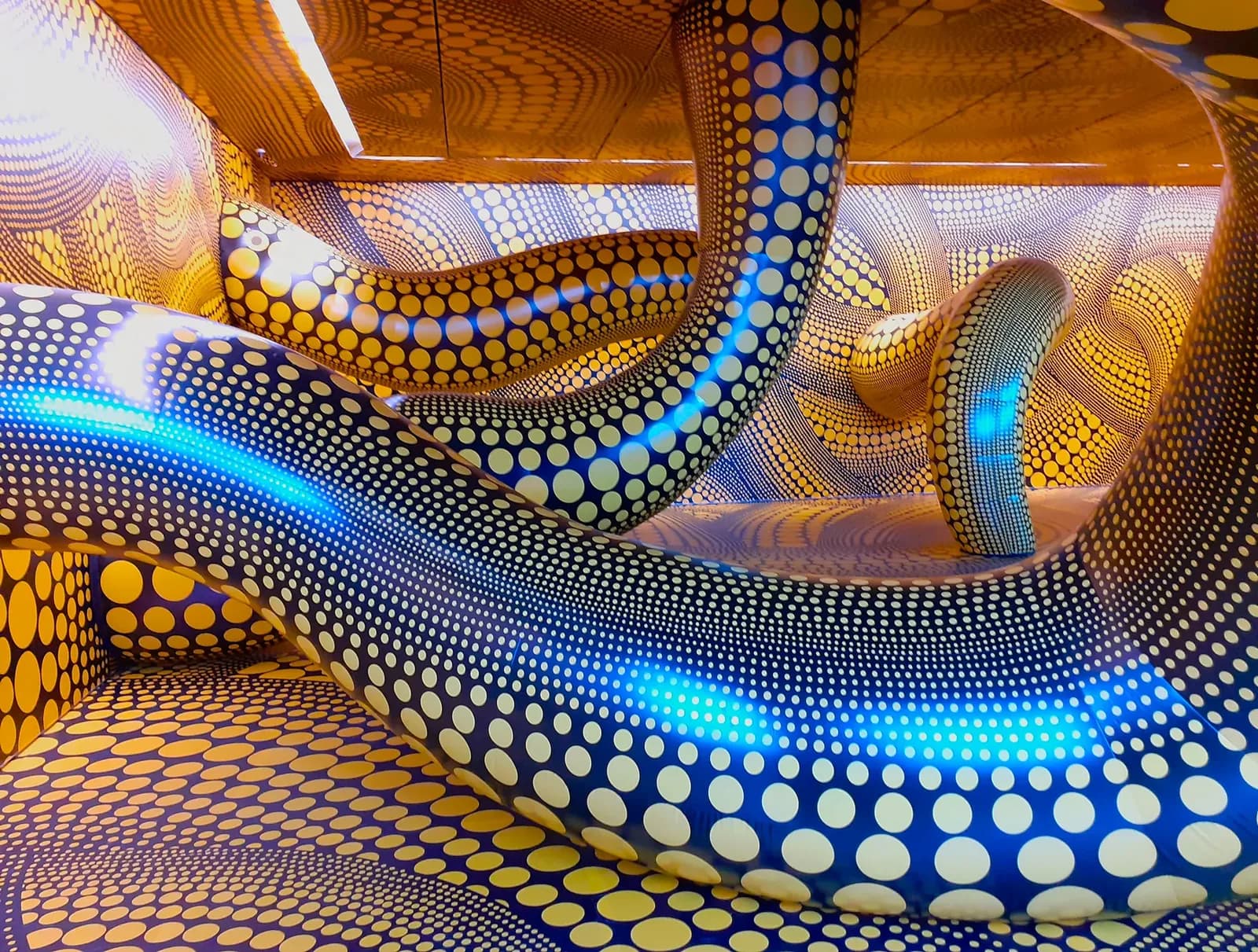
Death Announced by Studio
Yayoi Kusama, the Japanese avant-garde artist who achieved global superstardom, died on August 14 at a hospital in Tokyo. The announcement came from her studio, Yayoi Kusama Studio Inc., in a statement posted on August 27. The cause of death was not initially disclosed, but a foundation supporting her later reported it as multiple organ failure.[S1][S2][S3]
The studio's announcement lauded her remarkable career dedicated to artistic creation, emphasizing that she painted until the very end. It pledged to honor her legacy by using art to spread optimism and resilience globally. The cause of death was not disclosed.[S1][S2]
A Life in Art
Kusama was born in 1929 in Matsumoto, Japan, and had a challenging upbringing, with hallucinations that later influenced her work. In 1957, she relocated to New York, where she created her iconic 'infinity net' paintings and soft sculptures, often exploring themes of infinity and self-obliteration.[S1][S3]
Kusama's career spanned over six decades, during which she became known for her polka dots, pumpkin motifs, and immersive Infinity Mirror Rooms. These installations, which allowed visitors to experience endless reflections, gained immense popularity in the age of social media, particularly on Instagram. Her 2017 exhibition in Singapore attracted over 235,000 visitors.[S1][S3]
Legacy and Recognition
Despite early struggles for recognition, Kusama later received widespread acclaim. In 1993, she represented Japan at the Venice Biennale with a mirrored room filled with pumpkin sculptures. She was named one of TIME magazine's 100 most influential people in 2016 and received the Order of the Rising Sun from the Japanese government in 2006.[S1][S3]
Art collector Kim Camacho, who owns over 100 of Kusama's works, called her death 'a loss for mankind,' praising her as a proponent of love and beauty in a time of hatred and wars. Kusama's influence is expected to endure through her extensive body of work and the museum dedicated to her in Tokyo.[S3]