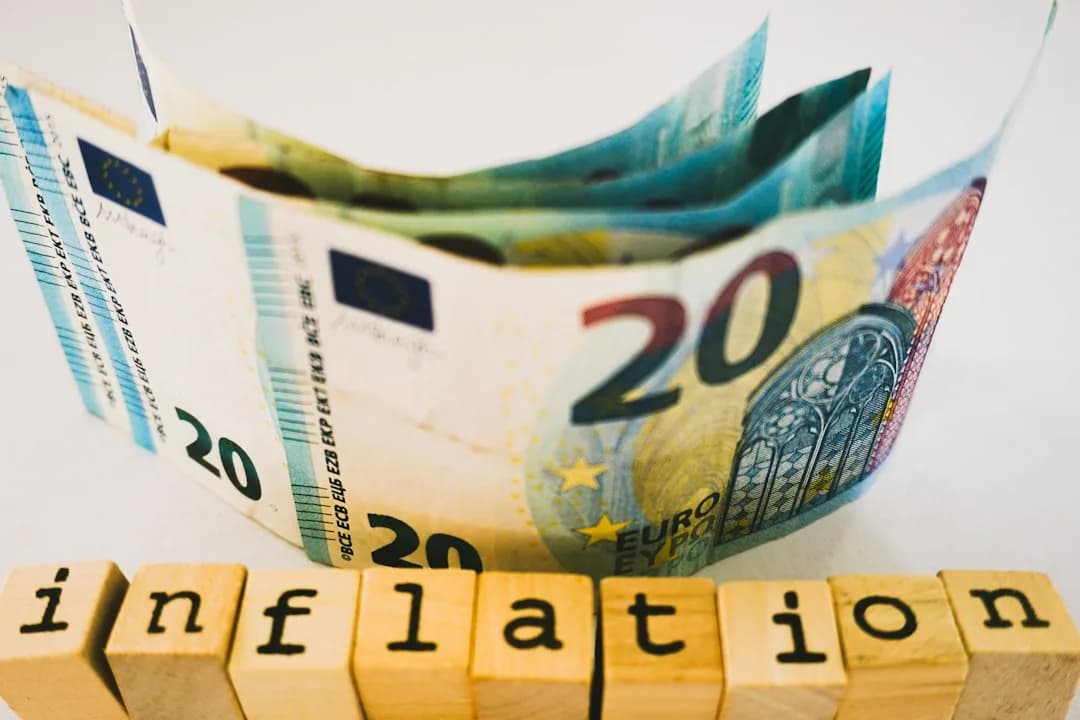
Energy Drives the Headline Rate Higher
Eurozone annual inflation reached 3.8% in September, a three-year peak that came in above the 3.6% economists had projected. According to Eurostat's flash estimate, prices advanced 0.6% during September alone relative to August. The last time the rate was this high was September 2023, at 4.3%. The current figure is close to twice the 2% goal the European Central Bank treats as consistent with price stability.[S1]
Roughly half of the headline rate could be traced to energy. Year-over-year energy prices climbed 18.8%, compared with 14.3% in August, and they increased 3.9% during September by themselves. Energy makes up around 9% of the euro area's inflation basket. At that 18.8% annual pace, the category contributed approximately 1.7 percentage points to the overall 3.8% reading.[S1]
Core inflation, which excludes energy, food, alcohol and tobacco because those prices fluctuate widely month to month, ticked up to 2.5% from 2.4%, matching expectations precisely. Services inflation moved to 3.2% from 3.0%; services form the biggest basket component at roughly 47%, covering rents, restaurants, travel and insurance. Food, alcohol and tobacco rose 1.4% from 1.1%, unprocessed food such as fresh produce and meat jumped to 4.0% from 2.7%, and non-energy industrial goods, including cars, clothing and appliances, eased to 1.1% from 1.2% — the sole major category to slow.[S1]
Lithuania Tops the List as Six Countries Reach 5%
Lithuania posted the euro area's steepest annual rate at 6.1%, up from 5.6% in August. Bulgaria, which adopted the euro on Jan. 1, 2026, came next at 5.6%. Cyprus and Luxembourg were tied at 5.2%, with Greece at 5.1% and Spain at 5.0%. All told, six of the bloc's 21 members saw inflation of at least 5%, while ten countries matched or exceeded the 3.8% euro area average.[S1]
Malta recorded the lowest annual rate in the euro area at 2.4%, with Finland at 2.6% and Latvia at 2.9% behind it. Latvia stood out as the sole member country where annual inflation declined during September.[S1]
Prices accelerated across all four of the euro area's biggest economies. Italy saw the sharpest rise among them, its annual rate reaching 4.1% from 3.2%, with Italian prices up 2.0% in a single month — the largest monthly gain in the bloc. France followed, climbing to 3.4% from 2.6%, which pushed French inflation above Germany's, where the rate went to 3.3% from 2.9%. Spain stayed highest of the four at 5.0%, up from 4.6% in August.[S1]
The ECB's Next Move Hangs in the Balance
On 10 September the ECB lifted its three key interest rates by 25 basis points, leaving the deposit facility rate at 2.50%. It marked the second hike of the year, following a comparable step in June. Costlier borrowing tends to restrain household and business spending, which in time reduces pressure on prices. The ECB's September projections put headline inflation at 3.0% on average in 2026, 2.5% in 2027 and 2.1% in 2028.[S1]
The next policy gathering takes place on 28-29 October in Frankfurt, with the decision announced on 29 October. No fresh staff projections will accompany that meeting; the following set is due in December. September's figures handed the ECB a clear warning, since headline inflation sits well above target and continues to climb. Prediction markets put the odds of another ECB rate increase at month's end at 91%.[S1]