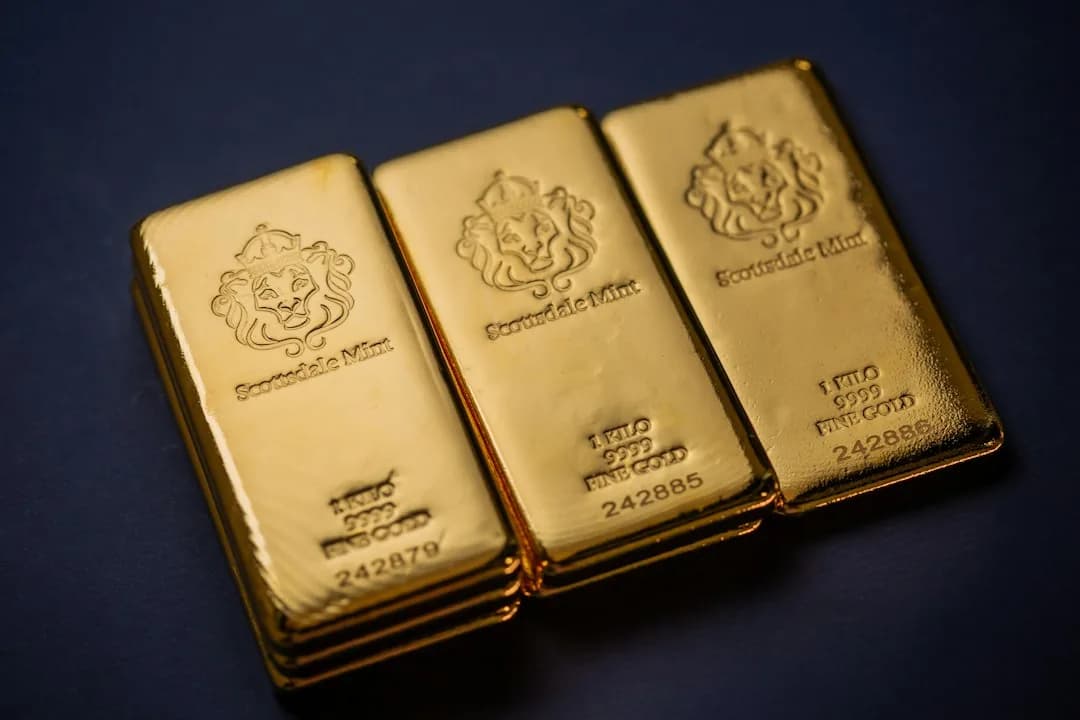
Gold Rebounds Despite Stronger Dollar and High Yields
On Thursday, bullion advanced as market participants reconsidered how probable another Fed rate increase is for this month, despite Treasury yields holding at high levels and the greenback gaining ground. By 09:03 ET (13:03 GMT), spot gold had added 0.5% to reach $4,179.00 per ounce, and gold futures likewise rose 0.5% to $4,208.67 per ounce. The dollar index, which tracks the U.S. currency versus a basket of peers, rose 0.3% to 101.79. A firmer dollar typically pressures gold, since it raises the cost for holders of other currencies.[S1]
September Slide Marks Sharpest Monthly Drop Since June
Gold shed 6% during September, its biggest one-month decline since June. The drop came after the Federal Reserve raised interest rates for the first time since 2023 and hinted that more tightening could still be needed. Bond yields worldwide rose that month as concerns over growing government debt and expanding fiscal shortfalls lifted term premiums. Higher yields make holding assets that pay nothing, like gold, less attractive. HSBC analysts observed that after the Iran conflict triggered selling, along with higher oil, inflation and yields that boosted the dollar, gold recovered on returning investor appetite in late summer. Yet the September FOMC hike, anticipation of more increases and climbing oil prices put gold back on the defensive, the HSBC analysts wrote in a note.[S1]
Inflation Surprise Eases Pressure for Near-Term Fed Hike
Gold drew some support as expectations for a near-term Fed rate increase this month faded. The central bank's favored measure of underlying inflation – the personal consumption expenditures price index excluding food and energy – climbed 0.2% in August, undershooting forecasts. The previous month's figure was revised downward as well, giving markets some comfort about the inflation picture. Following the data, traders cut back sharply on the chances of another move at the Fed's October meeting, with the implied probability falling to roughly 34%, down from almost 70% earlier in the week.[S1]
Robust Consumer Spending Keeps Yields Elevated
Meanwhile, U.S. consumer spending during August grew at the quickest pace in over a year, reinforcing the view that the economy can withstand higher borrowing costs. That strength supported longer-dated Treasury yields, which stayed near multi-decade peaks. Attention now turns to Friday's U.S. employment report, which should offer further clues about the Fed's policy path and what it means for gold prices.[S1]