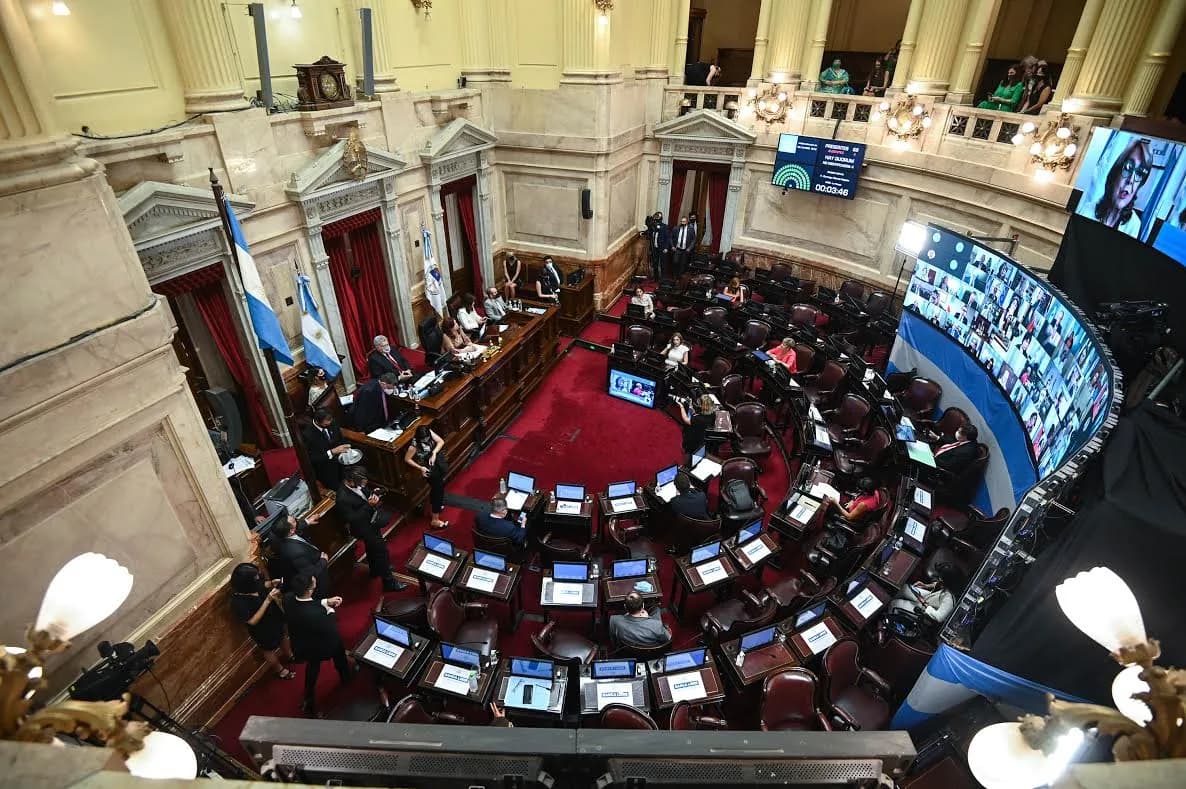
A committee session set for Tuesday
Argentina's ruling coalition, La Libertad Avanza, has called a meeting of the Senate's constitutional affairs committee for next Tuesday to start work on its electoral reform bill, whose central element is scrapping the open, simultaneous and mandatory primaries known as PASO. Parliamentary sources confirmed the convocation. The move follows the difficulties the government faced in restarting the electoral debate in the upper chamber, and it opens a fresh round of negotiation with potential partners.[S1][S2]
The parliamentary plan is to secure a committee opinion with support from allied blocs, which would let the ruling party bring the proposal to the floor during the last session of the current ordinary period, scheduled for November 26. Disagreements between the government and its allies over eliminating the primaries remain one of the main obstacles to that path, according to the reporting.[S1][S2]
Vote counts and negotiations with governors
Passing the initiative depends on deals the government can strike with other political forces. According to parliamentary sources, the ruling party is talking with allied groups to gather the backing needed in both chambers, and negotiations with provincial governors are also decisive for securing Senate votes. The bill needs 37 affirmative votes in the Senate and 129 in the Chamber of Deputies to be enacted, so the talks go beyond the committee stage.[S1][S2]
Tuesday's meeting will be pivotal in determining whether the ruling party can muster the support to issue a committee opinion. Clearing that step would allow it to pursue its goal of bringing the bill to the floor before the end of November.[S1][S2]
Menem sets out the timetable
Amid the parliamentary talks, Chamber of Deputies speaker Martín Menem outlined the timeline the ruling party is working with. He said the government hopes to win Senate approval in the next two weeks, though that outcome will hinge on agreements reached with the various blocs. Speaking in a Radio Mitre interview, he described that expectation as a wish and said progress would depend on the conditions he expects to hold.[S1]
Menem backed the executive's proposal and criticized the use of state resources to finance party primaries. He argued that Argentina does not need the mechanism, that taxpayers should not pay for parties' internal contests, and that the goal is to suspend or definitively eliminate the primaries while advancing the broader electoral reform. He also acknowledged that the result does not rest on the government's will alone, since senators must individually agree to raise their hands in support on the same day and at the same time.[S1]
What the reform would change
The bill goes beyond the primaries. The comprehensive electoral reform sent to Congress in April 2026 also covers party financing, the conditions for forming and retaining a party's legal status, and some rules on electoral representation. Its main axes were set out when Javier Milei submitted the package, which includes changes to the PASO and to the Ficha Limpia clean-record requirement.[S1]
Among its central aims is letting each political force choose its candidates through its own internal mechanisms, without a mandatory national primary. The proposal would also rework the system of state contributions and expand the role of private financing, while setting tougher requirements for parties to be recognized and to keep operating. The PASO were created by Law 26.571, passed in 2009, and first applied in the 2011 national elections; the mechanism requires groups to clear 1.5% of validly cast votes in the relevant district to compete in the general election.[S1]
The closest precedent is the suspension of the primaries for the 2025 elections, approved in February of that year through Law 27.783. That decision applied only to that electoral year and did not repeal the primary system, so the government now needs a new law to make a permanent change to the electoral regime.[S1]