Record Ocean Heat
The world's seas were hotter last month than in any July on record, scientists have said, as devastating heat struck western Europe. Sea surface temperatures hit record highs for July on the Atlantic coast and western Mediterranean, the EU's Copernicus climate change service found, with severe marine heatwaves roiling Europe's seas. Globally, the average sea surface temperature outside the cold polar regions was the highest on record for the month, beating the previous July record set in 2023.[S1]
Copernicus also said the world's oceans hit record-high temperatures for a second straight month in July, driven by marine heatwaves around Europe and a powerful El Nino taking shape in the Pacific. Global average sea surface temperatures in July were 20.96C, beating the previous record of 2023. Copernicus director Carlo Buontempo said parts of the Mediterranean and Atlantic were unusually warm but the developing El Nino 'is probably the driving force' behind the record sea temperatures.[S2]
Western Europe's Hottest Summer Start
Western Europe has experienced its hottest June-July period on record, data shows, with 'exceptional' heat driving wildfires that devastated swathes of the Mediterranean. The first two summer months of 2026 were 2.79C hotter than usual, the Copernicus said on Monday, beating the previous record set four years ago and reflecting the 'exceptional persistence of heat' since the season began. The combined average temperature in western Europe for June-July was 21.62C, beating the 2022 record for the same period.[S1][S2]
Central Europe is reeling from a heatwave in which national temperature records fell in a handful of countries including Austria and Slovakia. It is the latest in a scorching summer that has dried out vegetation and primed the continent to burn. Surface air temperatures around the world in July 2026 were marginally cooler than July 2024 – by just 0.01C – leading scientists to consider the two months as the joint-second warmest Julys on record.[S1]
Drought and Economic Impact
Copernicus said widespread dryness observed in May and June intensified last month, with exceptionally low rainfall and soil moisture in much of western Europe. Across the dry regions, which include France, Spain, and parts of Germany and the UK, low river flows hit water supply, irrigation and power plants, including in countries downstream. Short of cooling water, two coal-fired power plants were forced to shut in Poland last week, as well as Hungary's sole nuclear power plant, for the first time in its 44-year history.[S1]
Heat and drought are among the biggest environmental threats to Europe's economy. Early estimates for this summer suggest the June heat cost grain farmers €2bn in lost crops. The longer-term damage can eclipse short-term losses, economists warn, particularly if droughts persist over many years. The mega-drought of 2015-18 cost Europe €439bn, a new working paper led by the CMCC European Institute on Economics found, with high but short-lived hits to agriculture and low but persistent impacts on manufacturing and construction.[S1]
Wildfires and Future Risks
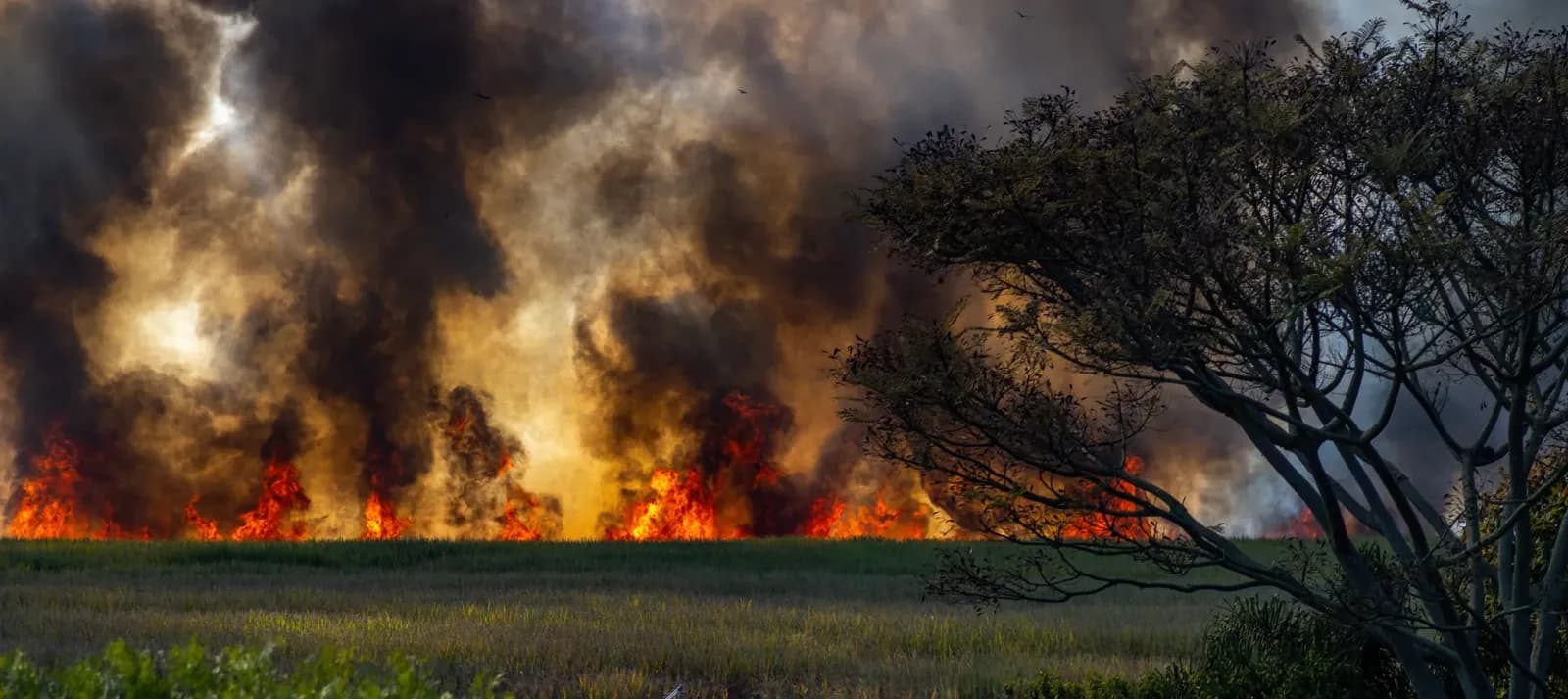
About half a million hectares have burned across the EU since the start of the year, data published by the European Forest Fire Information System shows, accompanied by above-average pollution as burning vegetation spews thick smoke. The hot, dry and windy conditions that make it harder to battle blazes has set new records for severity for this time of year. France and Spain have battled their worst infernos in living memory this summer, while other nations in Europe and as well as the US northwest and Canada have also experienced serious blazes.[S1][S2]
Víctor Resco de Dios, a professor of forestry engineering at the University of Lleida, said: 'Climate change is creating increasingly favourable conditions for the development of mega-wildfires. The good news is that through vegetation management and urban planning we can largely mitigate the problem,' he said. 'However, we must be clear about one thing: what seems extreme to us today will be remarkably benign in a few decades if we continue to fail to take the necessary adaptive measures.'[S1]