A diagnosis that raises an old question
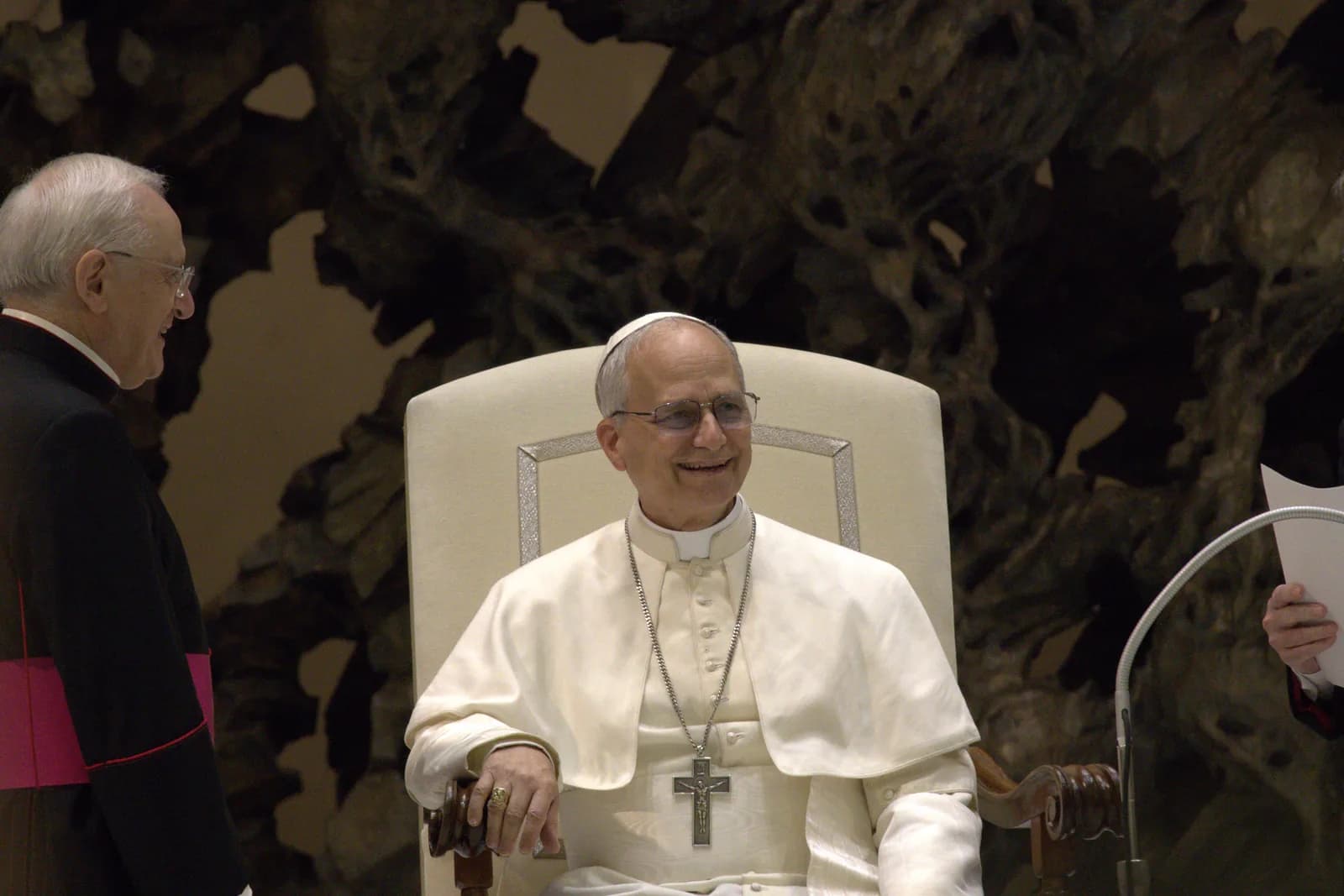
Pope Leo XIV, 71, was diagnosed with lung cancer on Tuesday, reviving a question the world asked in March of last year when his predecessor, Francis, was hospitalized. On Wednesday, AP journalist Nicole Winfield posed the question that Catholics are asking: who leads the Catholic Church when the pope is unconscious, incapacitated or unable to govern? Her answer was two words: the pope. That brief reply captures a complex situation. Unlike death or resignation, for which well-established succession rules exist, there is no clear protocol for delegating Church leadership when the pontiff cannot fully exercise his functions because of serious illness.[S1]
Leo XIV underwent a 90-minute operation at Rome's Gemelli Hospital, where the lower lobe of his right lung was removed. The Vatican said the pope had a quiet night and added that more details about his health would be provided throughout the day. Before the operation, the director of the Holy See Press Office had confirmed Leo XIV's trip to Uruguay, Argentina and Peru, but the diagnosis on Tuesday has created uncertainty. The pope is the highest authority of the Catholic Church and the Vatican State, so his leadership is vital in religious, administrative and diplomatic matters.[S1]
The Curia and the Secretary of State
When the pontiff cannot exercise his functions in person, the administration of the Church falls to the Roman Curia, the ecclesiastical governing body, and especially to the Vatican Secretary of State, a post currently held by Cardinal Pietro Parolin. In March 2025, faced with a similar situation after Francis's illness, Filipe Domingues, director of the Lay Centre in Rome and a specialist in Vatican affairs, told BBC News Mundo that if the pope were not conscious, everything would continue more or less the same. Each cardinal has his own role in the Vatican, and the secretary of state plays a very important part in this context, he said.[S1]
Pietro Parolin, who currently holds this role, oversees diplomatic and administrative affairs and acts as a kind of prime minister of the Vatican. Asked by journalists in recent days whether he was worried about the pope's health, Parolin replied that he was, because he certainly had not expected something like this. But the Vatican secretary of state added that he had spoken with the pope on Monday night and that this had reassured him. It was something that, thank God, was detected immediately, he said, and normally, when these things are discovered in time, they can be resolved. There have been no statements from Parolin about the diagnosis released in recent hours.[S1]
The secretary of state's authority does not replace the pontiff's; he cannot make decisions that belong to the pontiff, such as the appointment of bishops, Domingues stressed. Another task reserved exclusively for the pontiff is approving the canonizations of new saints and also his messages to the faithful on Wednesdays or Sundays. Although the Holy See has certain mechanisms to remain operational in the absence of its leader, there are gaps in its normative system that could pose difficulties if the pontiff's health becomes complicated for a longer period.[S1]
A legal gap and the question of resignation
Experts point out that canon law, which provides detailed procedures for papal succession in the event of death or resignation, leaves a legal void when the pope is still alive but cannot fully exercise his functions. Canon 335 mentions the possibility that the Holy See may be vacant or totally impeded, but it does not define what totally impeded means or establish steps to follow in that scenario. In the case of bishops, for example, the Church does have rules: according to Canon 412, a diocese can be considered impeded if its bishop cannot exercise his authority for reasons of illness, exile or any other circumstance, and command passes to an auxiliary bishop or vicar general. However, because there is no equivalent provision for the pope, the question of who should assume his role in the event of incapacity remains open.[S1]
In theory, if a pope could not continue in his post for health reasons, the only solution would be to leave the chair of St. Peter. In 1965, Pope Paul VI wrote letters to the dean of the College of Cardinals raising the hypothesis that, if he were to become seriously ill, the dean and the other cardinals should accept his resignation. Francis, aware of this possibility, confirmed in 2022 that he had left a resignation letter to be used in case of medical incapacity. However, there is uncertainty about how this resignation would be activated if the pope were no longer in a condition to express his will, since canon law establishes that a papal resignation must be free and manifest. In the case of Benedict XVI (2005-2013), he himself publicly announced his resignation.[S1]
If the pope had Alzheimer's and a moment arrived when he could no longer make the decision for himself, someone from the Secretariat of State should make the letter public and present a medical report, Domingues explained. In 2021, a group of experts suggested that, if a pope were completely incapacitated, the College of Cardinals should assume the management of the Church and appoint a commission to periodically evaluate his health. This proposal would involve a medical committee reviewing his health every six months and, if it were determined...[S1]