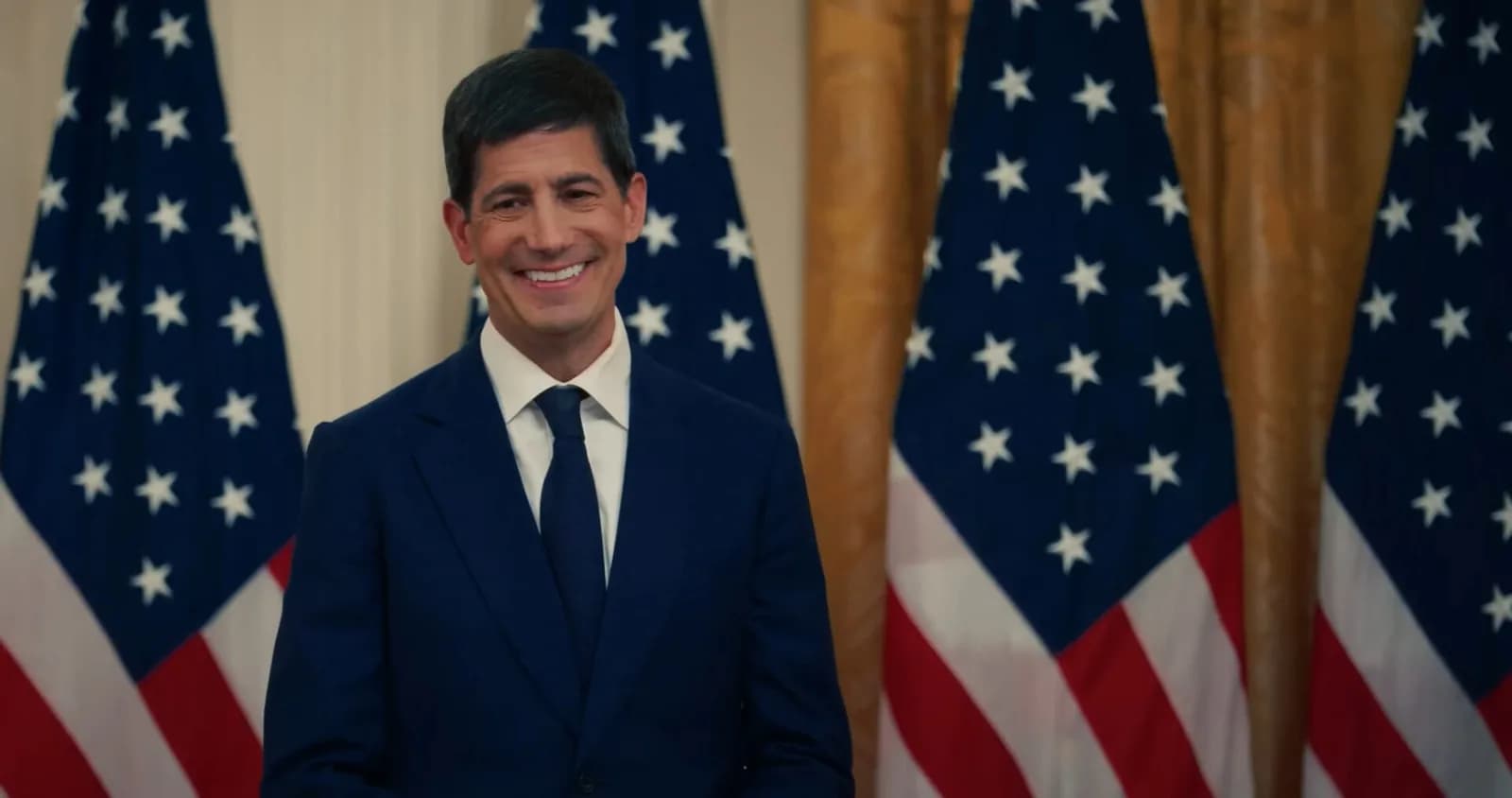
A chair who prefers plain words to guidance
Wall Street has enjoyed a strong stretch, with the Dow Jones Industrial Average, the S&P 500 and the Nasdaq Composite all reaching repeated records despite persistent anxiety. History suggests the major indexes climb across decades, but shorter windows are far less dependable, and stubbornly high inflation now poses perhaps the sharpest threat to the artificial intelligence bull market. Attention turned to Federal Reserve Chair Kevin Warsh and the Federal Open Market Committee ahead of the October 28 decision, when officials left interest rates unchanged.[S1]
Since taking office on May 22, Warsh has reshaped how the central bank communicates and meets. He announced that the FOMC will hold seven rate-setting meetings in 2027 and six in 2028 rather than eight each year, and that by 2028 two of the eight sessions will focus on longer-term policy questions instead of votes on the federal funds target. He also ended the long-standing practice of signaling an easing or tightening bias in meeting statements, a convention that had lasted more than two decades.[S1]
Removing that guidance leaves bond traders and investors with more guesswork, yet Warsh is sometimes so blunt that explicit signals become unnecessary. Asked after the October 28 announcement why the committee had not raised rates given the absence of meaningful progress toward the 2% target, he acknowledged the premise of the question and said officials were still working on it. That closing phrase implies further action lies ahead, consistent with his September remark that the committee had removed a dose of accommodation.[S1]
Markets already lean toward tighter policy
Forecasts broadly anticipate a more aggressive Federal Reserve in December and through 2027. The CME Group's FedWatch Tool, which derives probabilities from 30-day Fed Funds futures prices, puts the chance of at least a 75 basis point increase, lifting the target to 4.50%-4.75%, at 65% by September 15, 2027. Two Federal Reserve officials have also publicly called for additional rate increases to begin soon.[S1][S2]
Understand this article deeper
Tariffs, war and AI all push prices upward
Multiple factors underpin the committee's position, including price pressures tied to President Trump's policies and the build-out of AI infrastructure. Three economists at the New York Federal Reserve, writing in Liberty Street Economics, calculated that Trump's tariff and trade actions had pushed goods price inflation up by 2.9 percentage points as of February 2026. In addition, the Trump-led war with Iran caused the Strait of Hormuz to close for eight months, disrupting crude supplies on a scale never seen before and pushing gasoline and diesel prices higher.[S1]
The AI boom has likewise converted a deflationary force that endured for decades into an inflationary one. In the first half of 2026, import prices for computers and electronic products climbed 7.4% to 77.1 points, the highest level since January 2016, and rose 8.0% year over year, the biggest annual increase ever recorded. This marks a reversal of the roughly 20-year slide in which such import prices dropped 30% from 2006 to 2019 as technology and manufacturing efficiency lowered costs. Today's heavy demand for semiconductors, servers and components is stretching capacity, and consumers end up paying.[S1]