A Rocky Week for the AI Trade
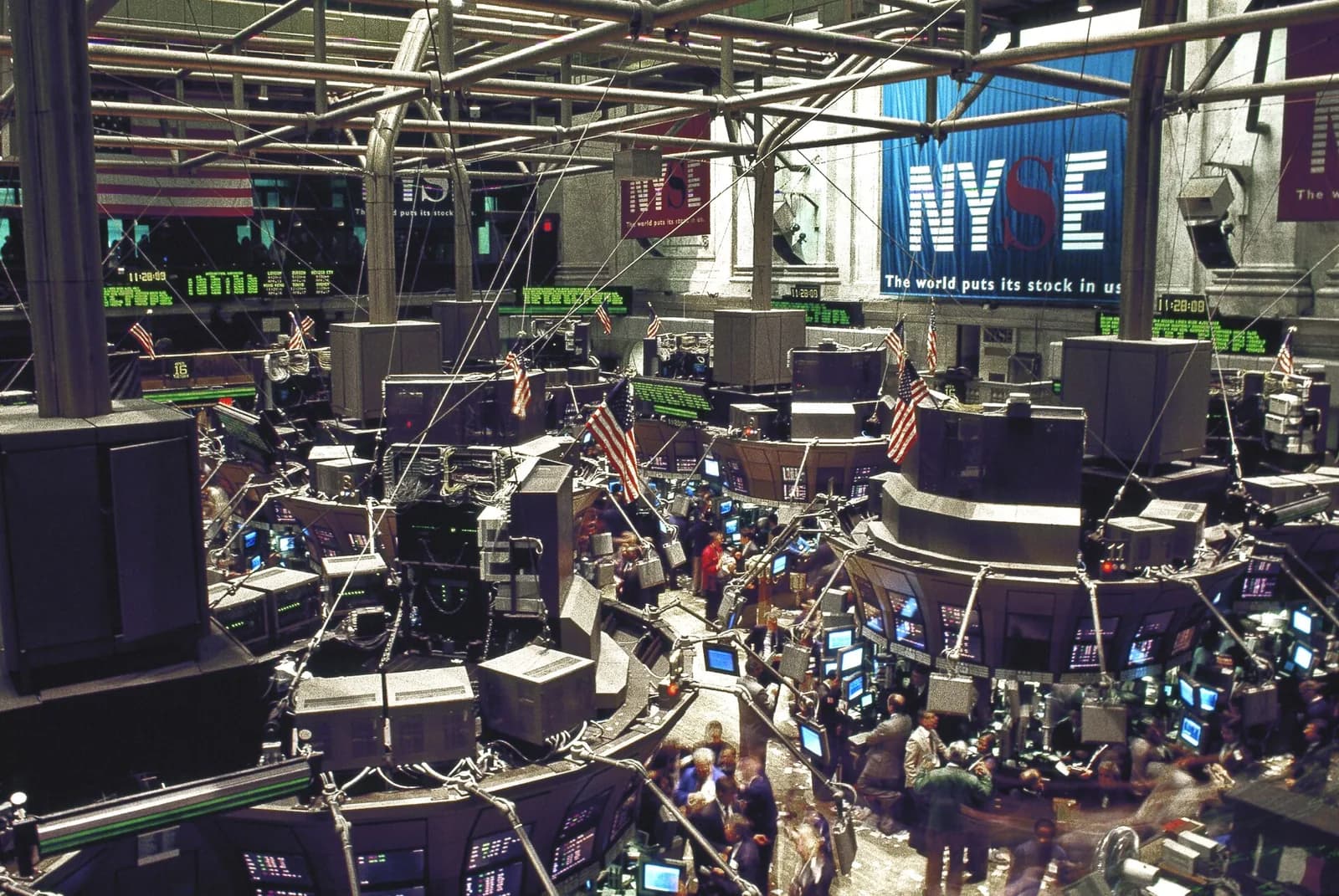
The Dow Industrials and the S&P 500 declined on Friday, while technology shares steadied at the close of a turbulent week driven by the artificial-intelligence trade. The Nasdaq Composite finished nearly flat, one day after the tech-heavy index posted its steepest single-day fall since June as worries mounted over the financing costs needed to sustain heavy AI investment. Most S&P 500 sectors weakened, with consumer staples and financials leading the retreat.[S1][S2][S3][S4][S5]
The Dow Jones Industrial Average dropped 626.43 points, or 1.18%, to 52,241.55. The S&P 500 shed 33.51 points, or 0.43%, to 7,629.92, and the Nasdaq Composite lost 21.91 points, or 0.08%, to 25,986.95. Over the week, the S&P 500 and Nasdaq were headed for modest declines, while the blue-chip Dow held slightly higher on support from defensive stocks.[S1][S2][S3][S4][S5]
Kristina Hooper, chief market strategist at Man Group, said the questioning of the AI trade was still producing fallout. She noted that there was potential for less money to go into building out AI data centers next year than had been projected, which she said was giving investors pause.[S1]
Earnings, the Fed and the Midterms
Attention now shifts to corporate results, with roughly a third of S&P 500 companies due to report next week, including Alphabet, Microsoft and Amazon. The capital spending forecasts of those three AI hyperscalers will be watched closely on Wall Street. According to LSEG IBES data, S&P 500 companies are on course to post earnings growth of more than 32% in the third quarter.[S1]
When the Federal Reserve releases its policy statement on Wednesday, it is widely anticipated to hold interest rates steady. Even so, investors will scrutinize the announcement for hints on whether borrowing costs could be lifted at the December gathering. Attention on Wall Street is also shifting toward the November 3 midterm elections, since their outcome will decide which party controls Congress.[S1]
Sector Moves and Consumer Mood
Telecom shares slid following a report that SpaceX was pursuing thousands of cell sites in order to launch a fourth wireless carrier, dragging down the communication services sector. AT&T and T-Mobile both lost over 6%, Verizon dipped 1.6%, and SpaceX added 1.5%. Tower companies moved higher, with Crown Castle climbing 10% and American Tower gaining 3.7%.[S1]
Energy was the strongest sector, climbing 2.4% to a record high, as Brent crude reached its highest level since late April following Houthi attacks in Saudi Arabia that raised concerns about further disruption to Middle Eastern energy supplies. American Express fell 3.9% after raising its profit forecast and announcing plans to cut 5% of its workforce, while SLB rose 6.7% on third-quarter profit that beat Wall Street estimates.[S1]
A University of Michigan survey found US consumer sentiment dropping close to a record low in October, with price increases linked to the Middle East conflict worsening households' outlook on the economy. On the New York Stock Exchange, losers outpaced winners 1.97 to 1, and on the Nasdaq the ratio stood at 1.65 to 1. The S&P 500 posted 18 new 52-week highs against 6 lows, while the Nasdaq Composite saw 61 highs and 299 lows.[S1]