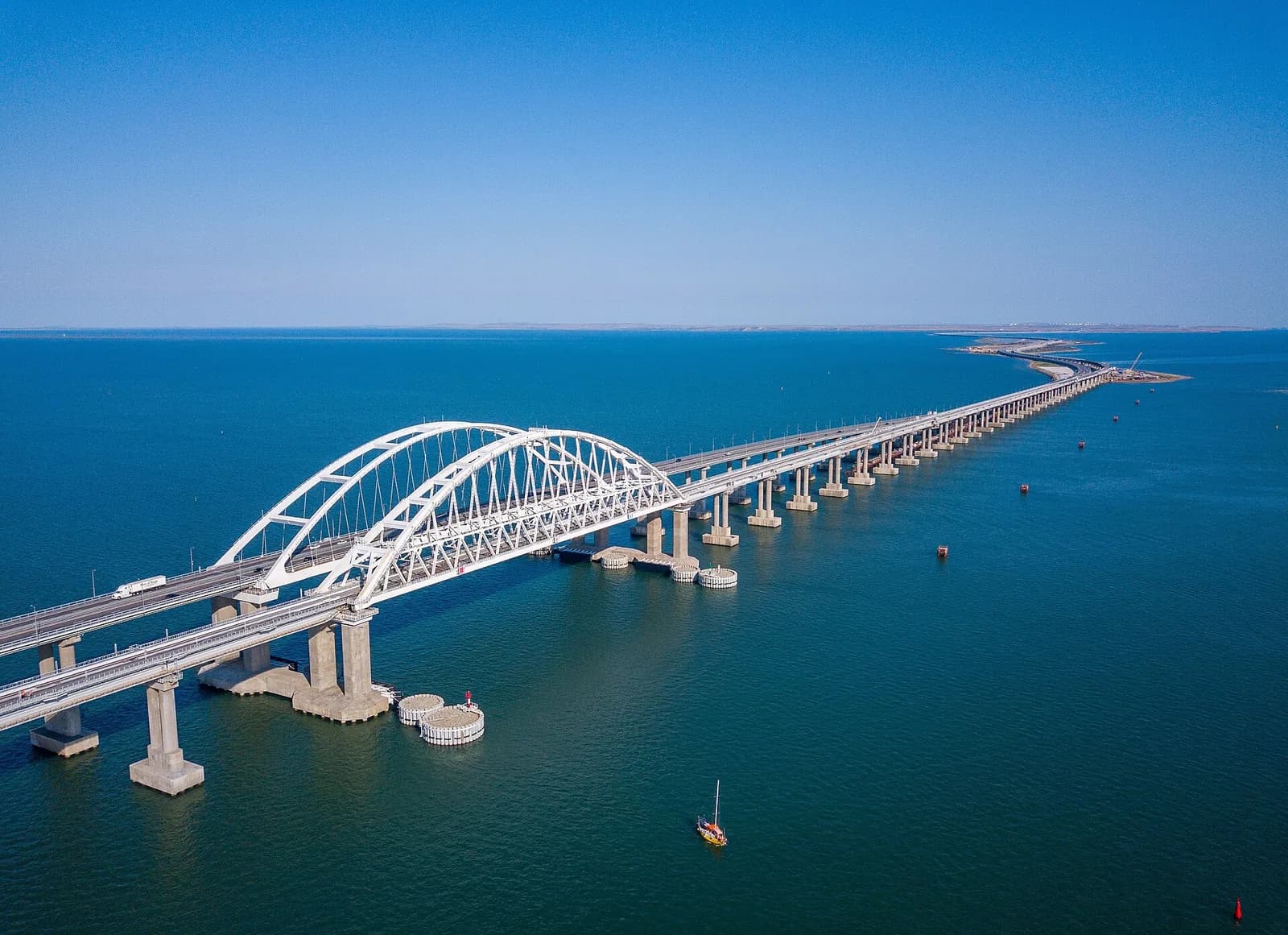
A night launch with a singular target
On a freezing Monday night in central Ukraine, with ice forming on the wings of a bulky kamikaze drone, a soldier wrote a defiant message on the airframe before it was sent south. The men gathered in the muddy field usually strike oil refineries far inside Russia, work that had grown routine after so many hits. That evening the objective was different: a structure tied personally to Vladimir Putin and his imperial ambitions.[S1]
A participant in the special operation, speaking under the pseudonym Leon, said everyone knew what the target was and that the mood was enthusiastic. His unit, the 7th Deep Strike Centre, belongs to Magyar's Birds, a brigade named for the call sign of its founder, Robert Brovdi, who heads Ukraine's unmanned systems forces. Leon said the repeated refinery strikes no longer stir excitement, but this mission did.[S1]
The biplane-style drone, packed with explosives, vanished over the southern steppe. Across roughly four hours, hundreds of attack drones traced the same line, crossing land and then the Black Sea, and reached the Kerch bridge in the early hours. Putin had inaugurated the road and rail crossing in 2018 by driving a Kamaz truck over it, four years after undercover troops seized the peninsula.[S1]
Waves meant to overwhelm air defences
Russian propagandists had portrayed the bridge as unassailable, as firm as the country's leader. For Kyiv it was a despised emblem of Russian arrogance and colonial thinking, and officials called it illegal. Ukraine had tried twice before to destroy it, first with a truck bomb in 2022 and then with a sea drone the following year. This time, Leon said, the plan was carefully coordinated and worked exactly as intended.[S1]
The opening salvo was designed to saturate Russia's well-organised air defences rather than to strike the bridge directly, according to Leon. Insiders said a second wave then flew to serve as a radio relay. Ukrainian units had previously relied on Starshield, the military counterpart of Starlink, for medium-range strikes on occupied territory; the satellite network belongs to Elon Musk's SpaceX and is overseen by the Pentagon and the Trump administration.[S1]
Ten days earlier, unexplained limits had stopped Ukrainian drones from flying faster than 161 km/h (100 mph). SpaceX denies any slowdown, a claim President Volodymyr Zelenskyy rejects. On Monday night Kyiv appeared to get around the US restrictions by building its own real-time video and radio link. With the relay working, a third wave followed: Flamingo cruise missiles made in Ukraine, each able to carry 1,000kg of explosives.[S1]
An unknown number of missiles, with some reports citing at least four, were fired from southern Ukraine towards Crimea. Onboard footage from one Flamingo showed the crossing emerging from the dark, a huge steel arch coming into view, and then the feed cutting out. Other video captured the impact as an orange fireball against the blackness.[S1]
A collapsed span and a message to three leaders
Photographs taken on Tuesday morning showed a large arch and a big concrete section of the roadway lying in the Kerch strait, with the neighbouring railway arch also damaged. Traffic will not be crossing the bridge for some time. Leon said his group spent the night exchanging messages in high spirits.[S1][S5][S6]
A source in Ukraine's armed forces said the timing was deliberate. Zelenskyy called the operation unprecedented, and it came before a Thursday meeting in Shenzhen between Xi Jinping, Donald Trump and Putin on the margins of an Apec summit. The source said the bridge symbolises Putin's rule and that destroying it tells the other two leaders he is weaker than he pretends.[S1][S4][S8]
The same source argued the strike showed the world that the king has no clothes, that Putin is vulnerable, and that the operation was built for this particular moment. The source said Putin meant to bluff at the summit about his power while unable to protect the most symbolic pillars of his regime.[S1]
Beyond the political embarrassment, the damage has practical effects. Russia has militarised Crimea since annexing it, turning the peninsula into a fortified base used since 2022 to launch drone and missile attacks on Odesa and other regional cities. Its southern occupying army depended on the bridge for ammunition, equipment and fuel, and with the crossing partly closed it must fall back on a land corridor under fire linking Rostov oblast to Moscow-held parts of Zaporizhzhia and Kherson.[S1][S3]