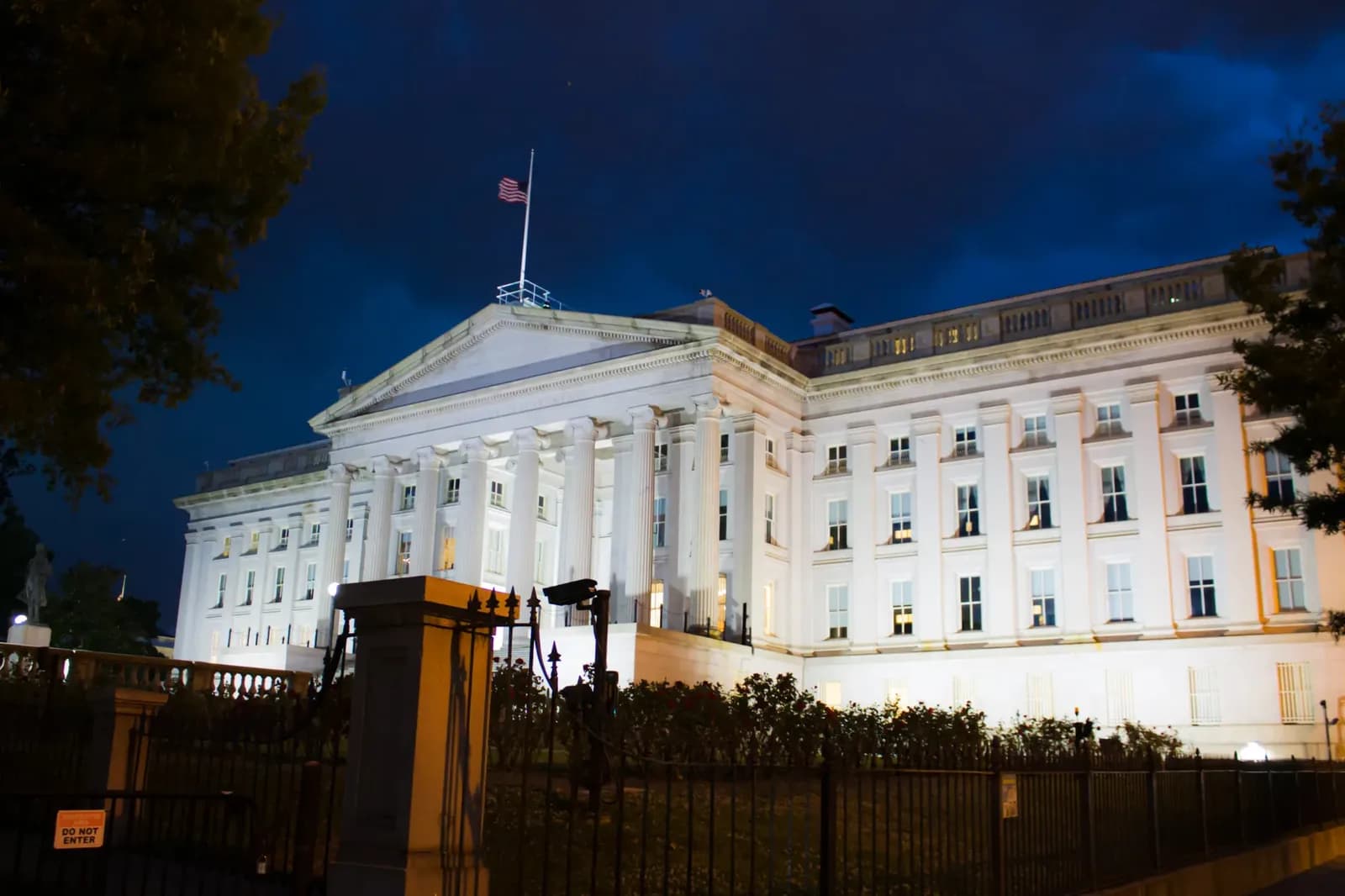
I would ask first what the article actually tells us, and what it does not. It reports that the yield on ten-year Treasury notes has risen to just below five percent, that a broad sell-off in global bonds has accompanied it, and that this reflects mounting inflation fears tied to the Iran War and to trade policy. It reports that efforts to calm the government debt market have not succeeded. It does not tell us the size of the debt, the term of the borrowing, or the fund assigned to pay it. On those points I would suspend judgment, because the price of a bond tells us less than the arrangement behind it.
What the article does describe is a government that must borrow, and lenders who must be persuaded. When a state raises money, it may assign a particular branch of revenue for a short term, or it may mortgage that revenue in perpetuity and pay interest only, leaving the principal to be redeemed at leisure. I observed that the second practice, once men grow familiar with it, is generally preferred in the great exigencies of the state, because a greater sum can be raised by it. But I also observed that unprovident anticipations, repeated before the first has expired, render the fund insufficient to pay both principal and interest, and that this necessarily gives birth to perpetual funding. The article's report of rising yields is consistent with lenders demanding more for the use of their money; it does not by itself establish why.
I would distinguish two things the article runs together. One is the fear of inflation, which the article attributes to the war and to trade policy. The other is the market's judgment of the borrower. On the second, I would note only what the article reports: that the Financial Times argued the actions have raised concerns that Washington is behaving in a manner more typical of weaker borrowers, and that an economist called these worrying times for bond markets. A creditor will not lend for less than the use of his money is worth, and where the security is doubted he must be paid for the risk he runs. That is the mechanism I would watch, and the article gives me the direction of the movement, not the measure of it.