A Night of Honors and Emotion
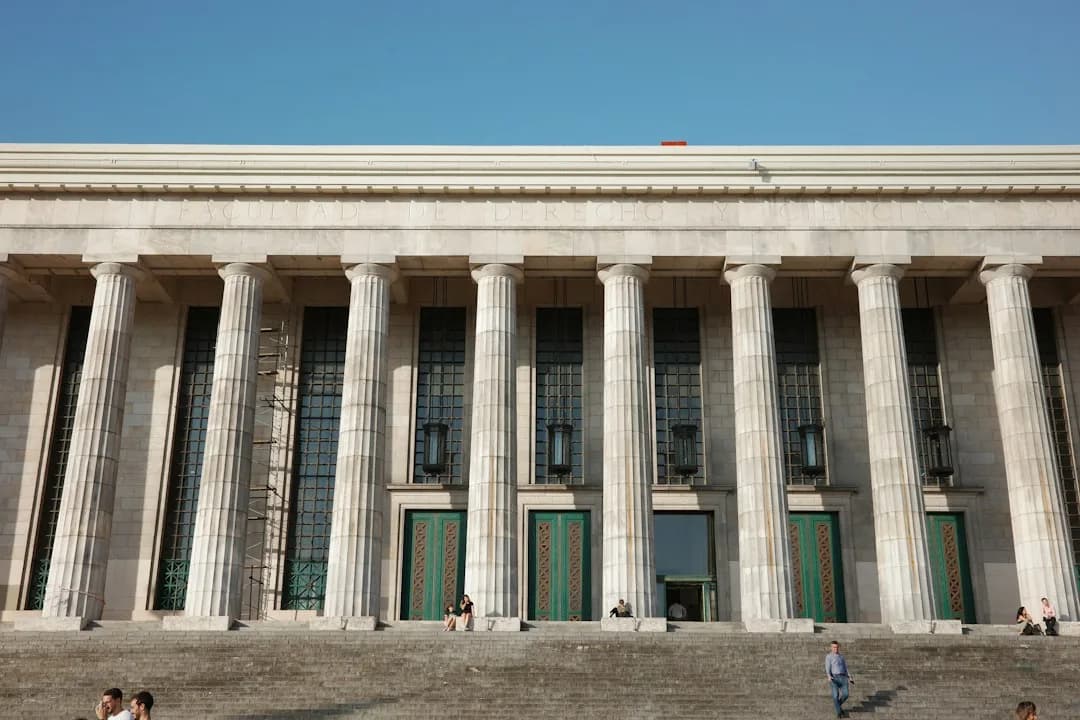
Alejandro Dolina, the Argentine writer, musician, and thinker, was awarded an honorary doctorate by the University of Buenos Aires (UBA) on Friday, September 3. The ceremony took place in the auditorium of the Faculty of Social Sciences, where more than 700 attendees, including students, teachers, journalists, and friends, gathered to celebrate him. The audience's applause and affection continued throughout the event, even during the formal speeches and a brief coughing fit that interrupted the honoree.[S1][S2]
The distinction was promoted by two of the faculty's five degree programs: Social Communication Sciences, represented by its director Larisa Kejval, and Political Sciences, represented by its director Miguel De Luca. The proposal received unanimous support at all formal stages. UBA Rector Ricardo Gelpi and Vice-Dean of Social Sciences Diego de Charras presented Dolina with the diploma and medal.[S1][S2]
Dolina's Reflections on Joy and Public Education
In his acceptance speech, Dolina reflected on the nature of joy at a certain age, noting that it comes accompanied by a delicious melancholy and a noble sadness, not due to physical ailments but because one better understands the tragic nature of human existence. He expressed that not being able to fully enjoy this happiness made him even happier, a sentiment that resonated with the audience.[S1]
Dolina praised the public university as a place where one both receives and gives, creating moments of communion despite life's tendency toward solitude. He recalled his own student days in law school, emphasizing the importance of companionship over distant professors. He also joked about feeling like a fraud, as he does not come from the academic world, and playfully rejected the idea of the 'university of the street,' arguing that true learning is better found in formal institutions than on street corners.[S1]
He concluded by urging governments to prioritize the inauguration of universities and schools over other establishments, a statement that drew a thunderous ovation. His words underscored a deep belief in the transformative power of education and communal intellectual exchange.[S1]
A Dialogue with Gabriel Rolón
After the formalities, Dolina invited psychologist and writer Gabriel Rolón to the stage, recreating the witty and erudite exchanges they shared for fourteen years on the radio program 'La venganza será terrible'. Rolón, acting as an impromptu doctoral tutor, explored themes from Dolina's work, including love, poetry, philosophy, mythology, and music.[S1]
Rolón recited verses written by Dolina, including 'La duda es la vida' (Doubt is life), prompting a discussion on the nature of questions and answers. Dolina explained that answers are definitive and should be avoided, as questions open while answers close. He also described mythology as science replaced by poetry, a construction that gives meaning to the world through metaphors.[S1]
Moved to tears, Rolón expressed his gratitude to Dolina for his generosity, for opening doors that otherwise would have remained closed, and for being an example of an artist and thinker. He admitted that he thought UBA could not make him happier than the day he received his psychology degree, but he was wrong, as this moment surpassed it.[S1]
Recognizing Knowledge Beyond the Classroom
Vice-Dean Diego de Charras explained that the honorary doctorate is the university's highest distinction, aimed at recognizing knowledge that is not necessarily born in classrooms but is equally important, especially in a faculty dedicated to studying popular culture. He noted that the Faculty of Social Sciences, founded in 1988, experienced the late 80s and early 90s with Dolina's figure circulating through its hallways like the Ángel Gris, a character from his work.[S1]
Larisa Kejval, director of the Social Communication Sciences program, delivered the laudatio, reviewing Dolina's life and work in a style fitting the honoree. She listed his many roles—writer, essayist, observer, actor, radio host, comedian, philosopher, orator, thinker, and musician—and highlighted how his characters transcended fiction to become part of everyday reality, blending imagination, humor, music, literature, love, and melancholy.[S1][S2]