A Sea of Red Across the Tech Sector
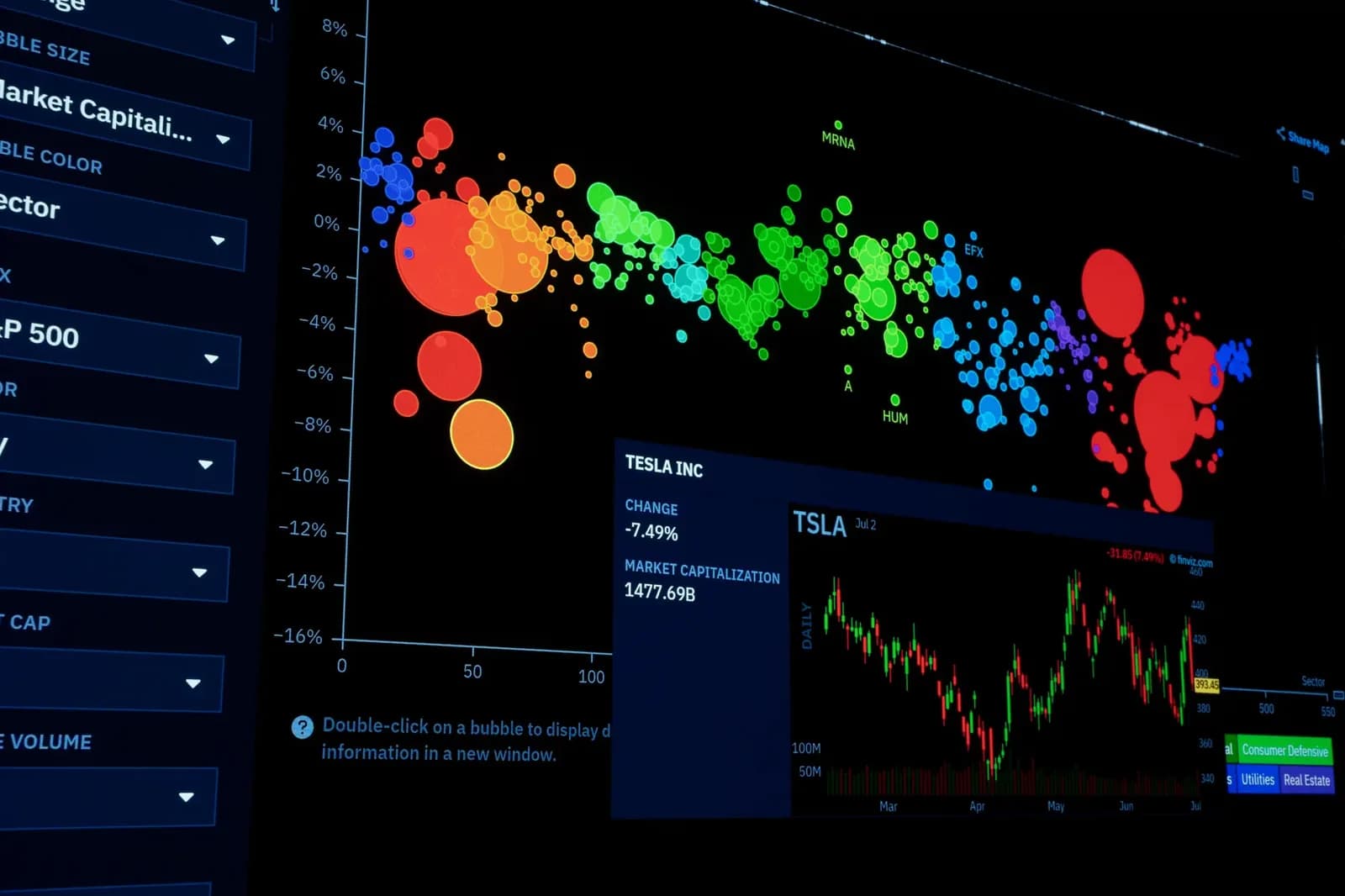
Technology stocks posted their steepest single-day loss since the April 2025 tariff announcement, after midterm election results left investors questioning how quickly AI infrastructure will be built out. By midday the Nasdaq composite had shed more than 1,340 points, a 5.2% drop that wiped out over $3 trillion in market value, per Bloomberg data. The Philadelphia Semiconductor Sector index, which follows the thirty biggest chipmakers, fell over 1,000 points and was on course for its worst session since March 2020.[S1]
The downturn was broad, pulling the entire market lower and reversing the rally that had followed the Democrats' capture of both the Senate and the House of Representatives on Wednesday. Voters had backed candidates and ballot measures aimed at limiting the expansion of AI data centers across the United States. By Thursday, that message appeared to have registered more forcefully with technology investors as early signals of shifting business conditions emerged.[S1]
Major technology names absorbed heavy losses. Meta, the parent of Facebook, declined 3.4%, Microsoft slipped 2.8%, and Nvidia dropped 8%. The selloff extended well beyond the technology sector, with the Dow Jones Industrial Average falling roughly 1,700 points amid the broad market retreat.[S1][S2]
Chipmakers and Neoclouds Take the Hardest Hits
Semiconductor companies bore some of the worst damage. Micron, among the three largest memory chip manufacturers globally, fell about 14%, while AMD, a rival to Nvidia, also lost 14%. Neocloud firms, which have borrowed heavily to build data centers competing with Amazon and Google, were hit particularly hard. CoreWeave, a leading neocloud company, dropped 9% on Thursday and was on course for an 18% decline over two sessions.[S1]
Google, one of the industry's largest cloud providers and supported by its search advertising business, declined a comparatively modest 1.6%. The divergence underscored how investors were distinguishing between companies with diversified revenue streams and those more directly exposed to the data center construction cycle.[S1]
Executives and Analysts Reassess the Outlook
Meta President Dina Powell McCormick, speaking Wednesday at a conference organized by the Wall Street Journal, acknowledged the new obstacles. She said building data centers in the United States is going to be harder, and noted that every hyperscaler is now weighing whether it needs to build outside the country, describing hedging on such enormous investments as a wise course.[S1]
Dan Ives, an analyst at Yorkville Ives known for his bullish stance, told investors in a Thursday note that he now sees the tech industry's capital expenditure growth topping out next year instead of in 2028 or 2029. He noted that Big Tech and hyperscaler capex should still comfortably surpass $1 trillion in 2027, but that the growth rate heading into 2028 will plainly slow by a significant margin, since the data center buildout is proceeding far more slowly given the political landscape, particularly in Texas.[S1]
Ives put the low-end estimate at 10% of the 800 to 1,000 planned U.S. AI-focused data centers being removed from the roadmap, with as many as 20% potentially facing a far longer regulatory path that could weigh on capacity buildout over the coming years. That capital spending surge has powered the U.S. economy for two years, with Alphabet, Microsoft, Amazon, Meta, Oracle and newer neocloud firms racing to build AI data centers and pouring hundreds of billions into chips, computers, networking gear, land, energy and construction.[S1]