Paramedic's escape from drone attack
Inna Lytvynenko, a paramedic in Kherson, always wears bright orange body armour on emergency calls. Last June, while responding to treat a woman injured in a Russian drone attack, an FPV drone smashed into her ambulance. Seconds later, another drone flew straight towards her. She grabbed her trauma bag and ran, shouting and screaming, knowing that if she stopped, she would die. After chasing her for about 10 minutes, the drone flew away. Police quickly picked her up.[S1]
Lytvynenko called the incident 'safari hunting'. Drones then hit two more vehicles that arrived to take the injured woman to hospital. Hours later, a third police car finally managed to get her out. After another such attack earlier this week, Ukraine's President Volodymyr Zelensky called for greater pressure on Russia to stop deliberate 'hunting attacks' on civilians.[S1]
Rising attacks on healthcare
Hospitals and ambulances in Ukraine are increasingly coming under Russian drone and missile attack, despite Geneva Conventions requiring their protection. Dr Jarno Habicht, WHO representative in Ukraine, calls this 'a new normality, which should not be the normality'. The WHO has registered 3,118 attacks on healthcare since February 2022, about two cases per day. Since 2023, attacks have grown steadily, with a 30% increase in 2024 and another 20% last year.[S1]
A recent Doctors Without Borders (MSF) report says Russia systematically and often deliberately targets Ukrainian medical facilities. The frequency suggests attacks are 'a sustained feature of the war rather than an episodic consequence of large scale offensives'. Last month, Russian missiles hit a hospital in Kherson, killing one doctor. Hospital director Olena Tymoshenko believes it was targeted, noting three missiles hit within minutes, which cannot be an accident.[S1]
Tactics and impact on civilians
Moscow often uses a 'double-tap' tactic, targeting the same location twice to hit first responders. During a recent attack on Kyiv, seven people were killed, including a police officer and a volunteer, after a second strike. Russian forces have also targeted warehouses of humanitarian organisations; last month, warehouses of three UN agencies, including the WHO, were damaged. The WHO shares coordinates of its facilities with both Moscow and Kyiv to protect them.[S1]
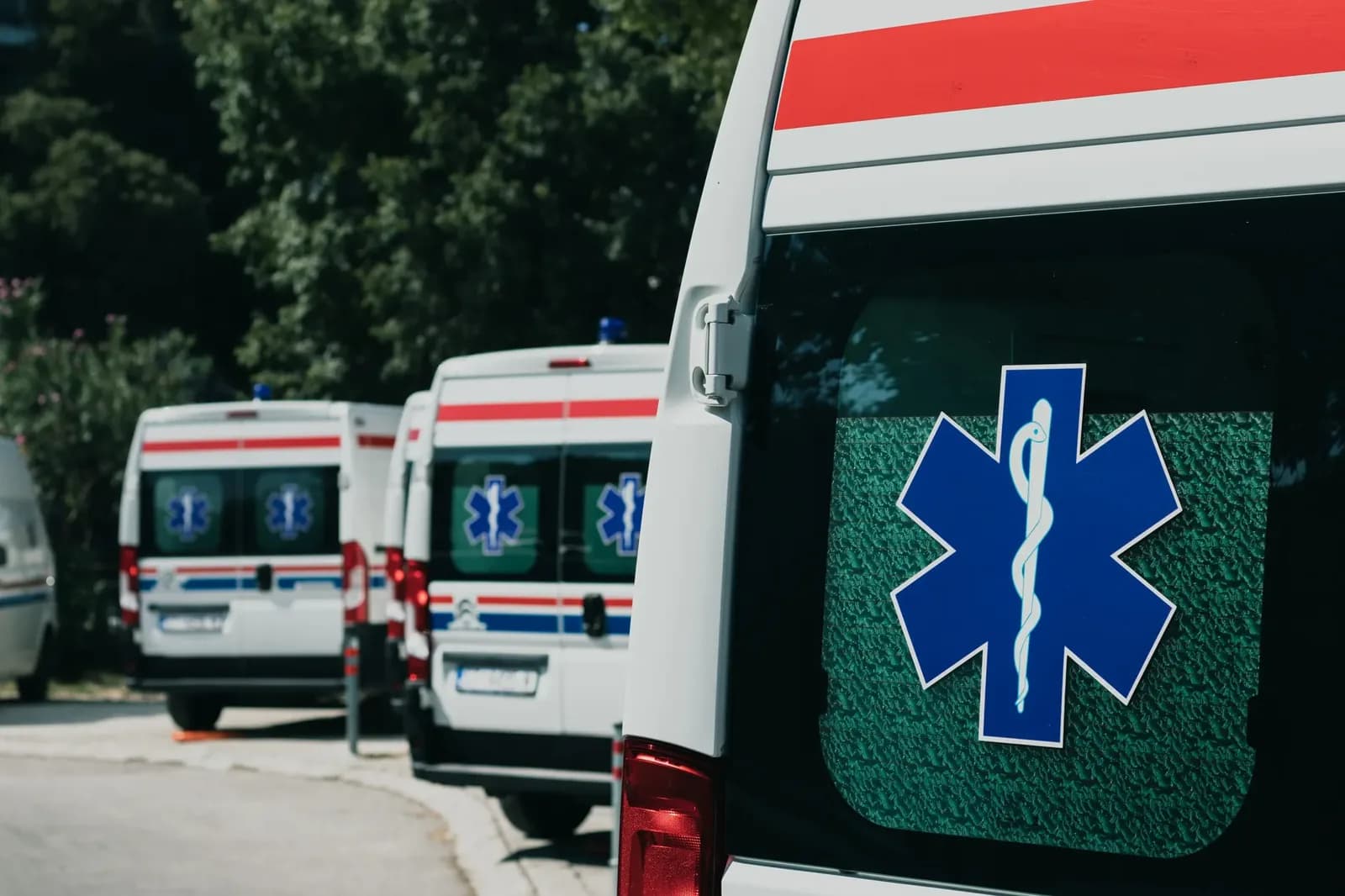
FPV drone strikes are almost always intentional, as pilots see targets in live feed, says Robin Meldrum, MSF country coordinator. Lytvynenko believes the operator consciously chose to target her, as she wore a medical uniform and the ambulance was clearly marked. Strikes on ambulances make up 20% of all attacks on healthcare, suggesting a calculated strategy. As a result, civilians near the frontline are increasingly cut off from health services, with many elderly people facing slow death without medication.[S1]
Growing danger zones
Lytvynenko and colleagues constantly monitor social media for threats. 'It's really scary,' she says. 'Every time when we take a patient to hospital, we just pray. These drones can appear from anywhere, they can even get through anti-drone nets.' In some cases, police are dispatched instead of ambulances. As drone ranges grow, mobile clinics have shifted further from the frontline. Two years ago, MSF could go within 5-8km; now they avoid anywhere within 30km.[S1]
Over the past 18 months, MSF stopped regular visits to about 80 villages near the front, and recently paused ambulance services in Sloviansk. Meldrum says, 'It doesn't feel like we're protected in this environment, and in the way that Russia is conducting the war. We don't feel that the rules of war are being respected.'[S1]