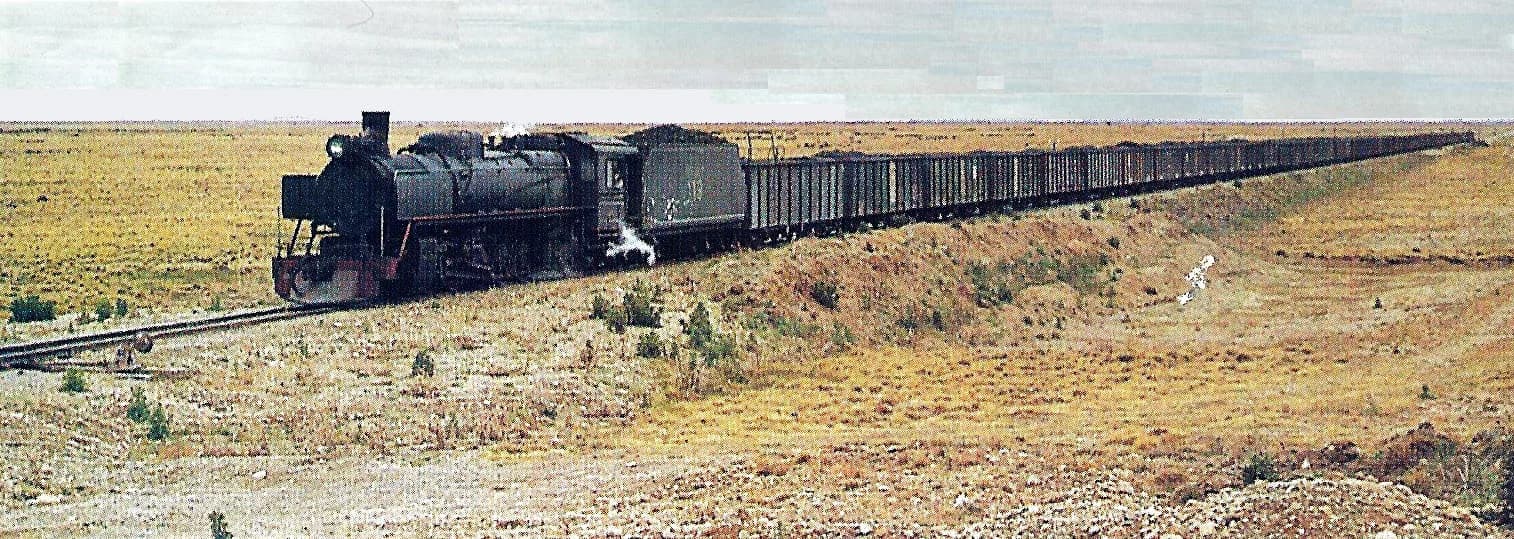
The derailment and the workers aboard
A train operated by Yacimientos Carboníferos Río Turbio (YCRT) left the tracks while hauling roughly 600 tonnes of coal toward the port of Punta Loyola in Santa Cruz province. The locomotive overturned and three wagons came off the rails, spilling the cargo. The two workers travelling in the cab were not seriously hurt and suffered only minor knocks, according to the provincial government. The formation had departed Río Turbio on Wednesday morning with about 37 wagons. The accident occurred at kilometre 181 of the Ramal Ferro Industrial Río Turbio, near Ingeniero Capa, on a route of almost 300 kilometres that links the mining town to the ferroport complex close to Río Gallegos.[S1][S2][S3]
The run was the first under a new commercial contract and was meant to carry coal to Punta Loyola for shipment to international markets. YCRT had been working to restore its rail transport capacity in order to meet those commitments. The derailment therefore interrupted the company's return to exporting, and the cargo was dumped along the track.[S2][S3]
A strange object on the track and suspicions of sabotage
YCRT personnel found an unusual object on the track, described as a piece of old railway material. Governor Claudio Vidal said marks were detected in the area where the object would have struck before the derailment. Pablo Gordillo, the company's interventor, said the piece could have been placed on the rails so that a wheel would ride over it and derail the train. He added that a notch was found on the object and on the track, and that there appeared to be an impact mark in the sector. In his view, the way the object was positioned suggests someone with considerable knowledge of railways.[S2][S3]
Gordillo said the object should never have been on the locomotive or on the track, and stated that someone had brought it into the area. The find fuelled suspicion of a deliberate act, although no official conclusion has yet confirmed sabotage. Vidal described the incident as serious and said it must be investigated to the last consequences, while also seeking to reassure the public. He insisted that no hypothesis can be discarded until a technical assessment is complete, including infrastructure failure, weather conditions and intentional interference.[S1][S2][S3]
Inspection, prior warnings and the pending inquiry
The company maintains that the stretch had been checked shortly before the trip. Gordillo said the track was surveyed a day earlier with a track-recording vehicle that runs the line to verify its condition. He also said a review had been carried out four or five days before the accident and everything appeared normal, which is why the incident surprised the company. YCRT will ask the Comisión Nacional de Regulación del Transporte to carry out an on-site technical inspection, and contacts have already been made through Trenes Argentinos to examine the state of the track.[S2][S3]
Days before the accident, a report circulated by journalist Rubén Lasagno on OPI Santa Cruz had warned of problems along different sections of the branch line. It mentioned missing ballast, deteriorated rails and the need to replace sleepers, as well as a track bump at kilometre 112 and ballast shortages elsewhere. The report also noted that ground conditions could worsen during thaw periods and rising temperatures, when the soil loses firmness. The derailment has now made those warnings part of the inquiry into what happened at kilometre 181.[S2]