Warsaw sets a deadline and a template
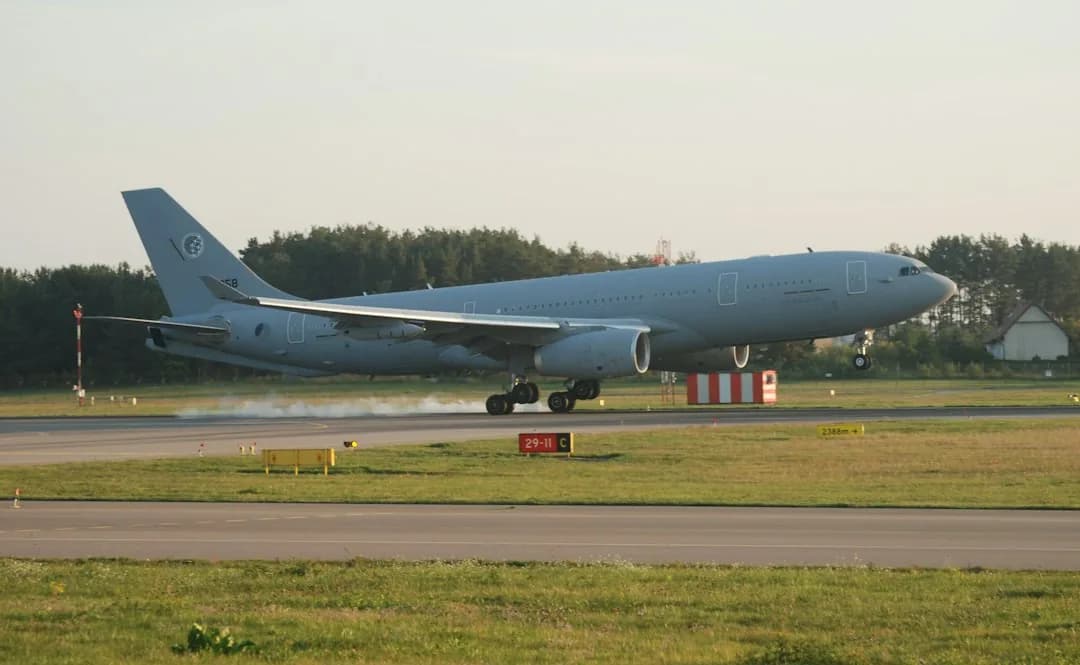
Poland intends to create a no-fly zone on its side of the border with Ukraine, with a government ordinance in preparation that should take effect at the end of December or in early January, Deputy Defense Minister Cezary Tomczyk told reporters. The zone would extend several dozen kilometers from the frontier and is meant to strengthen the country's armed forces, he said. Poland already applies strict limits on air traffic along that border.[S1][S2][S3][S4][S5][S6][S7][S8]
Tomczyk framed the step as a model for the wider alliance, saying Warsaw would press all NATO members to adopt the same principle along the eastern flank. He noted that Poland moved first on the measure and that the Baltic states have since followed its example. The deputy minister linked the decision to repeated Russian intrusions into NATO airspace during Moscow's war against Ukraine.[S1][S3]
Merz warns against cutting support
In Berlin, German Chancellor Friedrich Merz used a Bundestag budget debate to defend spending on aid to Ukraine, confronting criticism from parties on both the left and the right. He argued that Russia has clear objectives and that its ambitions extend beyond Ukraine, pointing to escalation in the Baltic region, in Poland, on the Black Sea and in space, as well as inside Germany itself, even at the risk of casualties.[S1]
Merz said those who fail to recognize this either misunderstand the world around them or are pursuing entirely different goals. The Left Party and Alternative for Germany have both urged an end to Ukraine aid and improved ties with Moscow. Germany holds Russia responsible for an explosive drone incident at Leipzig airport this summer, along with cyberattacks, sabotage and airspace violations across the EU and NATO. Merz said backing Kyiv amounts to protecting Germany, and that Berlin is learning from Ukraine in both civilian and defense technology.[S1]
Energy sites hit on both sides
Overnight, Kyiv and Moscow each assessed damage to energy infrastructure as the war, now past four and a half years, continued. Russian forces struck a thermal power plant and shut it down, and hit a gas production facility in Poltava, where fires halted operations. Ukraine's acting energy minister reported outages in five regions following the attacks.[S1]
On the Russian side, Ukrainian drones struck at least two oil refineries in the Samara region, killing one person and igniting large fires, according to the report. Separately, Ukraine's General Staff said its forces had hit the Savasleyka air base east of Moscow in the Nizhny Novgorod region, putting three MiG-31 jets used to launch hypersonic missiles and two Su-34 fighter-bombers out of action for some time. Russia did not immediately comment.[S1]
Moscow presses Europe on talks
Russian officials renewed their push for European diplomats to travel to Moscow and set out their intentions before taking part in any Russia-Ukraine peace negotiations. President Vladimir Putin issued the invitation last month; on Wednesday, foreign policy adviser Yury Ushakov said it remains open but that no Europeans have agreed to make the trip. Russia's ambassador to Germany, Sergei Nechayev, told AFP that the response had been restrained and that Moscow was ready to keep talking.[S1]
Nechayev repeated the Kremlin position that Europe is the obstacle to ending the war and that Russia is the party genuinely seeking peace, and said Moscow does not see the same honesty from Europeans that it sees from US President Donald Trump's team, including Jared Kushner and Steve Witkoff. He asked Europe to decide what it wants, name its negotiators and clarify its aims. Critics have accused Russia of stalling to prolong its attacks on Ukraine.[S1]