A near tie with most votes counted
With 95% of ballots tallied on Saturday night, New Zealand's two main parties were effectively level, each sitting just under 30%. The governing center-right National Party held a lead of about 3,500 votes over the opposition Labour Party. The contest played out against a backdrop of expensive everyday goods and the country's highest jobless rate in more than a decade, issues that dominated the campaign.[S1][S2][S3][S4][S5][S6]
New Zealand's tight election rules meant the last day of balloting went by with no political discussion or campaign coverage in the media. Voting had nonetheless been underway since October 26, and by Thursday the electoral commission said roughly 1.7 million ballots had been cast out of about 3.8 million people eligible to vote.[S1][S7]
Luxon sees a route, Hipkins urges compromise
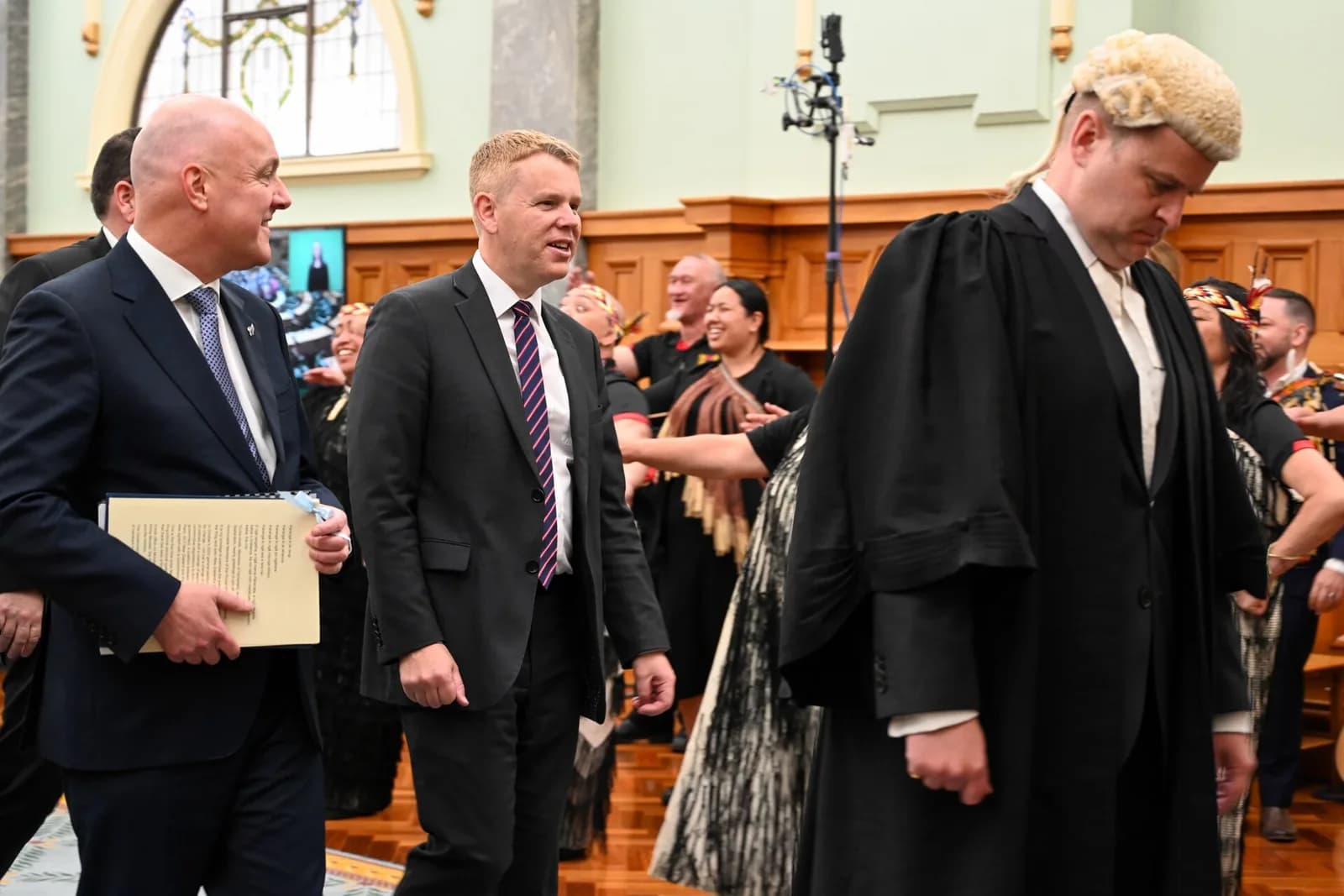
Prime Minister Christopher Luxon, who leads National, told supporters his party had again finished as the largest in parliament and had a route to forming the next government. National currently governs alongside the pro-business ACT party and the right-wing populist New Zealand First. Preliminary figures put the three together at 67 seats, a majority narrow enough to be fragile.[S1]
Labour leader Chris Hipkins said the result left neither side likely to govern alone and that politicians would have to compromise and seek shared positions. He acknowledged that the country's message might take time to interpret, and said the coming parliament would demand cooperation from everyone in it.[S1]
Special votes and a possible kingmaker
Special ballots, including those from New Zealanders abroad, will be counted over the next three weeks. Such votes have historically favored parties on the left and have altered preliminary outcomes in each of the last three elections. Official final results are scheduled for release on November 27.[S1]
Should the right-wing bloc lose its slim edge, the centrist Opportunity Party could become decisive. It is projected to win seven seats, clearing the 5% threshold and entering parliament for the first time since its founding in 2017. Luxon has previously said he would not work with it.[S1]
Under the country's mixed-member proportional system, voters mark two choices: a party and a local candidate. Electorate winners take seats in what is normally a 120-member house, though an overhang can enlarge it, with additional lawmakers drawn from party lists according to the national vote. Saturday's preliminary count indicated parliament would grow to 130 seats, the largest in New Zealand's history.[S1]