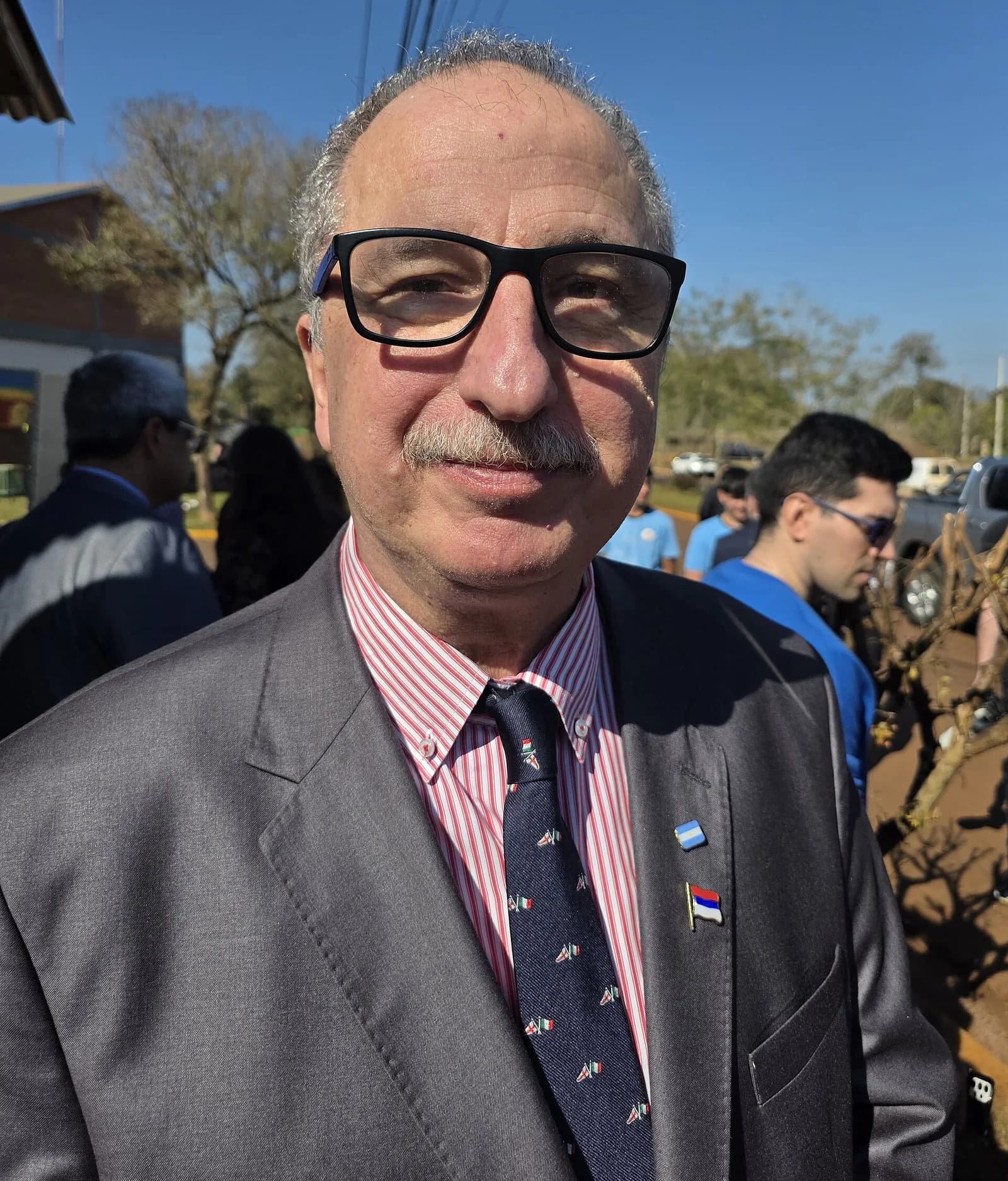
Passalacqua orders legal action against land law
The governor of Misiones, Hugo Passalacqua, has confirmed that he will go to court to try to stop the application of the national land law in his province. Through Decree No. 1,935, he instructed the provincial attorney general to take whatever legal steps are necessary to safeguard Misiones' rights at every opportunity and through all available channels. The decree was signed on Friday and directs the Fiscalía de Estado to oppose land purchase operations that could harm provincial interests.[S1][S2]
In the document, Passalacqua said the Supreme Court's decision leaves Misiones in a situation of absolute defencelessness and institutional vulnerability. He criticised not only the recent law but also DNU 70/2023, which he said directly and harmfully affects the province's autonomy, territorial sovereignty, public finances and socio-economic fabric. He also argued that the change creates greater vulnerability for Misiones, especially in border areas, with potential consequences for territorial control, natural resources and various sectors of the provincial economy.[S1][S2]
Supreme Court ruling and its scope
Days earlier, the Supreme Court revoked a ruling that had declared unconstitutional article 154 of DNU 70/23, on the grounds that the entity that brought the claim lacked standing. The court held that in the clear absence of a collective right over a collective good, it is not possible to find a case or controversy. The ruling was signed by justices Horacio Rosatti, Carlos Rosenkrantz and Ricardo Lorenzetti. It also warned about lower courts that recognise standing far removed from constitutional requirements for opening a judicial case.[S1][S2]
In a clarification aimed at the public, the court said its decision strictly follows all of its precedents and does not affect other injunctions with the same object that are pending before different courts. It added that the ruling does not prevent anyone who considers the land regime unconstitutional from requesting an injunction, whose admissibility must be decided by the competent judge. The court also said that interest groups pressing on the issue can resort to judicial claims, which in a democracy is more appropriate than promoting hate speech and disqualification on social media.[S1]
Provincial defence and the repealed law
The provincial decree was issued after the Supreme Court set aside a judicial resolution that had suspended the application of the article of the DNU that eliminated restrictions on land purchases by foreigners. The court did not rule on the constitutionality of the regime; it considered that the organisation that had filed the claim lacked sufficient standing to raise the challenge in those terms. The decision was set out in decree 1935, which tasks the Fiscalía de Estado with exercising the judicial actions and defences it deems necessary following the repeal of Law 26.737. That law had established restrictions on ownership of rural land by foreign individuals and companies and was left without effect by article 154 of DNU 70/2023.[S2]
Passalacqua justified the measure by the need to preserve provincial territory and questioned the impact the new situation has on Misiones. He said that with more than 90% international border, unique biodiversity in the country and an economic matrix centred on small producers, the province cannot allow its soil to remain unprotected. He stressed that Misiones has an extensive international border with Brazil and Paraguay, significant biodiversity and an economy with a strong presence of small producers. Misiones is also one of the provinces with the highest proportion of rural land in foreign hands. The governor argued that the decision to go to court maintains the stance his administration has held in defence of the territory and natural resources, and concluded that the need to care for Misiones' land is an unrenounceable duty to its people and sovereignty.[S1][S2]