Milei's Open Support for Flávio Bolsonaro
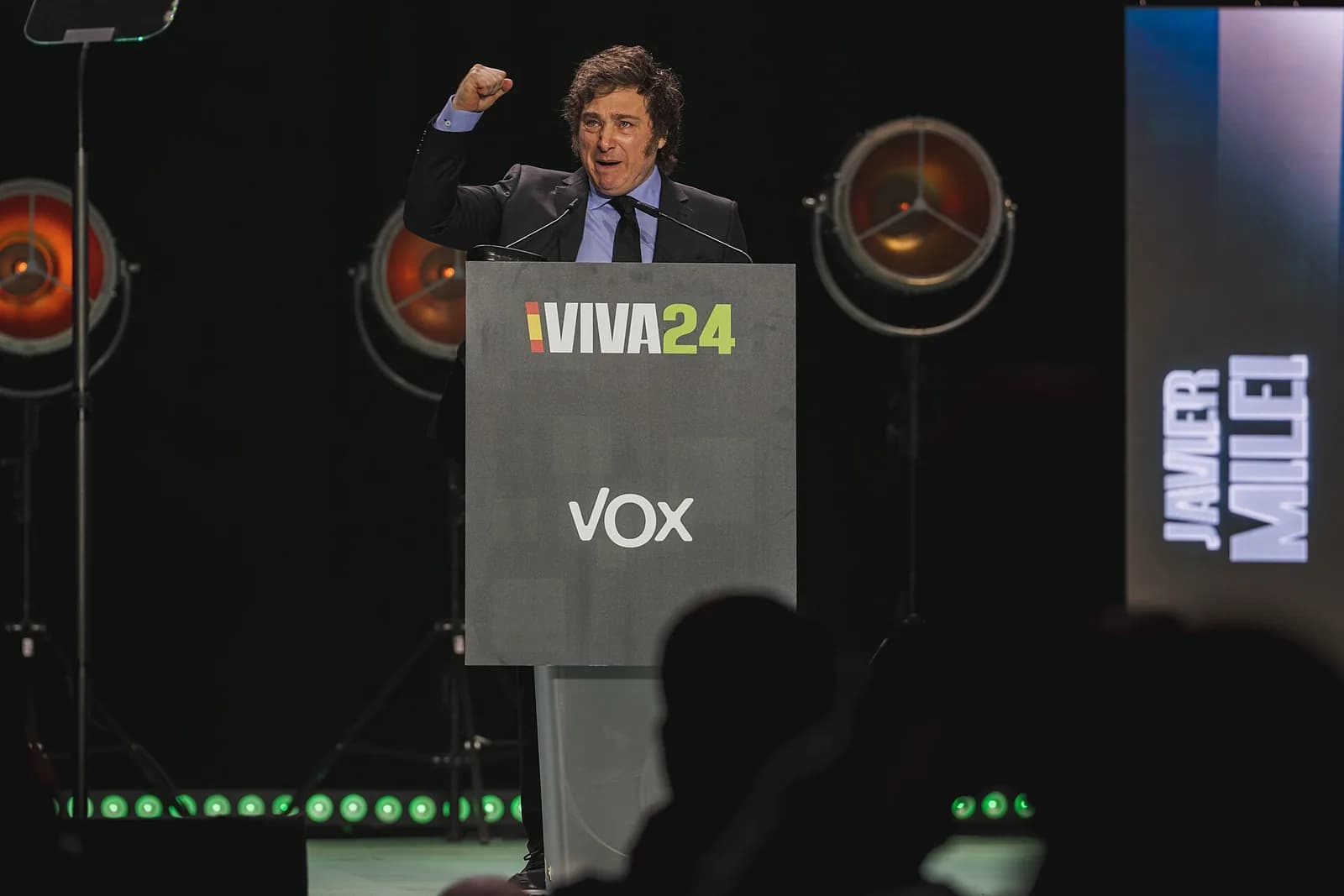
From the Quinta de Olivos, Javier Milei closely followed Brazil's presidential election and explicitly backed Flávio Bolsonaro in his race against incumbent Lula da Silva. The Argentine president made his preference clear on social media, sharing posts in favor of the son of former president Jair Bolsonaro, whom he considers a personal friend. Once the result was known, he published a congratulatory message.[S1][S2][S3][S4][S5][S6][S7][S8]
In his message, accompanied by a photo of the two together with the Fuerzas del Cielo flag, Milei stressed that the American continent belongs to citizens who want to live in freedom and expressed hope that Argentina and Brazil can soon work together to remain great commercial, cultural, and political partners. He also described the election as historic and again labeled Lula a communist.[S1][S8]
Government Expectations for the Runoff
According to what TN was able to reconstruct, the Casa Rosada is confident that Bolsonaro will win the second round scheduled for October 25. Officials in the executive branch analyzed that in all Brazilian elections with a runoff, the candidate who finished first in the initial vote went on to win, and they see that pattern as a historical marker.[S1]
From the ruling coalition's perspective, a Bolsonaro victory would consolidate what the government calls the blue wave in the region, pointing to more than a dozen conservative leaders across Latin America. They highlight recent wins by Keiko Fujimori in Peru and Abelardo De la Espriella in Colombia, as well as Rodrigo Paz in Bolivia, Nasry Asfura in Honduras, José Antonio Kast in Chile, José Raúl Mulino in Panama, Daniel Noboa in Ecuador, Santiago Peña in Paraguay, Nayib Bukele in El Salvador, Luis Abinader in the Dominican Republic, and Laura Fernández in Costa Rica.[S1]
Mercosur and the Road Ahead
A shift in Brazil's domestic politics could facilitate the trade opening that Milei is pushing within Mercosur. Since taking office, Milei has promoted reducing trade barriers, revising the Common External Tariff, and giving members more flexibility to strike deals with third markets. At the Foz de Iguazú summit in December 2025, he called for a comprehensive institutional reform of the bloc. Since then there have been partial advances on the tariff and its exceptions, but fundamental change remains pending, and the government acknowledges it is impossible without Brazil due to its economic and political weight.[S1]
The first signal will come on December 4, when the Mercosur summit of heads of state takes place in Montevideo, the first presidential meeting after Brazil decides who will govern for the next four years. If Lula wins re-election, the government will have to sustain its bloc-opening agenda through negotiation with Brasilia, in a relationship still marked by political tensions and a lack of direct diplomatic dialogue.[S1]