The long road to Gekko
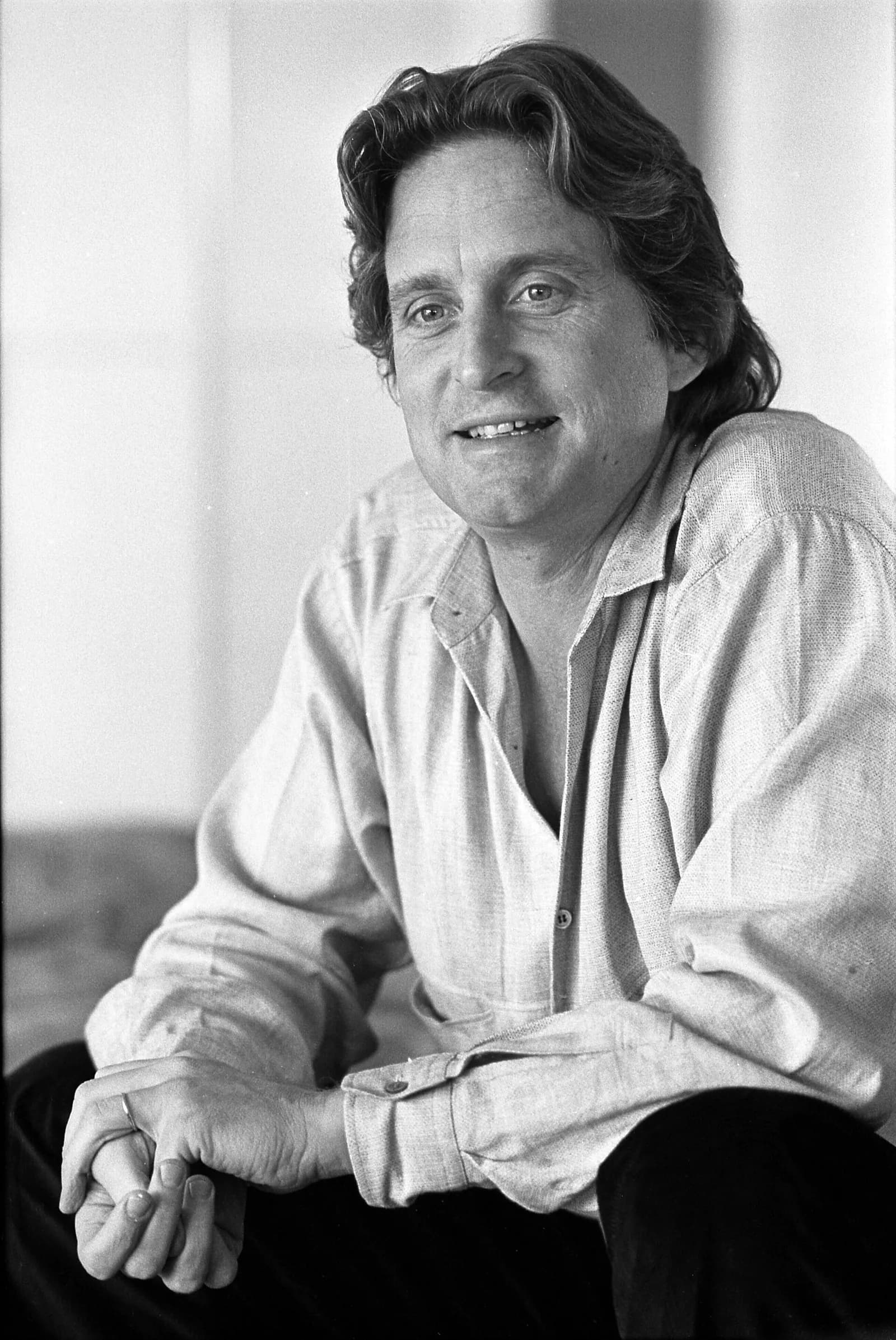
Michael Douglas has revealed that he was not the first choice to play the iconic villain Gordon Gekko in Oliver Stone's 1987 film Wall Street. In his new memoir, One Helluva Ride, written with Shane Salerno and Deadline's Mike Fleming Jr., Douglas recounts that the studio initially wanted Warren Beatty for the part, but Beatty would not commit. The role was then offered to Richard Gere, who turned it down. Only after those two passed did the screenplay reach Douglas.[S1][S2]
Douglas had already achieved success as a producer, sharing a Best Picture Oscar for One Flew Over the Cuckoo's Nest and capturing the zeitgeist with The China Syndrome. But his onscreen career had not yet reached the same heights. As an actor, he had played flawed characters in films like Fatal Attraction, but never a true villain. His father, Kirk Douglas, had long encouraged him to take on a cunning and manipulative role, telling him that audiences would be surprised by the darkness he could bring.[S1]
Stone's vision and the birth of a villain
Oliver Stone had just won Academy Awards for Best Director and Best Picture for Platoon when he began developing Wall Street. While researching his screenplay for Scarface in Miami, Stone had observed the rise of a young millionaire class fueled by easy money and excess. He saw parallels between the drug trade in Miami and the financial world of New York, calling Wall Street 'Scarface North.' His goal was to hold a mirror up to America by exploring the greed and moral compromises of the finance industry.[S1]
Understand this article deeper
The film follows Bud Fox, a young stockbroker who is drawn into illegal insider trading under the mentorship of Gordon Gekko, a wealthy corporate raider. To counterbalance the protagonist, Stone needed a villain who was slick, charismatic, and seductive. The studio's first choices, Beatty and Gere, did not work out. When Douglas finally received the screenplay, he was captivated by Gekko's monologues, including the famous 'Greed is good' speech. He saw the part as exactly what he had been looking for.[S1]
Overcoming studio doubts
Despite Douglas's enthusiasm, the studio was not convinced. Executives, including Scott Rudin, felt he was too young for the role and doubted his ability to deliver. They warned Stone that Douglas was more of a producer than an actor, predicting he would spend his time in his trailer making phone calls and setting up other projects. Douglas was frustrated by their refusal to accept that he could handle both acting and producing. There was little on his resume to prove he could embody a character as powerful and Machiavellian as Gekko.[S1]
Douglas ultimately won the role and delivered a performance that defined the 1980s. His portrayal of Gordon Gekko earned him the Academy Award for Best Actor and paved the way for a career in which he could take on any role and draw audiences to see what he would do next. The memoir, published by Grand Central Publishing, explores his life through a dozen of his most memorable films, including Romancing the Stone, Fatal Attraction, Basic Instinct, Traffic, Falling Down, and The War of the Roses, as well as his early work on the television series The Streets of San Francisco.[S1]