Suspect dies two days after the attack
The man suspected of carrying out Saturday's shooting in central Kraków died in hospital in the early hours of Monday, the Małopolska regional police announced on X. He was 24 and Polish, and had been in critical condition since officers shot him during a confrontation at the scene. Police said the gunfire was stopped within roughly three minutes of the attack starting, which officials credited with preventing a larger loss of life.[S1][S2][S5]
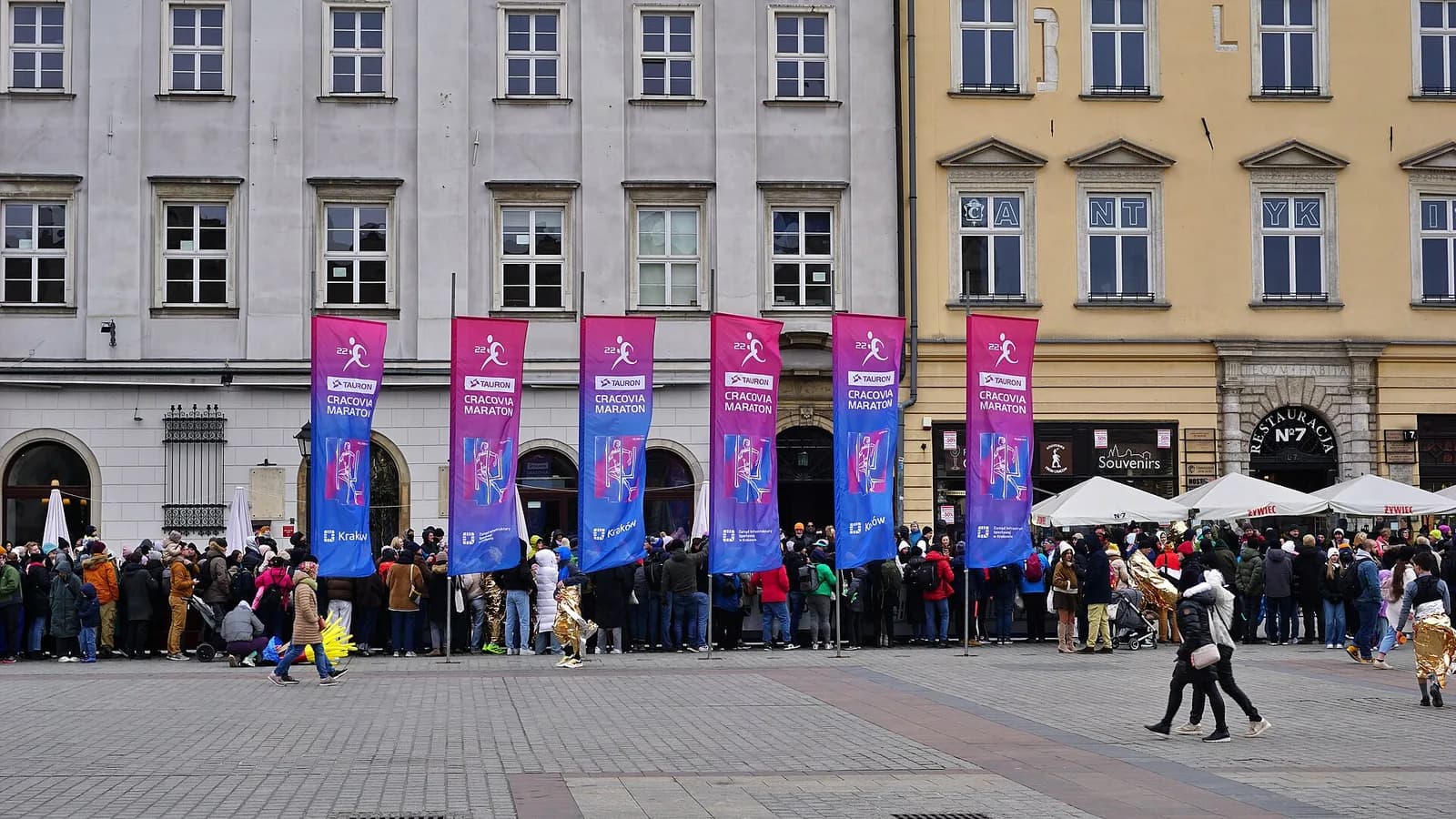
The attack unfolded shortly before 15:00 local time on Saturday in the Main Market Square, the historic heart of Poland's second-largest city and a place normally crowded with visitors. According to police accounts, the man drove into the square at high speed in a car, wearing military-style clothing and a bulletproof vest, then fired at random at people around him. The city's police spokesperson described his movement through the square as a wild circuit of the area.[S1][S2][S3]
Victims at the square and at a family home
Six people died in the square: four women and two men. Four of the dead were Polish, while the others were a British man and an Austrian woman. Five of the wounded came from abroad, among them citizens of Britain, Austria, Germany, Portugal and Russia, and two police officers were also hurt. One officer, named in local reports as Jakub Kulik, was described as fighting for his life, and a blood donation appeal was issued on his behalf.[S1][S2][S3][S4][S5]
In the hours after the shooting, police searching the suspect's home in Ostrowiec Świętokrzyski, roughly 93 miles or 150 kilometres from Kraków, found three more bodies. They were later identified as his father, 53, his mother, 52, and his sister, 21, and authorities believe they were shot. The suspect was also facing murder charges over those deaths. Polish media reported that he held a firearms permit and may have taken the weapons from the family house.[S1][S2][S3][S4][S5]
Terror investigation and contested motive
Prosecutors in Poland announced a terrorism probe following the attack, in which a gunman shot six people dead and tried to kill numerous others, among them police officers. Justice Minister Waldemar Żurek said the shooter's aim had been to cause serious fear among a great many people. He added that investigators would keep working after the suspect's death to determine whether the man had acted on his own or taken cues from some organisation.[S1][S4]
Interior Minister Marcin Kierwiński said the man was absorbed by far-right ideologies and held very radical, ultra-nationalist views, and he said an automatic rifle was used. A ministry spokeswoman said emblems on the attacker's clothing were still being analysed by specialists. But a government spokesman, Adam Szlapka, urged restraint until the matter was fully clarified, and the defence minister, Władysław Kosiniak-Kamysz, said the suspect had no ties to the military. The cybercrime bureau was examining his online activity for links to radical groups.[S1][S3][S4][S5]
Mourning in a country unaccustomed to mass shootings
Two days of national mourning began as residents brought candles and flowers to the square where the attack took place. The St Mary's Trumpet Call, the melody sounded over the Main Market Square every hour, fell silent in tribute, the first interruption of its kind since the Second World War, and mourners gathered at St Anne's Church for a service for the victims. Mass shootings are rare in Poland, where about 411,000 people hold gun permits and interest in owning firearms has been growing.[S1][S5]
The violence has sharpened anxiety about extremism in the country, coming after a series of school stabbings in October that left one woman dead and that officials linked to extremist material online. Two surgeons who were eating near the square when the shooting began ran to treat the wounded before ambulances arrived; one of them, Professor Michał Pędziwiatr, said his colleague used a hand to slow the bleeding of the most badly hurt officer, buying time until help came. Both injured officers had come out of comas by Sunday.[S1][S2][S4]