A gray town and a hunger for color
Janusz Kamiński grew up in Ziębice, a small Polish town he recalls as gray: no billboards, no advertising, dim streets, and residents in dark clothing. Coal heated the houses in winter, and chimney smoke hung in the air, thickening it like fog with coal particles. He does not describe the place as bleak in the moment, yet acknowledges it was bleak.[S1]
That gray carried longing. Kamiński calls Poland a lyrical country with a strain of melancholy and a wish for something beyond the everyday. Traveling theater troupes passed through, and the local cinema held out a wider world. He says the theater, the movies, and a life of color were the main reasons he left home.[S1]
From refugee to cinematographer by drawing straws
In 1981, Kamiński left Poland as a political refugee, carrying a passion for American cinema but no command of English. He made his home in Chicago, devoted two years to mastering the language, and then began studying part-time at Columbia College. During an introductory filmmaking course, the class of five had to assign the roles of writer, actor, director, producer, and cinematographer among themselves; they settled it by drawing straws, and at age 22 he ended up with the camera.[S1]
He took to it immediately, captivated by the flickering 16 mm black-and-white image and its uncertainties over focus, exposure, and story. A professor encouraged him to continue, and Kamiński notes it was the first time anyone had told him he was good at something, since Polish parents of his era offered food and little praise. Classmates all wanted to direct, so he shot their films, hauling gear in a station wagon on weekends and taking commercial work as a camera assistant, electrician, and grip.[S1]
A single commercial spot a month paid $250 against $280 rent, which he considered adequate. For an immigrant, he says, self-support matters because no mother, father, or cousins are there to help. The Hollywood Reporter helped early on: its back pages listed productions and location shoots, and he cold-called producers of modest titles, landing his first two features that way.[S1]
AFI, Diane Keaton, and the road to Spielberg
Kamiński concluded Chicago would only make him secondary crew on California productions, so he applied to the American Film Institute, was accepted for 1986-87, and moved to California without a car, renting near campus. A classmate's husband, a cinematographer shooting for Roger Corman, needed a key grip; Kamiński took it, then stepped into the gaffer's job when that person quit, drawn by lighting. He continued shooting second unit and small independents while finishing school.[S1]
His demo reel reached Diane Keaton through a friend of a friend who assisted her, and he was hired to shoot Wildflower, a period television movie with Patricia Arquette and Beau Bridges. Steven Spielberg saw it and offered Kamiński Class of '61, a pilot about West Point cadets on the eve of the Civil War that was not picked up. Spielberg liked the result, and when the pilot wrapped he asked Kamiński to shoot his next film, a black-and-white project called Schindler's List.[S1]
Spielberg went off to make Jurassic Park and spent eight or nine months editing, and throughout that stretch Kamiński knew the job awaited him, though few believed it until he actually shot the film. The two barely discussed the visual approach in advance. They agreed it would be made in Poland and in black and white, and they wanted to remove anything distancing the audience from the story, so they used no crane, dolly, or Steadicam; Kamiński proposed handheld work.[S1]
Two Oscars and a new language of war
Schindler's List brought Kamiński his first Academy Award for cinematography, and Saving Private Ryan his second. He notes that the latter's script devoted a single sentence to the Normandy landing, leaving the cinematographer to invent a visual language matching the story, emotions, sets, and locations. The handheld, color-drained, chaotic result, made with Spielberg, redefined how war movies are shot.[S1]
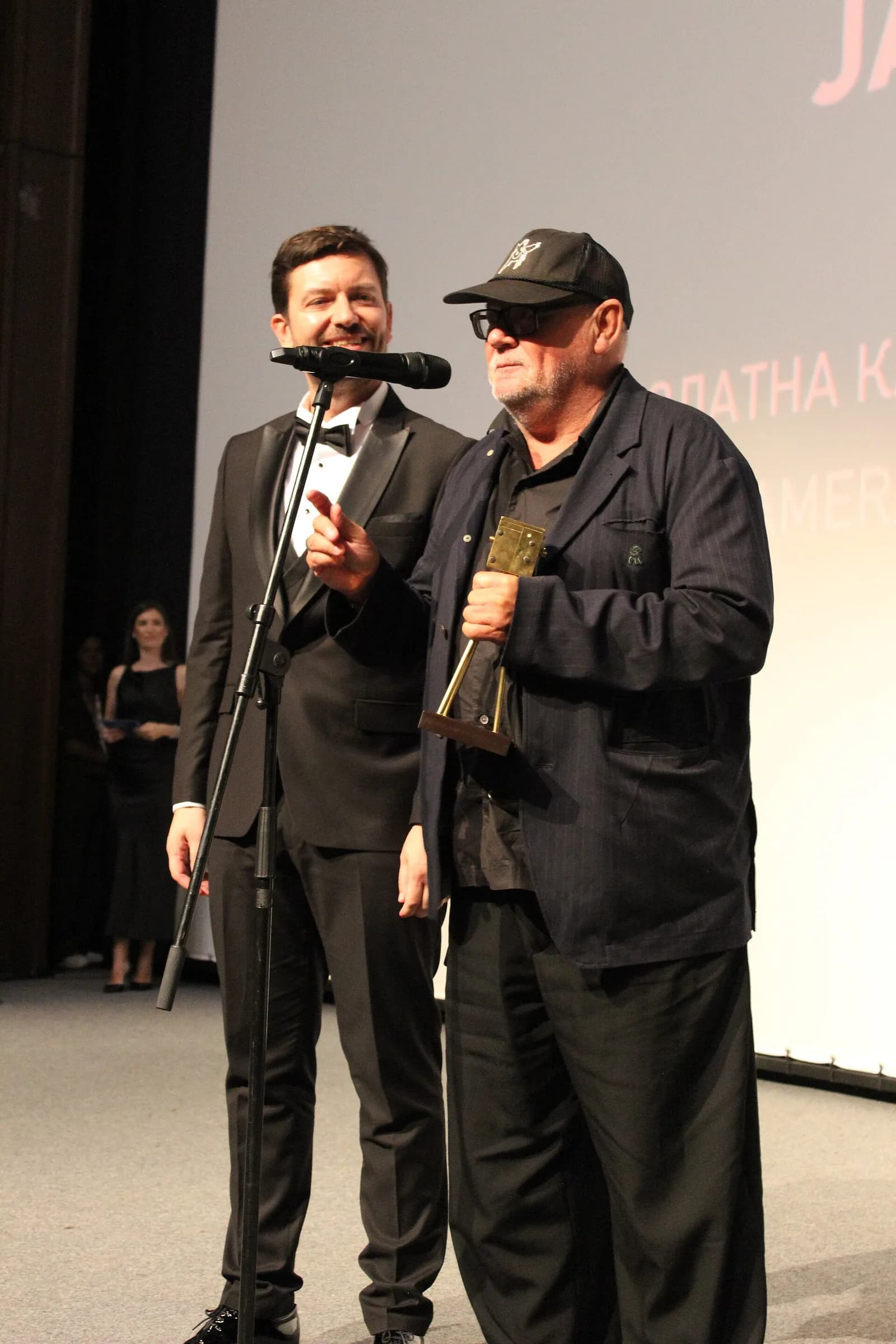
The Hollywood Reporter's 2026 Visionary Award for excellence in cinematography was presented to Kamiński at the Camerimage festival on Saturday, recognizing a career that carried the gray light and smoky streets of his childhood into the mainstream of American filmmaking.[S1][S2]