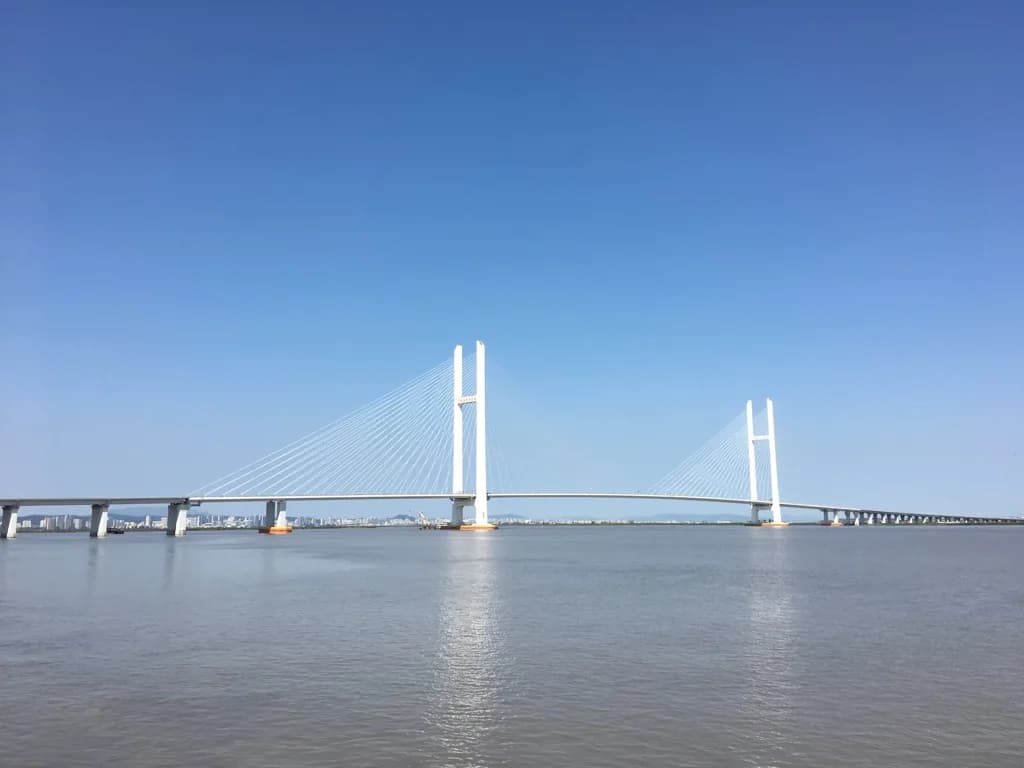
Bridge Opens After Years of Delay
Chinese state media have reported the inauguration of a much-postponed road crossing between China and North Korea, a sign of warming commercial relations between the two neighbours. Running roughly 3km (1.9 miles) from Dandong on the Chinese side to Sinuiju in North Korea, the New Yalu River Bridge is expected to serve as the principal overland trade corridor. Although originally planned to open in 2014, the project was shelved without a date after Pyongyang stopped work on its approach roads and customs buildings amid cooling ties with Beijing.[S1][S2][S3][S4][S5][S6][S7][S8]
In a Thursday video message, Chinese Premier Li Qiang described the bridge as a fresh landmark embodying the longstanding friendship between China and North Korea, saying the two nations were entering a new phase in their relationship. The structure offers an alternative to the Sino-Korean Friendship Bridge, which dates back to construction between 1937 and 1943 under Imperial Japan's occupation. Chinese Foreign Ministry spokesperson Mao Ning said on Wednesday that the crossing is a key connectivity installation and would help expand trade and interpersonal contacts.[S1]
Trade and Economic Context
Two-way commerce last year amounted to $2.7bn, returning to levels seen before the pandemic, with Chinese shipments to North Korea accounting for most of it. Kang Jun-young, who teaches Chinese studies at the Hankuk University of Foreign Studies, told the BBC that a rapid surge in cross-border trade is improbable while UN sanctions on North Korea stay in force. He added that Pyongyang also fears a rush of Chinese goods that could deepen Beijing's grip on its home market, and China understands this, so growth is likely to be gradual.[S1]
Geopolitical Shifts and Alliance Tensions
China and North Korea have been allies for decades under a mutual defence pact, the sole such treaty Beijing has signed with any nation. Their bond is frequently likened to lips and teeth, a phrase attributed to former Chinese leader Mao Zedong. Still, the partnership has known friction: relations cooled through much of the 2010s as Beijing grew impatient with Pyongyang's nuclear weapons development. Kim Jong Un oversaw a nuclear test in 2017 and has since expanded testing of prohibited ballistic missiles, heightening US concern and reinforcing its military alliances with South Korea and Japan.[S1]
More recently, China's stance has changed. A mere decade ago Beijing openly criticised North Korea's nuclear programme and pressed for denuclearisation; today it says little or nothing on the matter, Edward Howell, a lecturer at the University of Oxford, told the BBC. Analysts point to North Korea's deepening ties with Russia stemming from the Ukraine war as one explanation. At least 2,300 North Korean troops are thought to have been killed fighting for Russia in Ukraine, while Moscow supplies oil to Pyongyang in breach of UN sanctions, with an estimated billion-plus barrels sent in 2024 as payment for weapons and soldiers.[S1]
North Korea and Russia inaugurated their own first road bridge last month, which Russian state media said could handle as many as 300 vehicles and over 2,000 people daily. Beijing is therefore thought to be working to restore its influence over Pyongyang by reviving contacts. Air China brought back direct Beijing-Pyongyang flights in March following a six-year pandemic-related suspension, and passenger train services between the two countries restarted that same month. In June, Chinese President Xi Jinping made Pyongyang the destination of his first state visit this year, meeting North Korean leader Kim Jong Un.[S1]
Leif-Eric Easley, a professor at Ewha University in Seoul, says the New Yalu River Bridge's opening shows that bilateral relations are on the mend and that Xi Jinping's June trip to North Korea carried substance rather than mere symbolism. Yet the lengthy postponement, compounded by North Korea's pandemic-era isolation and its domestic socioeconomic crackdowns, illustrates how troublesome a partner Pyongyang can prove for Beijing.[S1]