Which streets change direction
Buenos Aires is altering traffic directions on several arteries in Caballito and Villa Crespo as part of the works for the TramBus T1, the city's fully electric transit line. Avenida Honorio Pueyrredón will run one way toward Neuquén between Avenida Ángel Gallardo and Neuquén. Avenida Acoyte will carry traffic one way toward Díaz Vélez between Neuquén and Avenida Díaz Vélez. Ambrosetti will become one way toward Rivadavia between Arturo Jauretche and Avenida Rivadavia, while Felipe Vallese will operate in both directions between Acoyte and Ambrosetti.[S1][S2]
The city transport secretariat also listed Pasaje Florencio Balcarce as one way northbound between Yerbal and Rivadavia, and the Honorio Pueyrredón shared street as southbound between Avellaneda and Neuquén. The first round of changes had already touched Avenida La Plata, Quito, Mármol and Pringles. Avenida La Plata now runs one way toward Rivadavia between Chaco or Quito and Rivadavia, with parking barred around the clock on both sides; Quito heads toward Muñiz, Mármol only toward Yrigoyen, and Pringles toward the avenue.[S2]
Dedicated lanes will be added on Avenida Honorio Pueyrredón between Juan B. Justo and Avenida Avellaneda. Public transport will feel the shift too: lines 42, 55, 92, 106, 135 and 145 must reorganise their routes to fit the new circulation scheme.[S1]
Parking rules already in force
New parking restrictions began on 3 November and cover stretches of Avenida Acoyte, Avenida José María Moreno, Honorio Pueyrredón, Ángel Gallardo, Neuquén, Ambrosetti and Pasaje F. Balcarce, with bans that differ by street, block and side of the roadway. On Balcarce, parking is allowed on the odd-numbered side and barred on the even side. Ambrosetti between Jauretche and Alfaro bars parking on the odd side and permits it on the even side, while the stretch from Alfaro to Rivadavia keeps existing rules.[S1][S2]
Acoyte bars parking at all hours on the odd side; on the even side the restriction applies on working days from 7am to 9pm. Felipe Vallese and Honorio Pueyrredón keep their current parking rules unchanged.[S2]
Neighbours focus on the Ambrosetti bridge
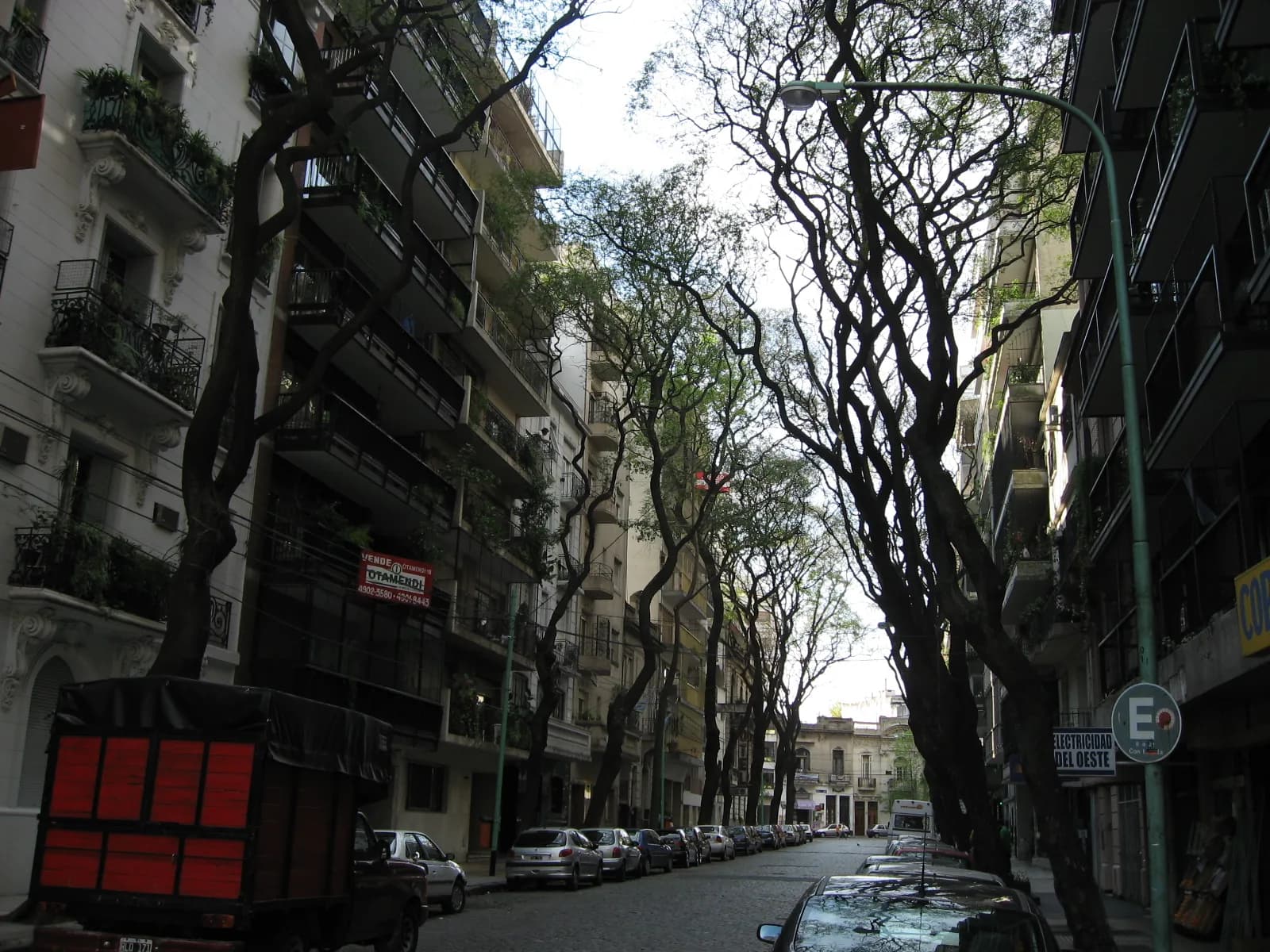
Among the changes, residents are most uneasy about Ambrosetti, a cobbled street a short distance from Hospital Durand that will begin taking the regular traffic of lines 55 and 145. Locals warn that constant bus traffic could bring noise and vibration into homes and complicate an area where ambulances also pass.[S1]
The heart of the complaint is the Ambrosetti bridge over the Sarmiento railway tracks. Built in 1993, the structure is now at the centre of the dispute because of doubts about whether it can withstand the steady passage of public transport vehicles.[S1]
What the T1 will look like
The TramBus T1 will stretch 22 kilometres and is scheduled to start operating in late 2026. Official projections put capacity at roughly 60,000 passengers a day. Toward Aeroparque, vehicles will leave Pompeya and run along Avenida La Plata, Rivadavia, Acoyte, Ángel Gallardo and Honorio Pueyrredón before joining the Metrobús on Avenida Juan B. Justo. In the opposite direction they will take Honorio Pueyrredón south to Neuquén, then Acoyte, José María Moreno and Formosa back to Avenida La Plata.[S1]
The fleet will be electric and low-floor, with ramps at every door, space for people with reduced mobility and for baby strollers, free wifi, multi-payment validators and screens showing real-time information. Smart traffic lights will extend green time for the vehicles to keep the route flowing, with the aim of lifting average speed by 30%. The trip between Pompeya and Aeroparque, now about one hour and 40 minutes, could fall to an hour once the system runs.[S1]