A tight race with continental stakes
Brazilians vote this Sunday in a runoff that will decide far more than who occupies the presidency. The contest pits Flávio Bolsonaro, a 45-year-old right-winger who surprised observers by leading the first round, against the incumbent Luiz Inácio Lula da Silva, an 80-year-old former union leader and a reference point for the Latin American left. The two were separated by 1.9 percentage points of valid votes on October 4, the narrowest first-round margin since Brazil returned to democracy, and some surveys pointed to a technical tie before the weekend.[S1][S2][S3]
Bolsonaro is seeking the office his father, the far-right former president Jair Bolsonaro, once held. Jair Bolsonaro was convicted of attempting a coup after losing his 2022 reelection bid to Lula, who is now pursuing a fourth term. On domestic policy, the younger Bolsonaro proposes economic liberalism, tax cuts and a hard line on security, while Lula advocates a larger state role, stronger social programs and expanded workers' rights.[S1]
Edgar Franco-Vivanco, a political science professor who directs the University of Michigan's Latin American Elections Center, told BBC Mundo that the vote is crucial for the region. The contrasts between the candidates, the unusual moment across the continent and Brazil's sheer size all help explain why the result is expected to resonate well beyond the country's borders.[S1]
The rightward wave and the economy
Seven presidential elections held in Latin America since 2025 have all produced right-wing winners, an unusual streak that would gain its strongest boost yet if Bolsonaro prevails on Sunday. Franco-Vivanco noted that Brazil is not only the region's most populous country but also its most important economy, so its alignment with that wave would bring significant change.[S1]
Bolsonaro shares traits with the radical right-wing leaders now governing the region alongside US President Donald Trump. His security plans include deploying soldiers against criminal groups and building maximum-security prisons modeled on the facility El Salvador's President Nayib Bukele installed for gang members, despite allegations of serious abuses there. He also proposes a fiscal adjustment with deep spending cuts, in line with Argentine President Javier Milei, who took part in launching the Brazilian's campaign, and Chile's José Antonio Kast.[S1]
Taken together, the plans could amount to the biggest effort to shrink Latin American states since the neoliberal reforms of the late last century. Bolsonaro has not explained how he would cut spending by the equivalent of 1.5% of GDP, and some economists doubt he could do so without reducing social spending even with congressional majorities. Brazilian researcher Monica de Bolle, a senior fellow at the Peterson Institute for International Economics, warned that touching the minimum wage, pensions and social programs would plunge the country into chaos, and said many people in the streets have signaled they will not accept an adjustment along those lines.[S1]
The Amazon and Mercosur
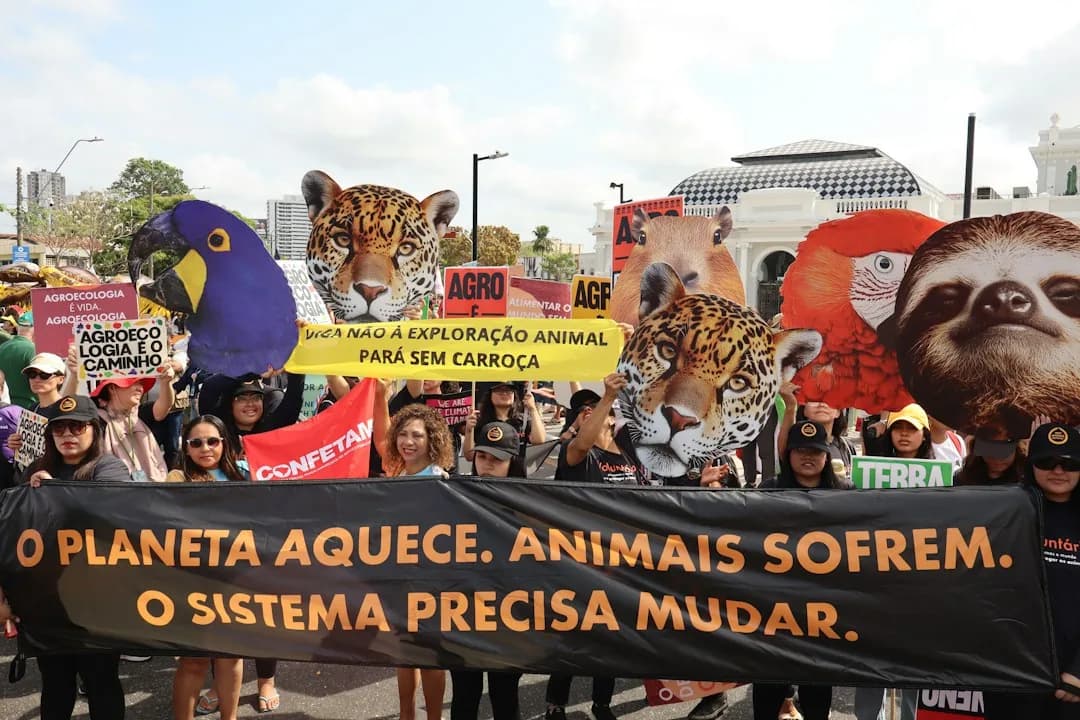
The runoff could also carry environmental consequences for the region. Experts say deforestation in the Amazon may rise under a Bolsonaro government, as it did during his father's term, when government controls were reduced and farming and mining activities met greater tolerance. Under Lula's current administration, destruction of the world's largest tropical forest fell this year to its lowest level in nearly four decades, according to official data.[S1]
The Forest Declaration Assessment, which brings together civil groups monitoring deforestation, said this month that changes stemming from recent elections in Colombia and Peru, as well as the upcoming one in Brazil, could threaten forest protection in countries that have led recent advances. De Bolle told BBC Mundo that the Amazon spans several countries, making the far right's advance relevant there because it lacks an environmental agenda compatible with preservation and energy transition goals.[S1]
On trade, Bolsonaro has suggested Brazil could free itself from Mercosur's constraints to pursue deals with countries such as the United States, as Milei did in Argentina, which belongs to the bloc along with Paraguay and Uruguay. The idea drew criticism from Lula's government.[S1]
Washington's hemispheric push
A Bolsonaro victory would also let Trump extend across almost all of South America the hemispheric dominance he has pursued since returning to the White House last year. Under his mandate, the United States has threatened and punished governments in the region, intervened in some countries' elections on behalf of its allies, attacked Venezuela to arrest its president and control its oil industry, and killed more than 230 people by bombing boats in Caribbean and Pacific waters in the name of the war on drugs.[S1]
Carolina Pedroso, a professor of international relations at the Federal University of São Paulo, said that since the start of 2025 the region has seen an increasingly violent and aggressive US presence, and that Brazil is a key piece. Brazil, like Mexico, has so far stayed outside an alliance Washington created with 14 countries in the region called the Shield of the Americas, whose first stated goal is fighting drug-trafficking organizations. Some US partners, such as Ecuador and Colombia, have accepted that US role.[S1]