Growth Beat Forecasts as Inflation Stayed Elevated
Data released on November 25 showed the US economy growing more quickly than economists had anticipated, price pressures still running hot, and household spending losing momentum. According to the Bureau of Economic Analysis's second estimate, gross domestic product rose at a 4.3% annualized pace in the third quarter, above the 3.5% consensus and the earlier 3.4% reading, and up from 2.2% in the prior quarter.[S1]
Investment, consumer outlays and government expenditure all contributed to the expansion. Real final sales to private domestic purchasers climbed 5.8%, real gross domestic income advanced 4.4%, and averaging the two measures put underlying growth at 4.4%. Corporate profits from current production grew by $206 billion, a smaller gain than the $384 billion recorded in the preceding quarter, suggesting the pace of profit growth is easing.[S1]
On inflation, the personal consumption expenditures index rose 3.8% year over year in October, up from 3.7% in September, while the core measure excluding food and energy climbed to 3.3% from 3.1%. Both headline and core prices increased 0.3% month over month, in line with expectations. Even so, the annual readings remain well above the Federal Reserve's 2% objective.[S1]
Rate-Hike Bets Climb Ahead of the FOMC Meeting
Following the inflation release, market-implied expectations of a December rate increase on Polymarket rose past 97%. The contract priced 94% odds of a quarter-point move, 2.6% for a half-point increase and 3.3% for no change, with roughly $58 million in trading volume. The Federal Open Market Committee is scheduled to meet on December 8–9.[S1]
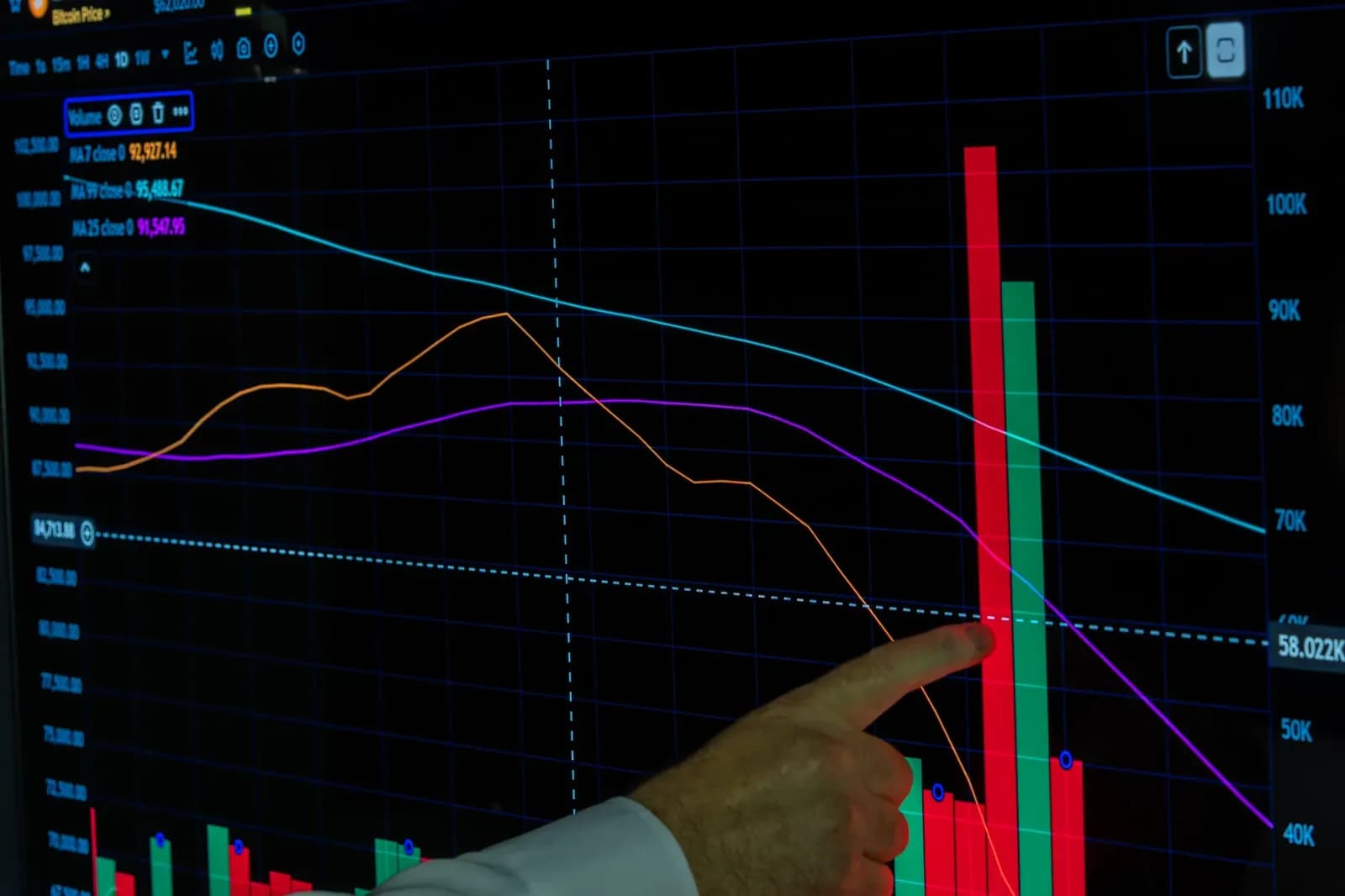
Bitcoin's price action highlights how far crypto diverges from traditional market benchmarks. According to a TradingView comparison chart, the cryptocurrency fell 36.33% across the displayed window, whereas the US two-year Treasury yield line rose 33.09% and Nasdaq-100 futures eased 0.72%. These readings represent normalized percentage changes measured from the chart's starting point, not literal Treasury yield levels or GDP figures.[S1]
Higher Treasury yields can raise the opportunity cost of holding assets that generate no income, Bitcoin among them, especially when investors anticipate rates staying elevated. That dynamic could weigh on demand for riskier holdings and make a recovery harder if the central bank keeps a hawkish stance.[S1]
What to Watch Before and After the Fed Decision
Several releases will shape expectations before policymakers convene. The ISM manufacturing report is due on December 1 and the US employment report on December 4, both ahead of the December 8–9 FOMC meeting. The November consumer price index, scheduled for December 10, will offer a further read on inflation after the decision.[S1]
A hawkish tilt from the Fed could keep Bitcoin under pressure amid tighter financial conditions. On the other side, evidence of softening demand and cooling inflation could restore expectations of future rate cuts and lend support to the cryptocurrency. Its recovery therefore remains exposed to volatility as traders weigh incoming data and the December decision.[S1]