Stadium Australia and Adelaide Oval
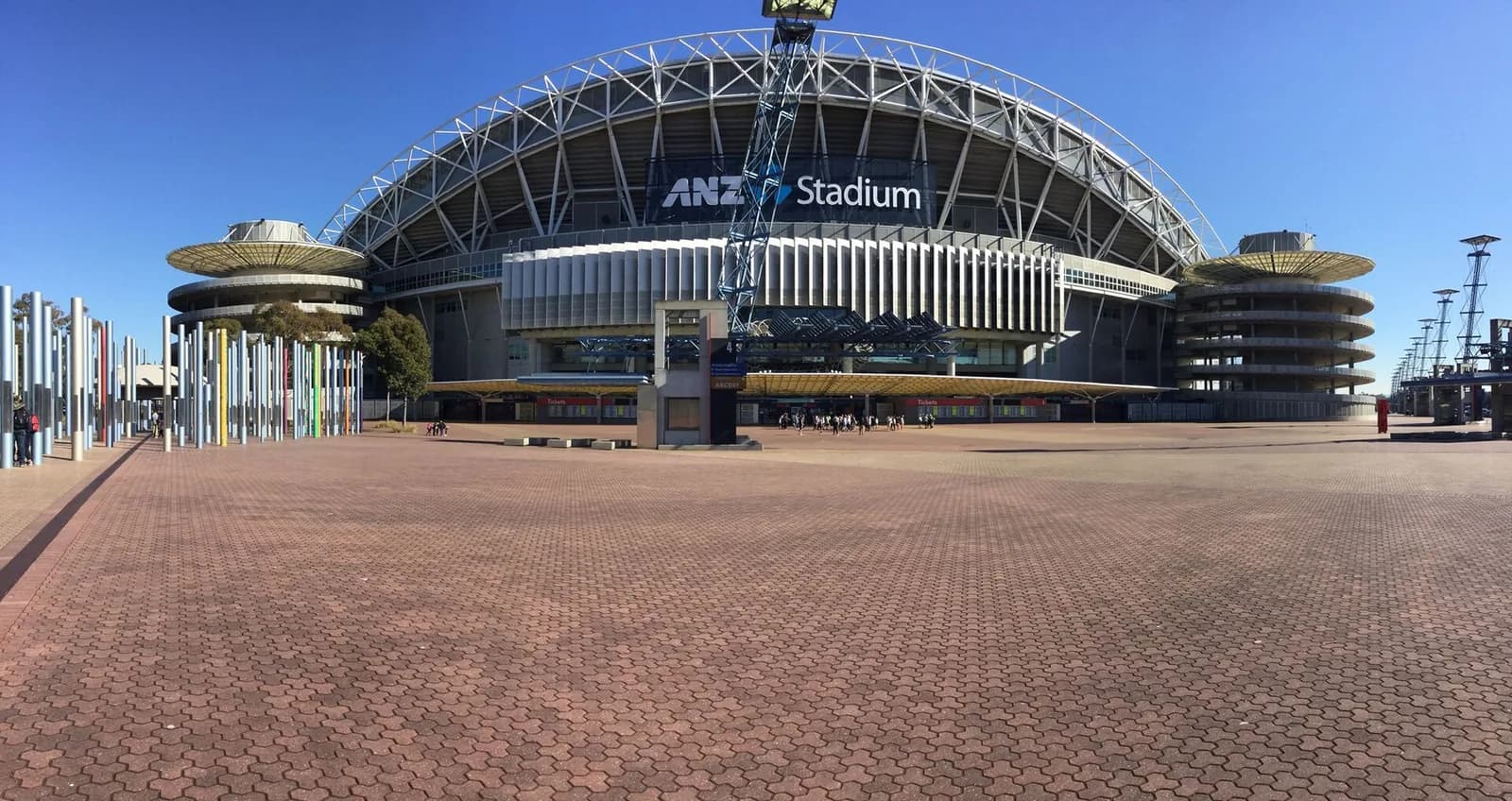
Stadium Australia in Sydney, with a capacity of 82,000, is the tournament's biggest venue. Built for the 2000 Sydney Olympics, it will host eight games, including both semi-finals and the final. It becomes the fourth stadium to stage a men's Rugby World Cup final for a second time, joining Eden Park, Twickenham and the Stade de France. The ground is home to National Rugby League clubs Canterbury Bulldogs and South Sydney Rabbitohs.[S1]
Adelaide Oval, which holds 53,000 spectators, sits on the River Torrens a short walk from the city centre. It has hosted cricket and Australian Rules continuously since opening in 1873 and was used during the 2003 Rugby World Cup. In 2027 it will stage six pool matches, including South Africa's opening defence of their title against Italy.[S1]
Melbourne, Brisbane and Perth
Docklands Stadium in Melbourne, also known as Marvel Stadium, is the only roofed venue and will keep it closed for all matches. With a capacity of 53,000, it hosted seven World Cup matches in 2003 and will have eight in 2027: six pool games and two round-of-16 matches, with France, New Zealand and Ireland scheduled to play there. Opened in 2000, it is home to several Australian Rules teams including Essendon, St Kilda and Western Bulldogs.[S1]
Brisbane Stadium, currently called Suncorp Stadium and formerly Lang Park, holds 52,500 and is nicknamed The Cauldron. It will host 10 matches: six pool games, two round-of-16 and two quarterfinals. England open against Tonga there on October 2, with Australia, Japan, Scotland and South Africa also playing in Brisbane. The ground is home to the Queensland Reds, Brisbane Broncos and Brisbane Roar.[S1]
Perth Stadium, with a capacity of 60,000, opened in 2018 on the Swan River. Also known as Optus Stadium, it is Australia's third-largest venue after the Melbourne Cricket Ground and Stadium Australia. The tournament kicks off there on October 1 when Australia face Hong Kong. It will also host four other pool matches and two round-of-16 games, with New Zealand, Ireland and the United States among the teams. It is primarily used for Australian Rules and cricket.[S1]
Sydney Football Stadium, Townsville and Newcastle
Sydney Football Stadium, capacity 42,500, opened in 2022 at Moore Park, replacing the old Allianz Stadium on a site that has hosted sport since 1903. Next to the Sydney Cricket Ground, it is used for football, rugby league and rugby union, and as a concert venue. It will host three pool games and two round-of-16 matches.[S1]
North Queensland Stadium in Townsville, with 25,000 seats, opened in 2020 and makes its Rugby World Cup debut. Its roof design is inspired by the tropical pandanus plant. The Wallabies have played there several times recently, and the ground will host four pool matches featuring Tonga, Canada, Georgia and Spain. It is home to the North Queensland Cowboys rugby league team.[S1]
Newcastle Stadium, better known as McDonald Jones Stadium, holds 30,000 and is a two-hour drive north of Sydney. Opened in 1970, it is mainly used for rugby league and football and has hosted games at the 2008 Rugby League World Cup and the 2015 Asian Cup. International rugby union has grown in popularity there, including a match during the 2013 British and Irish Lions tour and Ireland versus Japan this year. Four pool games will be played in Newcastle, with Japan returning along with Fiji, Italy and Samoa.[S1]