AI stocks lead a volatile session lower
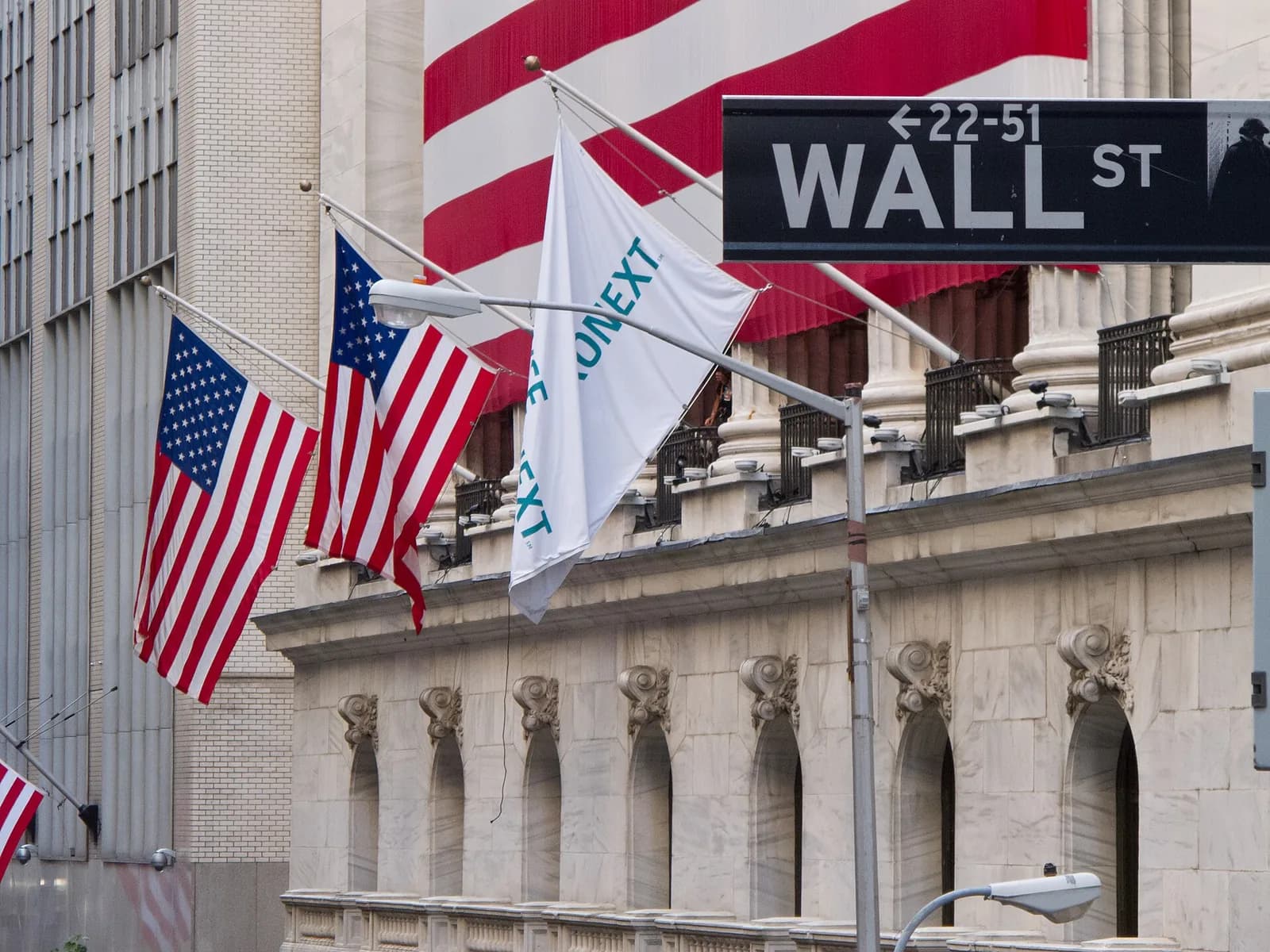
Wall Street opened Wednesday with a broad decline concentrated in companies tied to the artificial intelligence boom. The Nasdaq 100 fell far enough at one point to enter bear market territory, the threshold reached when an index loses at least a fifth of its value from its latest peak, while the S&P 500 dropped as much as 3.2% early on.[S1]
Mood improved as the day wore on. Anthropic, the AI developer that completed a record-setting initial public offering the previous week and then lost ground across three consecutive sessions, moved back above its $83 offering price shortly after noon. The Nasdaq Composite was down about 1.5%, the S&P 500 had trimmed its loss to 0.5%, and the Dow was roughly flat, just above the 50,000 mark.[S1]
Nvidia stayed among the heaviest drags on major indexes. The chipmaker had jumped 31% on Monday after word that Jensen Huang, its recently departed chief executive, would return, but it was still down about 7% on Wednesday, a second straight losing day. Huang's comeback had briefly calmed investors worried that large AI firms and the enormous sums they borrow and lend might stop expanding.[S1]
Monday's trading brought the biggest one-day gain since April 2025, as the Nasdaq 100 climbed 6.8% and the S&P 500 rose 4.7%. Over the weekend, President Donald Trump had urged Nvidia's board to reinstate Huang, who had been involved in several extramarital affairs, one of them with a woman suspected of being a Chinese spy; the board had until then insisted it would not do so. On Monday, Trump said he likely stepped in out of concern that the market would sell off in the week following Huang's exit, partly because investors were anxious about the broader AI sector.[S1]
Tariffs return to the foreground
Deutsche Bank strategists wrote early Wednesday that the risk-off tone had returned over the previous 24 hours as Monday's tech rebound lost steam. They added that the latest tariff headlines did not help. Before Monday's rally, stocks had endured weeks of selling that pushed the Nasdaq 100 into correction territory on Friday, defined as a 10% decline from its last high.[S1]
Semiconductor shares tracked by the Philadelphia semiconductor index have fallen more than 40% since their June peak, and stocks of data center and computer memory manufacturers are down 60% over the same stretch. Anthropic's post-IPO slide added to the damage in AI sentiment. Trading on Wednesday may also have been affected by the approaching Thanksgiving holiday, since U.S. markets were set to close Thursday and run only a half session Friday, making investors more inclined to cut large or risky positions before an extended break.[S1]
The Trump administration unveiled a new round of tariffs on the United States' leading trading partners, including the European Union, China, Japan and more than a dozen others. ING senior trade economist Inga Fechner wrote that the legal basis for tariffs keeps shifting while U.S. protectionism becomes harder to unwind. The prospect of renewed trade tensions and another inflation spike weighed on equities, and a Chinese Commerce Ministry spokesperson criticized the duties before the formal announcement, describing trade and tariff wars as serving neither side and calling the move political manipulation.[S1][S2][S3][S4][S5][S6][S7][S8]
Sarah Bianchi, Evercore ISI's chief strategist for international political affairs, noted in a written commentary that the administration's plans to issue additional tariffs may have caught some investors off guard. Even so, she said, when it came to duties stemming from the Section 301 overcapacity probe, the real uncertainty had always concerned timing rather than whether they would be imposed at all.[S1]
Inflation moves further from target
The Federal Reserve's preferred inflation measure drifted further from its 2% objective. The personal consumption expenditures index stood at 3.8% for October, up from 3.6% in September, and core inflation, which strips out food and energy, rose to 3.3% from 3.1% the month before. The core increase matters because it can signal that higher gasoline prices stemming from the Iran war are spreading through the rest of the economy.[S1]
The reading also makes a rate increase more likely at the Fed's next meeting, which ends with a decision on Dec. 9. Fed governor Christopher Waller said in a CNBC interview that he was very concerned about inflation, that it was heading the wrong way and spreading out, and that the central bank needed more aggressive action such as a 0.50% hike rather than the usual 0.25%, adding that policymakers might need to shock people. A hike would bring complications of its own, given that trillion-dollar tech companies borrow hundreds of billions.[S1]