The question that organizes worry
A reply that never comes. A decision that depends on someone else. Something that happened and that we keep replaying as if we could still change it. Some worries require action; others keep us busy without bringing us closer to a solution.
The useful question is: what part of this situation can I address and what part will I have to go through without guarantees? Recognizing that difference can guide the next step, even if the discomfort does not disappear immediately. The eight thinkers that follow did not share a single philosophy; the everyday applications are an editorial reading of their works, not textual quotes or advice they formulated to treat anxiety.
Epictetus: distinguishing what depends on you
Epictetus held in the Enchiridion that some things are in our control and others are not. In our control are opinion, desire, aversion and, in a word, our own actions. Not in our control are the body, property, reputation and command. What depends on us is free by nature; what does not is weak and belongs to others.[R2]
In the Discourses, Epictetus takes the distinction into the realm of coercion: no one can force us to assent to what is false, and the impulse to act is ours, even if the body can be hindered. Also in the Discourses he states that when we do something wrong we should ascribe the blame to the judgment from which the action comes, and not to slaves, neighbors, wife or children. Of those judgments we ourselves are the masters, not external circumstances.[R3][R4]
Today we can apply that distinction with a nuance: influencing something is not the same as controlling it. You can prepare for an interview, but the hiring also depends on others. You can care for a relationship, but you cannot decide for both people. Nor do you always choose the first emotion that appears; the practice can begin afterward: recognize it and decide what to do next. To try: write down what action depends on you and what result you cannot guarantee.
“Some things are in our control and others not.”
— Epictetus, Enchiridion
“Of these judgements we ourselves, and not externals, are the masters.”
— Epictetus, Discourses

Machiavelli, Nietzsche and Freud: prepare, accept and listen
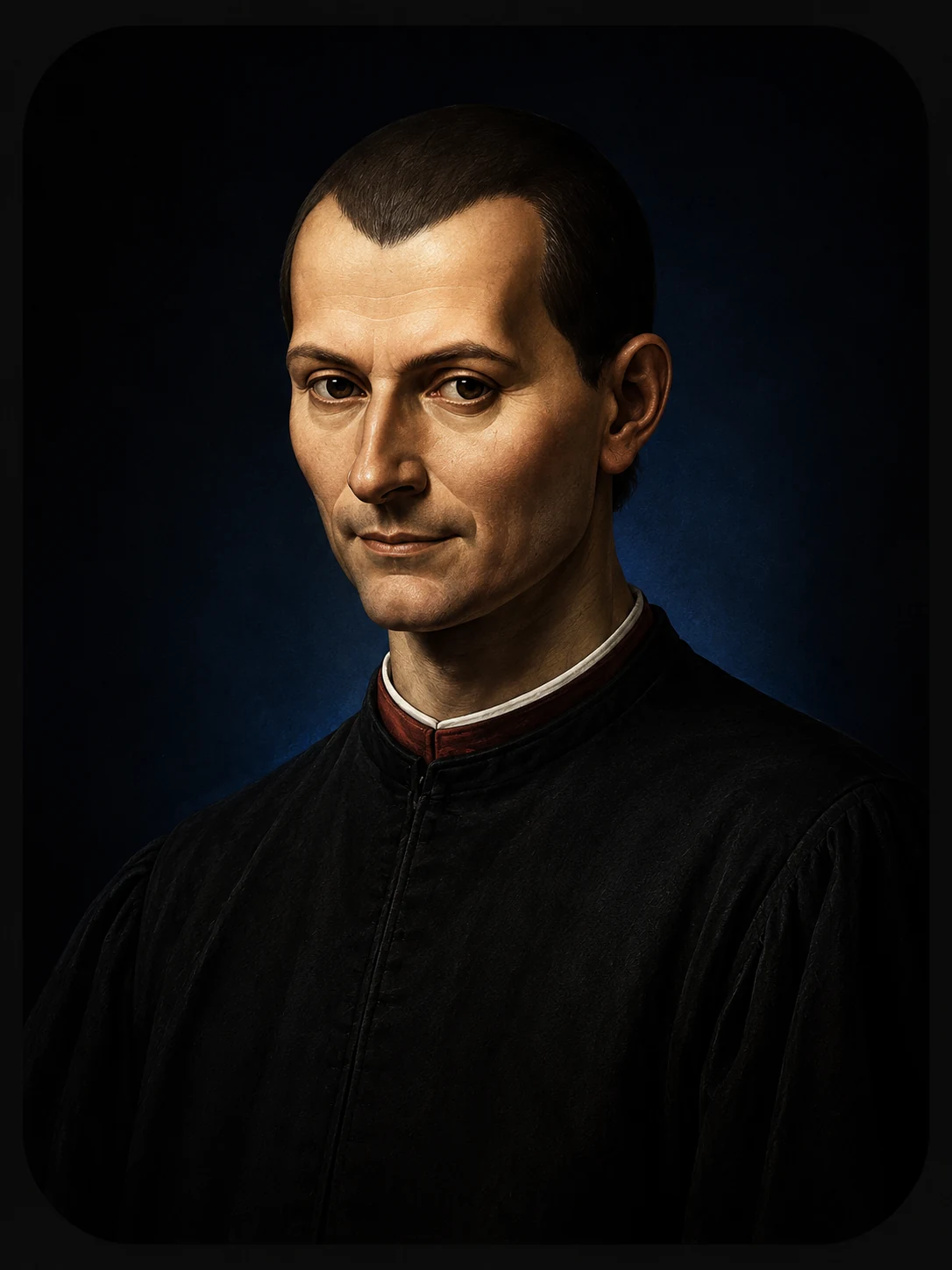
In chapter XXV of The Prince, Machiavelli compares fortune to a river that can overflow. When it is calm, it is still possible to build defenses. Uncertainty leaves room for preparation. Brought to everyday life, this invites replacing some mental loops with concrete measures: organizing documents, asking for information, rehearsing a conversation or preparing an alternative. But the plan needs a limit: if you review it without new data, ask yourself what is really left to decide.
In section 276 of The Gay Science, Nietzsche proposes amor fati: an aspiration to affirm life, including what is necessary, instead of living in permanent accusation of it. It is a strong philosophical demand. As a more modest everyday application, we can ask what we want to build from a reality that already exists. This does not oblige you to be grateful for a loss or to justify an injustice: you can mourn what happened and, when possible, choose a next step.
In his late theory, Freud described a form of anxiety that works as a danger signal: it anticipates a feared situation and mobilizes defenses. It is a historical explanation from psychoanalysis, not proof that every worry has a hidden cause. That perspective opens a question: what do I fear losing? Exploring it requires curiosity, not an improvised diagnosis. Feeling fear also does not prove that the feared outcome will occur.
Wilde, Leonardo and Montesquieu: the gaze of others, facts and limits
In The Soul of Man under Socialism, Oscar Wilde questions the authority of public opinion over individuality and artistic creation. His critique illuminates those worries that revolve around pleasing, appearing successful or avoiding any negative judgment. Listening to criticism can be valuable, especially when it points to concrete harm, but trying to secure everyone's approval is an endless task. It is worth distinguishing between an observation that deserves a response and someone else's expectation that you do not want to adopt.
In his notebooks, Leonardo da Vinci defends experience as the foundation of knowledge and informed judgment. We can transfer that method, by analogy, to the stories we build when information is missing. He did not reply describes a fact; he is angry with me proposes an explanation; I am going to lose the relationship anticipates an outcome. The three statements have different support. Separating them lets you identify what you know and what you could find out, without turning every silence into a certainty.
In The Spirit of the Laws, Montesquieu argues that power needs checks to prevent abuse. His argument is about political institutions, but the everyday analogy has a clear limit: some problems require changes in conditions, in addition to personal work. Faced with confusing work demands or abusive behavior, it may be necessary to clarify responsibilities, set limits or seek support. Accepting that you do not control another person does not mean granting them unlimited authority over your life.
Beccaria and an exercise to start
In On Crimes and Punishments, Beccaria defends proportionality between crimes and punishments. It is a thesis about criminal justice, not about mental health. As an analogy, it lets us review the harshness with which we judge our mistakes: are we treating a concrete mistake as if it proved that our whole life is a failure? Responsibility may call for an apology, a repair or a change in behavior; unlimited personal condemnation contributes little to deciding how to correct what happened.
Guidelines from the British health service, the NHS, recommend writing down worries, distinguishing manageable problems from hypothetical possibilities and making a concrete plan when there is something to do. You can start like this: name the worry in a specific sentence; separate facts from scenarios; choose a possible action, such as asking for clarification or scheduling a follow-up; define when you will act or review the issue; and acknowledge what remains open. When the worry returns, remember the plan and return to what you were doing. Its reappearance does not mean you have failed.
Understanding these ideas does not automatically remove fear. If worry interferes with your rest, your work or your relationships, or the strategies you try do not help, it is advisable to consult a mental health professional. Philosophy can offer valuable questions; you may also need support to work through what those questions awaken. You can start with something small: attend to the part that is yours and allow the rest to remain unresolved for a while.