A historic low for the party of Mandela
The African National Congress took 30.76% of the vote in the local elections held on Wednesday 4 November, the Independent Electoral Commission announced on Sunday, giving the party 3,246 municipal seats. It is the ANC's weakest performance since the end of apartheid, and it extends a decline that has run for roughly fifteen years. The party, founded in 1912, led the struggle against the racial segregation system imposed by the white minority between 1948 and 1994 and came to power in that final year under Nelson Mandela, the country's first Black president. In the first democratic elections it drew close to two thirds of the vote. It fell to 45.59% in the 2021 municipal ballot, then to 40.18% in the 2024 general election, when it lost its absolute majority for the first time and began governing in a national unity arrangement with the Democratic Alliance and other forces.[S1][S2]
The centre-right Democratic Alliance, the ANC's partner in the national coalition, came second with 24.64% and 1,695 municipal seats. The uMkhonto weSizwe party linked to former president Jacob Zuma reached 9.76%, putting it third, while the Economic Freedom Fighters took 6.22%. More than 29 million people were registered to choose among 136,790 candidates for the councils of 257 municipalities. Turnout was about 52%, up from 45.7% in 2021.[S1][S2]
Ramaphosa accepts the verdict as his party absorbs the blow
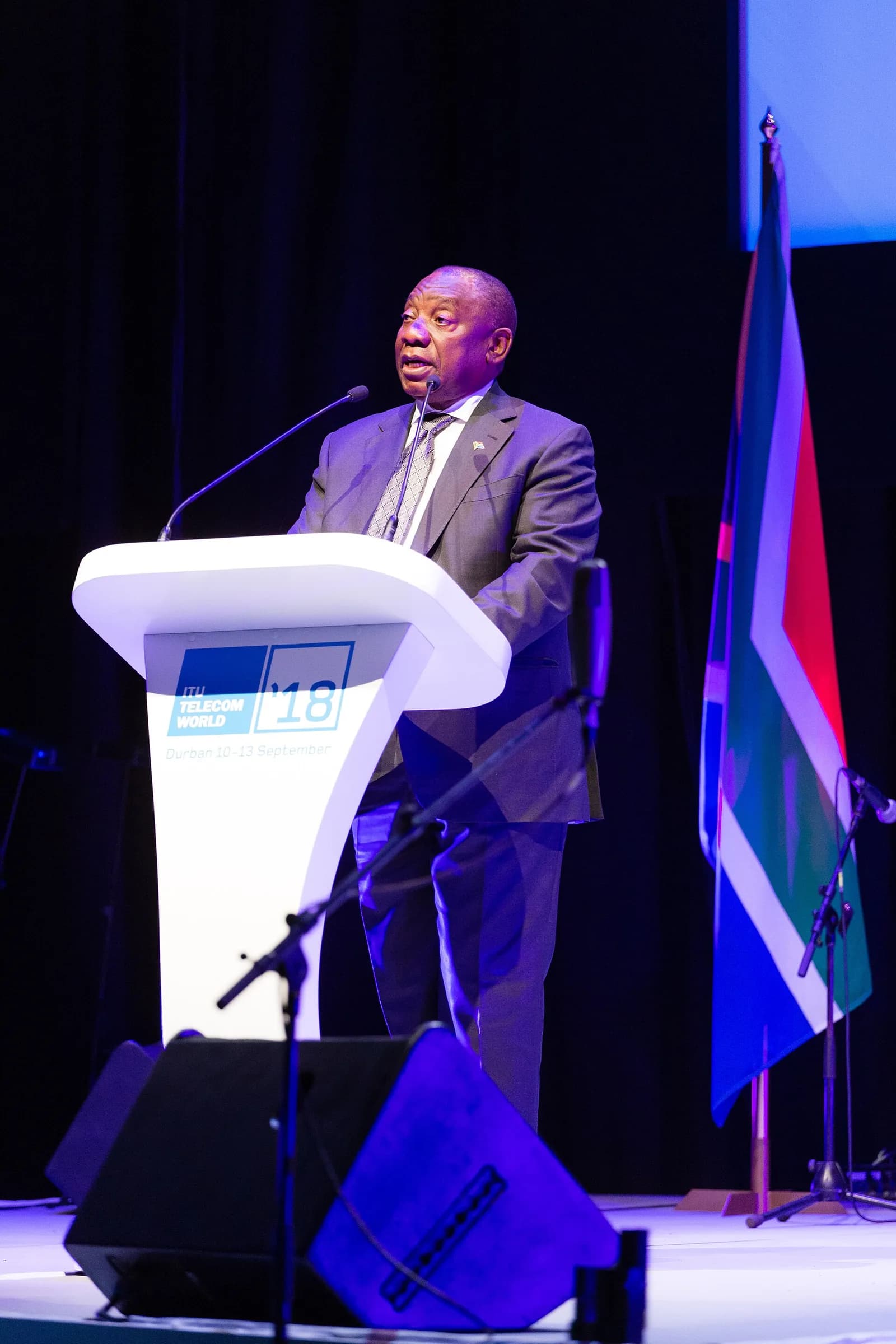
Speaking in Johannesburg at the ceremony where the commission presented the definitive data, President Cyril Ramaphosa said the people had spoken and that their verdict had to be respected. He described the result as a sign of the enduring strength of South African democracy and of the sovereign right of its people to choose their representatives, and he expressed pride in the country's multiparty character. In his address he pointed to households struggling with the high cost of living and to young people without work, saying that too many people, especially the young, remain unemployed. The official jobless rate stood at 33.6% in the second quarter, according to Statistics South Africa, and reached 47.4% among those under 35. Water shortages and power cuts were among the leading themes of the campaign.[S1][S2]
Fikile Mbalula, the party's general secretary, acknowledged on Saturday that the outcome had been very damaging for the ANC, describing it as catastrophic for the movement once led by Mandela. He said the party would not plead for posts once coalition negotiations begin, and argued that when voters say the party has fallen short, the honest response is not to argue with them but to go home and put its own house in order. Ramaphosa did not address the result in his remarks, though on Monday he had conceded that failures in municipal administration had helped erode public confidence in democratic governance. The Sunday Times reported, citing sources on the party's national executive committee, that Ramaphosa and other leaders had considered taking responsibility and stepping down from their positions in the party leadership. Mbalula denied the report and dismissed it in blunt terms. Ramaphosa's term as ANC president ends in 2027.[S1][S2]
Louw Nel, an analyst at Oxford Economics Africa, read the higher turnout as evidence that ANC voters went to the polls to choose other options rather than staying at home.[S1]
A fragmented map and the bargaining ahead
The Democratic Alliance won an outright majority only in Cape Town, with 56.42%. In the other seven metropolitan areas no party crossed the threshold. The DA was the largest party in Johannesburg with 34.79% against 20.25% for the ANC, in Tshwane with 34.37%, in Ekurhuleni with 30.68% and in Nelson Mandela Bay with 44.17%. The ANC finished first only in Buffalo City, at 41.93%, and in Mangaung, at 33.91%, without a majority in either. uMkhonto weSizwe led in eThekwini, which includes Durban, with 38.29%.[S1]
In Johannesburg, where the DA fell well short of the seats needed to govern alone, ActionSA, the party of former mayor Herman Mashaba, took 16.27%. With the ANC in second place, any majority in the country's most populous city requires an agreement between at least two forces. The number of municipalities needing coalitions has more than doubled since 2021, a sign of how fractured the electorate has become. The DA said it would open talks with parties committed to clean government, the fight against corruption and the rule of law, and it aims to become the country's leading party in the 2029 general election. Willies Mchunu, a uMkhonto weSizwe leader, ruled out a pact with the DA. Under the Municipal Structures Act, councils must hold their first sitting, at which they elect their leadership, within 14 days of the results being proclaimed.[S1][S2]