A century-old puzzle solved
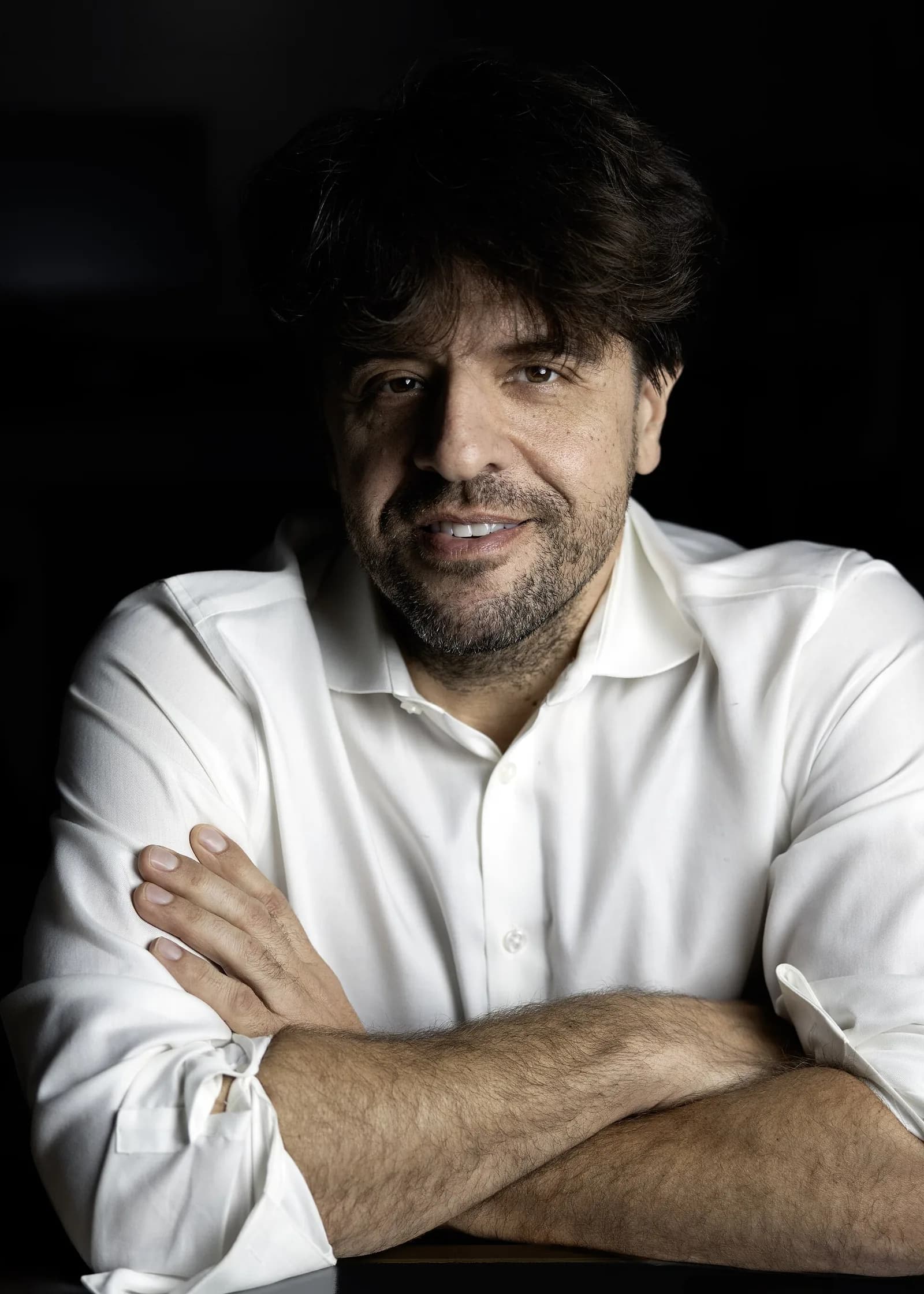
The Royal Swedish Academy of Sciences announced on Wednesday that the 2026 Nobel Prize in Chemistry goes to Henri B. Kagan, affiliated with Université Paris-Sud in Orsay, France, and Kenso Soai, 95, of Tokyo University of Science in Japan. The committee recognized their discovery of nonlinear effects and autocatalysis in asymmetric organic synthesis, a process that allows chemists to steer reactions toward producing one specific mirror-image form of a molecule. The two will share a prize of 12 million Swedish kronor, equivalent to about US$1.192 million.[S1][S2][S4]
The Nobel committee explained that molecules used by all living beings, such as the amino acids that make up proteins, are chiral: they exist in two versions that are mirror images of each other. Yet the building blocks of life on Earth use only one of those versions. Kagan and Soai provided a solution to the mystery of why life favors one mirror-image molecule over the other, a property known as homochirality. Heiner Linke, chair of the Nobel Committee for Chemistry, described their chemical reactions as spectacular.[S1][S2]
Why chirality matters for medicine
In organic chemistry, chirality refers to the existence of two symmetric versions of a molecule, each with different properties. This is especially important in drug development: one version of a molecule may have disease-fighting properties, while the other may produce no effect at all. The Nobel committee stated that the discoveries have played a decisive role for chemists designing reactions for the manufacture of pharmaceuticals. The control of a molecule's three-dimensional structure is fundamental to the pharmaceutical industry, because different forms of the same molecule can have different biological effects.[S1][S2][S3]
Kagan's research opened the way to understanding how to control asymmetric synthesis, a technique that allows one of those molecular forms to be obtained selectively. Soai conducted decisive experiments with autocatalytic reactions, in which the product of a reaction itself helps drive the formation of more product. His investigations showed that small initial differences can be amplified during a chemical reaction until one of the two mirror-image forms clearly dominates. The so-called Soai reaction is named after his experiment.[S2][S3]
Life's preference for one hand
The chemistry of life is what scientists call homochiral, a term derived from the Greek words for same and hand. Some molecules, such as amino acids, exist in two variants that are mirror images of each other, just like hands. However, only one of them is found in the proteins of our cells; the other rarely appears in life. The same is true for the sugar molecules that form part of our DNA: two distinct mirror images exist, but life uses only one. Amino acids take the form called L, and sugars take the D form. The mirror forms of those molecules (D amino acids and L sugars) exist, but life does not use them.[S2]
For a long time, chemists have wondered how this homochirality originates, and Kagan and Soai received the Nobel Prize in Chemistry for finding the solution to this enigma and completing the puzzle. The problem was that researchers could not choose in the laboratory which type of molecule they would obtain. When experimenting with chemical reactions capable of generating two mirror-image molecules, they always obtained equal proportions of both in their test tubes. The Nobel committee's recognition thus focuses on a branch of chemistry that connects fundamental questions about the origin and functioning of matter with concrete applications in the production of new compounds and medicines.[S2][S3]
Prize week continues
In the 2025 edition, the chemistry prize was awarded to Susumu Kitagawa, Richard Robson, and Omar M. Yaghi for the development of so-called metal-organic frameworks. This week's prizes will continue on Thursday with Literature and on Friday with Peace, while the Sveriges Riksbank Prize in Economic Sciences in Memory of Alfred Nobel will be announced next Monday. Three Argentine writers appear among the names generating expectations ahead of the 2026 Nobel Prize in Literature announcement, scheduled for Thursday: César Aira is among the five best positioned in the betting market, while Mariana Enríquez and Samanta Schweblin also figure among the possibilities.[S1][S3]