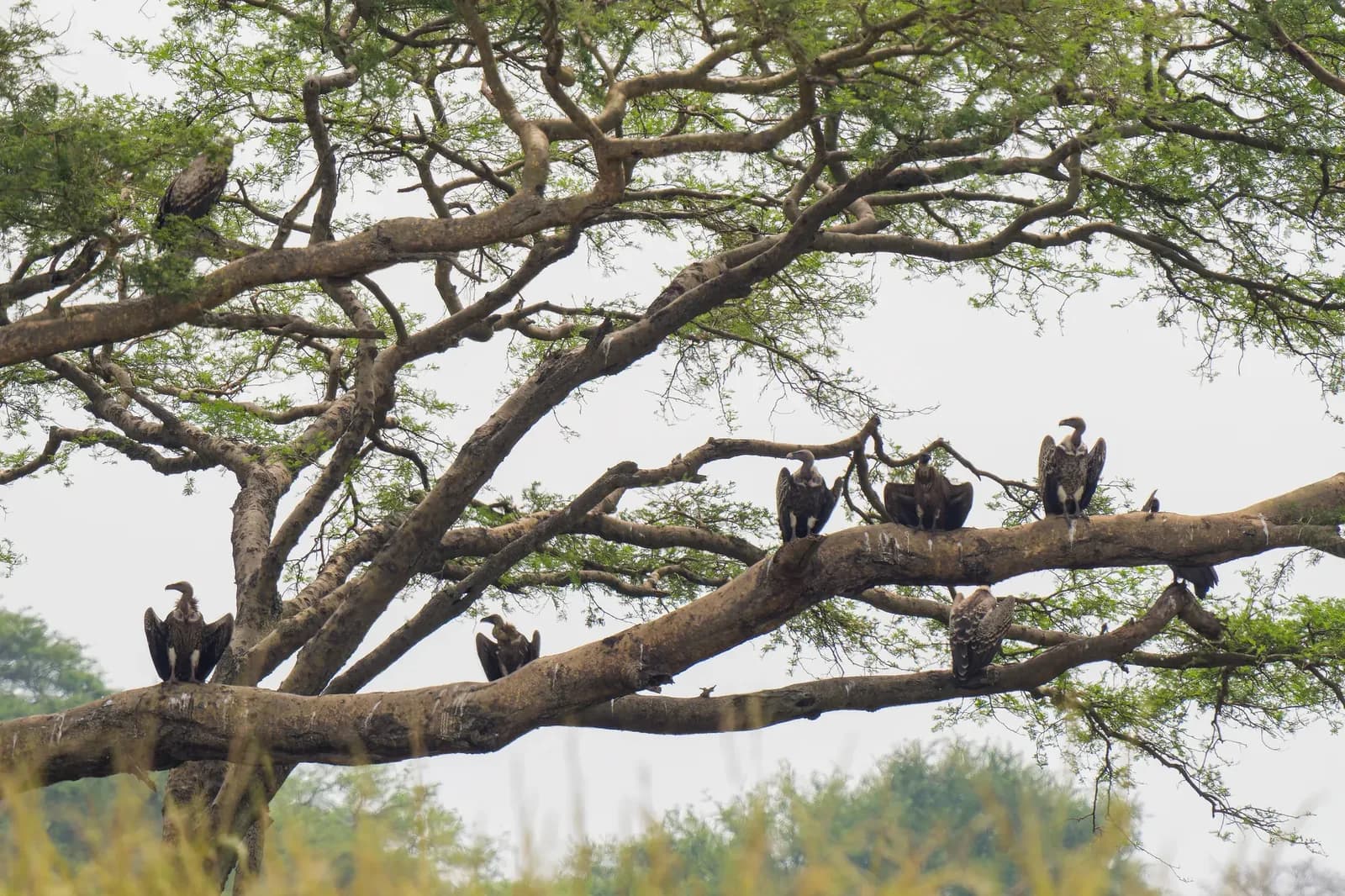
A Sacred Haven for Vultures
In Awka-Etiti, a town in southeastern Nigeria, a sacred forest surrounds a shrine dedicated to the deity Nguma. Locals believe the ancient tree at its heart has protected the community for centuries, and the site remains spiritually significant. Despite being a largely Christian community, some residents still follow traditional practices where vultures play a key role.[S1]
In Nigeria, Chukwuemeka Igwe, known as the King of Vulture, notes that indigenous communities do not hunt vultures. They make animal sacrifices at shrines, which attract these birds. Locals believe that if vultures do not appear after a sacrifice, it signals a problem in the spiritual realm, making them a sign of the deity's acceptance.[S1]
The Critical Role of Vultures
Scientists highlight the crucial role vultures play in ecosystems, as they rapidly consume dead animals, preventing the spread of diseases like anthrax and rabies. Their unique stomach acids enable them to safely eat infected carcasses, thereby protecting the environment from harmful bacteria.[S1]
NCF conservation biologist Stella Egbe warns that where vultures have collapsed, zoonotic diseases have risen. Without vultures, ecosystems lose a natural defense against disease. Rapid urban growth across Africa has also destroyed many tall trees where vultures nest, contributing to their decline.[S1]
Threats and Conservation Efforts
In West and southern Africa, vulture populations are declining due to their use in traditional medicine and Vodun practices. The high demand has led to a significant increase in price, with dead vultures now selling for up to 200,000 naira in Nigeria. This, combined with the targeting of eggs and nests, poses a significant threat to the species' survival.[S1]
African vulture populations have drastically declined, with a 80% to 97% drop over five decades. The species' slow reproduction rate, with adults reaching maturity at five to seven years and producing one chick every one to two years, exacerbates the issue. Seven species are now Endangered or Critically Endangered, and incidents like the 2020 discovery of over 2,000 dead hooded vultures in Guinea-Bissau highlight the severity of the crisis.[S1]
In Africa, poisoning accounts for approximately 60% of vulture fatalities, as reported by BirdLife International. Concerned by the decline in vulture numbers due to hunting by outsiders, Igwe now educates the public about the benefits of vultures in human life through visits to markets and public areas.[S1][S2]
Through six years of collaboration with the NCF, Igwe has successfully rallied community leaders and security teams to safeguard the birds from external threats, resulting in the establishment of local bylaws for their protection. The number of vultures has significantly increased, from approximately 20 in 2017 to over 160, as recorded by volunteer monitors.[S1]