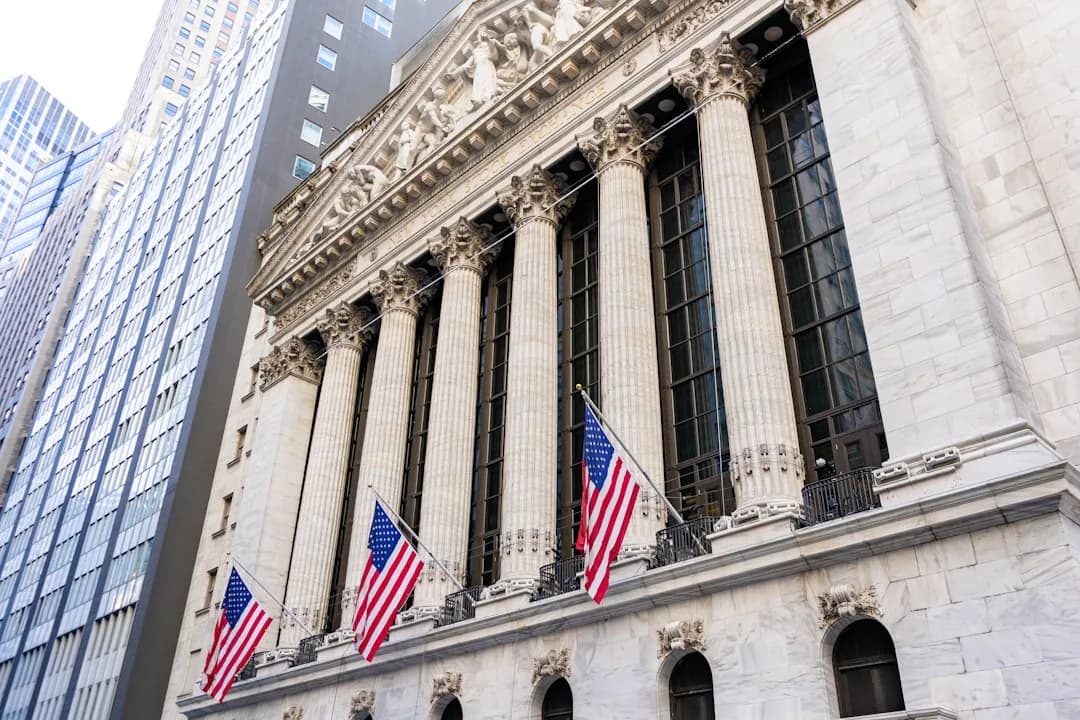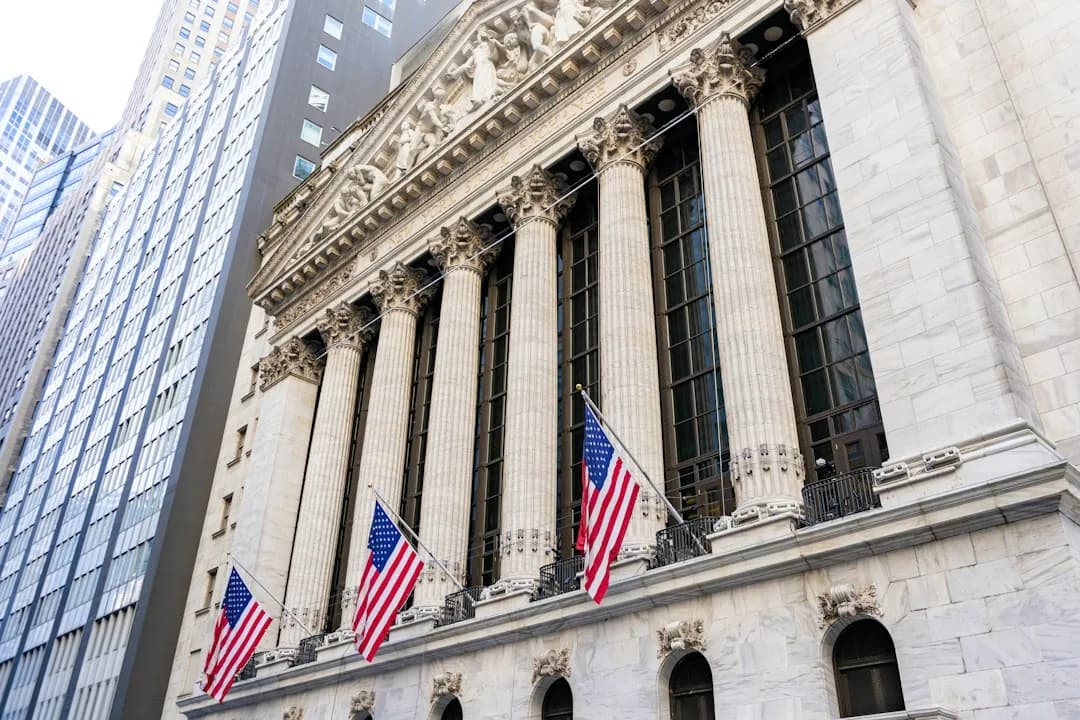
Wall Street retreats as yields surge
US equities ended Monday in the red, with the broad S&P 500 down 0.8 percent, the tech-heavy Nasdaq off 0.9 percent and the Dow Jones Industrial Average 0.7 percent lower. The session was dominated by a sharp rise in Treasury yields, which reached multiyear peaks. The 10-year note touched 5.27 percent, its highest since mid-June 2007, while the 30-year bond hit its highest since May 2004. The 2-year yield, often seen as a gauge of expected central bank rates, climbed to its highest since 2024. Jose Torres of Interactive Brokers described the Washington-Tehran standoff as roiling markets, with soaring yields and a geopolitical premium on oil worrying investors that the Fed might tighten policy to contain inflation.[S1][S2]
European bourses were sluggish: London and Frankfurt each closed 0.1 percent lower, while Paris finished flat. In Asia, results were mixed, with Tokyo's Nikkei down 0.7 percent, Hong Kong's Hang Seng up 0.5 percent and Shanghai's Composite down 1.7 percent. The mixed session followed news that Washington and Beijing had extended their trade truce late last week. Currency markets saw the euro weaken to $1.1367 from $1.1391 on Friday, the pound edge up to $1.3252 from $1.3247, and the dollar rise to 157.42 yen from 157.28 yen. The euro also slipped against the pound, to 85.78 pence from 86.00 pence.[S1]
Oil swings on conflicting signals
Oil benchmarks advanced, yet both settled far beneath their intraday peaks. Brent crude from the North Sea added 0.9 percent to close at $105.28 per barrel, and West Texas Intermediate edged up 0.2 percent to $92.60. Brent had earlier surpassed $108 before pulling back following reports that mediators intended to hold separate talks with American and Iranian officials. Iran's semiofficial ISNA agency minimized the importance of those discussions, stating that Foreign Minister Abbas Araghchi would see mediators but that no US delegates would attend. Additional reports indicating President Donald Trump might offer Iran economic incentives to revive negotiations also tempered oil's climb; NBC News said it could not verify those accounts.[S1][S2]
The energy supply crunch has additionally pushed up European natural gas prices, and UK average diesel costs hit an all-time peak just below two pounds per liter, per the RAC motoring group. Gold, in contrast, has retreated from its summer peaks because a firmer dollar makes the metal pricier for holders of other currencies, according to AJ Bell investment director Russ Mould. The Strait of Hormuz stays at the heart of the conflict: last week at the UN General Assembly, Iran put forward a proposal to pause hostilities that would involve reopening the strait. That waterway is crucial for worldwide oil and gas shipments, and the Iran-backed Houthis have taken control of Yemen's whole Red Sea coastline, including the Bab al-Mandab Strait, another essential shipping route.[S1]
Diplomatic impasse keeps markets on edge
On Saturday, Trump openly dismissed Iran's newest plan to end the war, yet he told Axios on Sunday that he anticipated negotiations would pick up again within days. Iran's state news agency IRNA reported Monday, citing an unnamed source close to the UN delegation, that no additional talks with the US had been arranged. Nevertheless, Iran's state broadcaster indicated Araghchi would meet with Qatari representatives, with the agenda expected to center on messages relayed to the United States via intermediaries, especially concerning Iran's terms for reopening the Strait of Hormuz. These mixed signals left traders unsure about what comes next.[S1][S2]
Investors are growing more uneasy about the sharp climb in bond yields. Ed Yardeni, who heads Yardeni Research, wrote on Saturday that this year's big jump in oil prices had not derailed the global economy, but he asked whether fast-rising interest rates might. He further cautioned that elevated rates worsen the picture for sizable government deficits around the world. Goldman Sachs analysts observed that financial conditions have barely shifted since January, since the large increase in interest rates has been almost canceled out by stronger equity prices. Even so, this year's stock gains have been narrow: the S&P 500 is up just over 12 percent, while information technology has risen 27 percent and energy 38 percent, with healthcare and industrials trailing.[S2]