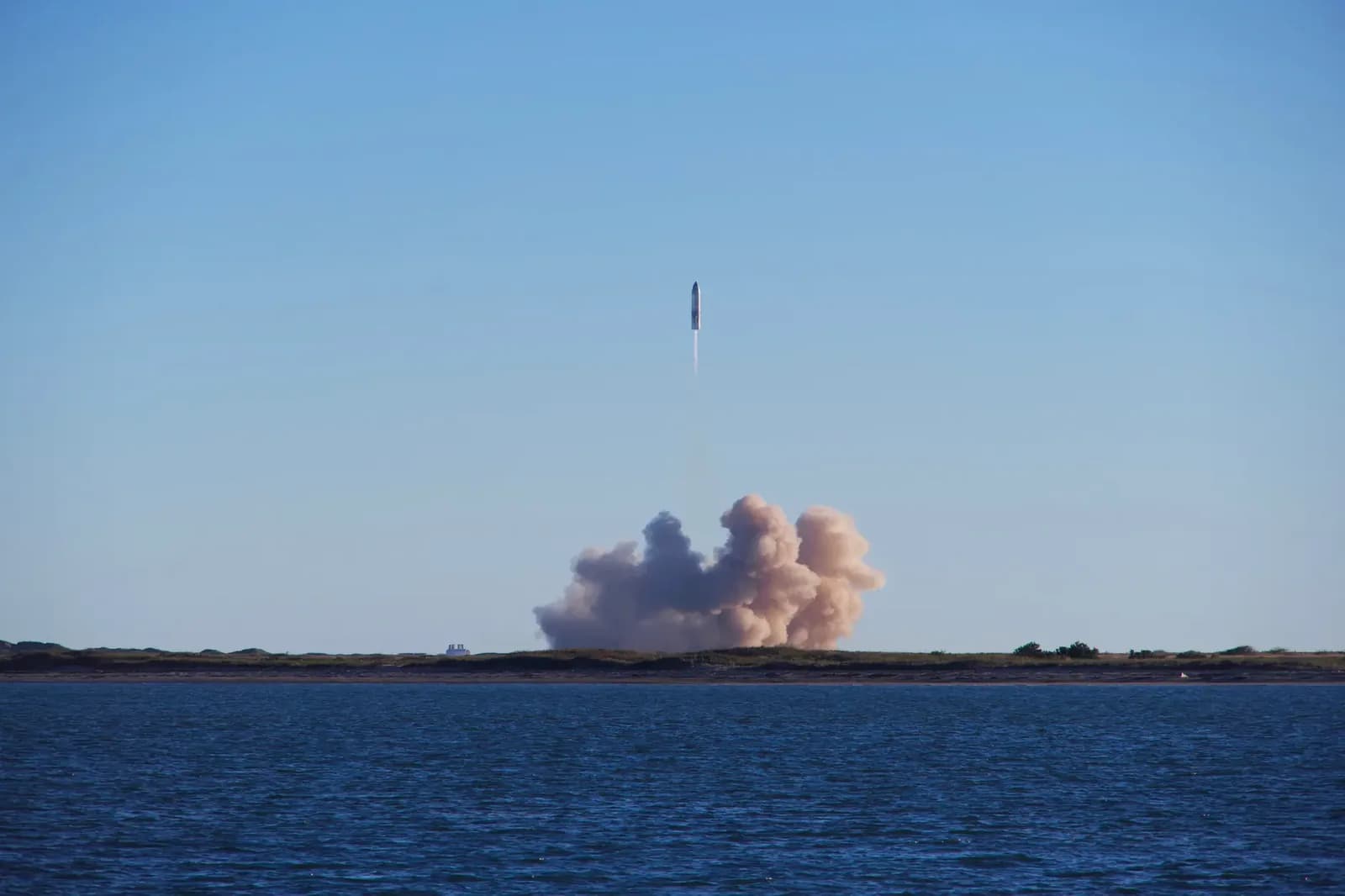
A launch from Tanegashima toward the Martian system
A Japanese-led space mission is scheduled to lift off on Monday from the Tanegashima Space Center at 0441 local time on 20 October, which corresponds to 2041 BST on 19 October. The spacecraft will leave Japan and is expected to reach Phobos, one of the two small moons orbiting Mars, in August 2027. The project is known as the Mars Moons Exploration mission, or MMX, and is run by the Japanese Space Agency. If the plan works, it would mark the first occasion on which material from Mars or its moons has been carried back to Earth for examination in laboratories.[S1][S4][S6][S7]
The inner Solar System holds only three moons: Earth's own, plus Phobos and Deimos around Mars. Both Martian bodies are small and oddly shaped, resembling lumpy potatoes rather than spheres. Phobos measures roughly 20km (12 miles) across, while Deimos is about 10km (six miles) wide. On arrival in the vicinity of Mars, the MMX craft will first examine Deimos before turning its attention to Phobos.[S1]
Landing a rover beside a giant planet
The mission intends to place a small rover on Phobos to survey the terrain, a task the team describes as unusually difficult. Sara Russell, a professor at the Natural History Museum who serves as the mission's deputy for sample analysis, explained that the moon has very little gravity of its own but sits beside a far more massive planet whose pull complicates any landing. The rover's job is to scout a site where the main spacecraft can later touch down. Once on the surface, the craft will extend a robotic arm and two samplers to collect lunar dust.[S1]
The gathered material will be sealed in a small capsule and sent back to Earth in 2031, with a planned landing in the Woomera desert of South Australia. The quantity involved is modest: about 10 grams. Chrysa Avdellidou of Leicester University, who works with the Japanese mission, said that even individual grains can support multiple studies and that returning kilograms is unnecessary for good science.[S1][S5]
Two rival explanations for the moons' origin
Researchers expect the sample to clarify where Phobos and Deimos came from, a question with two competing answers. One holds that an asteroid struck Mars early in its history and the debris coalesced into the two moons. The other proposes that the moons are wandering asteroids from the outer Solar System that the Red Planet's gravity captured. Russell said the chemistry and mineral makeup of the returned material should distinguish the scenarios sharply, and that the answer ought to become apparent almost at once.[S1]
The team also hopes for an unexpected extra. Because Phobos orbits so near the Martian surface, impacts on Mars may have flung small grains onto the moon, meaning the sample could carry pieces of Mars itself and offer direct evidence about the planet's composition and past. Elsewhere, NASA's Perseverance rover has been gathering Martian samples in canisters since 2021, but the follow-up Mars Sample Return effort involving NASA and ESA has effectively been cancelled after the US Congress halted its funding. China plans its own Mars sampling launch in 2028, with material due back in 2031.[S1]
Some Martian material already exists on Earth as meteorites blasted off the planet by asteroid strikes and later reaching our world. Such rocks are extremely rare, and like all space debris that falls here they become contaminated on arrival by air, dust, soil and water. That is why researchers are eager for a direct, pristine sample from Mars or its moons.[S1]