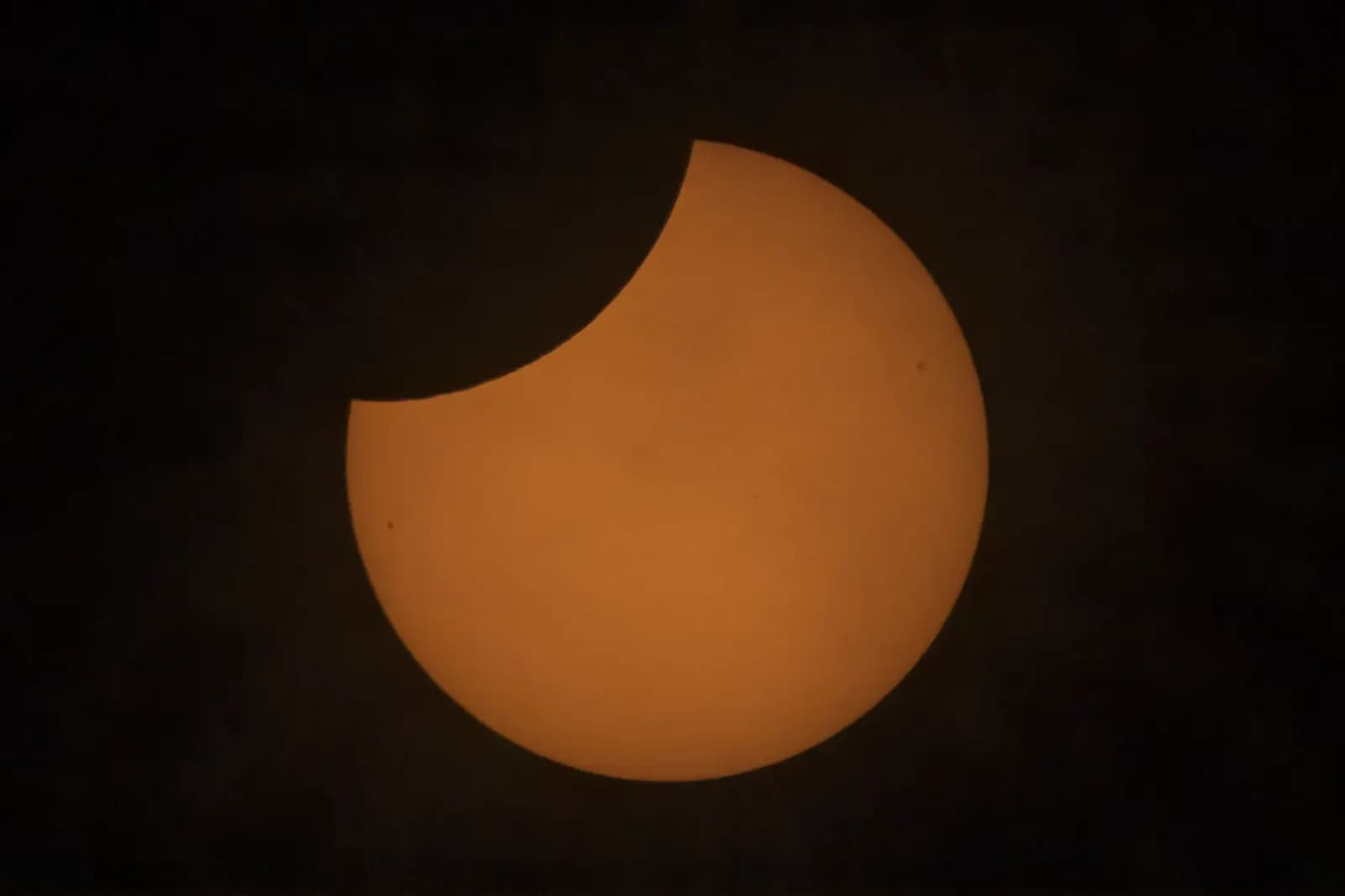
A Historic Celestial Event
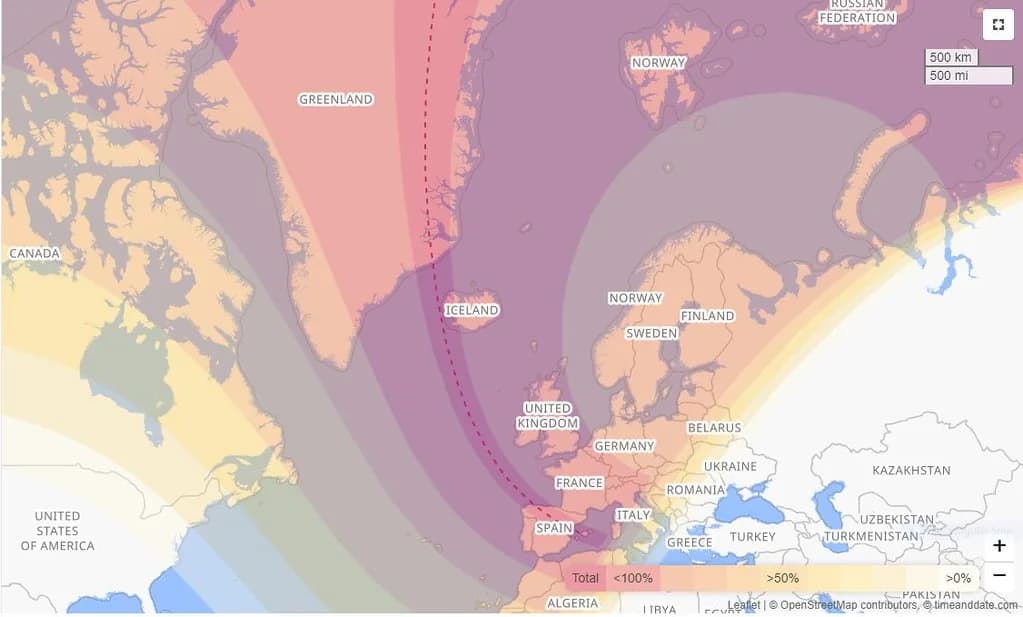
A total solar eclipse occurred on August 12, 2026, visible in parts of Europe, the first since 1999. The path of totality spanned Greenland, Iceland, northeastern Portugal, and northern and central Spain, as reported by the European Space Agency and other sources.[S1][S2][S3][S5]
Spain witnessed a historic total solar eclipse, the first in over a century visible from the Iberian Peninsula, with a maximum duration of two minutes and 18 seconds. Western Europe, including the UK, Belgium, Switzerland, and northern Italy, saw a partial eclipse.[S2][S5]
Massive Turnout and Preparations
Spain anticipated a large audience for the eclipse, with up to six million viewers and 660 designated viewing areas, accompanied by parking and camping facilities. To ensure public safety during a period of high wildfire risk, a significant police operation was implemented. Some events related to the eclipse were canceled due to concerns about fires.[S2][S5]
Up to 80,000 tourists were anticipated in Iceland, while the UK saw large crowds at viewing sites. Eclipse tourism led to high demand for accommodations and recreational vehicles along the path of totality, with specialist glasses selling out in some areas.[S5][S6]
Live Broadcast and Scientific Interest
Spain's Observatorio Astrofísico de Javalambre was the site for the European Space Agency's livestream of the solar eclipse, featuring expert analysis from Dame Dr. Maggie Aderin. The observatory experienced 1 minute and 21 seconds of totality at 20:31 CEST, offering a glimpse of the Sun's corona.[S3][S4]
The solar eclipse attracted a diverse crowd, including psychologist Kate Russo, who views eclipse chasing as a lifestyle. Researchers from Ireland prepared to study the Sun's corona, while experts cautioned against direct viewing without proper eye protection to prevent irreversible eye damage.[S2][S6]