A law with the Senate's changes
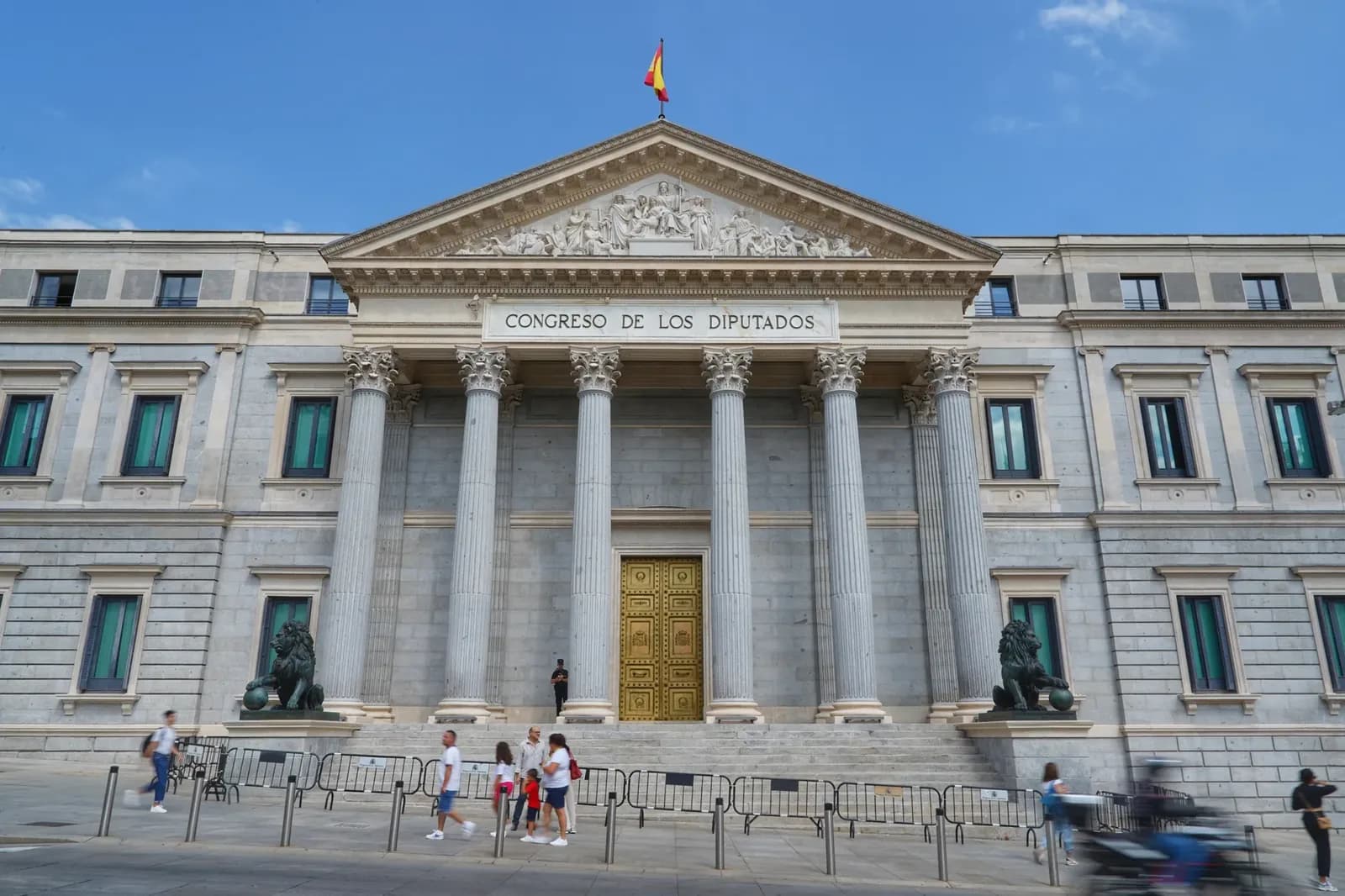
The Chamber of Deputies converted the reform of the Central Bank's charter into law on Thursday, endorsing the amendments the Senate had introduced. The tally was 141 in favor and 99 abstentions, all from opposition benches. Those lawmakers opted to abstain rather than reject the bill, a choice intended to deny the ruling party any opening to insist on the original wording that had won preliminary approval in the lower house on August 26.[S1][S2][S4]
President Javier Milei had made the overhaul one of his administration's top priorities. Its core aims are to narrow the institution's mission to safeguarding the currency's value, enshrine the principle of zero monetary issuance, and shield the monetary authority from future governments of a different political stripe that might try to bend its functions. Negotiations by La Libertad Avanza and its allies to restore the original text did not succeed.[S1]
That original version would have created an institutional lock requiring two-thirds majorities in both chambers before Central Bank directors could be removed, a safeguard designed to protect the authority against a change of political direction and economic course. What survived instead was the criterion the Senate set when it revised the text on September 24: an absolute majority to remove officials, with that decision reserved to the Senate alone, stripping the lower house of any say in composing the monetary authority.[S1][S2]
Support, rejection and warnings from the floor
Julia Strada of Unión por la Patria, arguing against the initiative, reminded lower-house speaker Martín Menem that his uncle Carlos Menem, as president in 1992, vetoed a charter amendment she described as very similar to the one this libertarian government brought forward. She said the Menem administration of the 1990s did not want the Central Bank taking on external debt with private creditors because that would compromise its role as defender of deposits. The economist also warned that reserves could be pledged as collateral to indebt the Central Bank, putting Argentines at risk.[S1]
Diógenes González of the UCR confirmed his support, arguing that an independent Central Bank matters and that the bloc adhered to what it believes the institution should be: guarding the currency's value and shielding the public from inflation, which he framed as a way of protecting lower-income sectors. He said he would have preferred the chamber to insist on what passed with a two-thirds majority, and called the bill not the best possible but the one that could be achieved.[S1]
Mercedes Llano of La Libertad Avanza observed that a president with Javier Milei's convictions may not need a law stopping him from disposing of the Central Bank's resources at will. She argued, however, that successors cannot be trusted to share those convictions, and that the initiative's institutional value lies in turning a personal conviction into a permanent institutional obligation.[S1]
Nicolás del Caño of the Frente de Izquierda rejected both the original bill and the Senate's version, saying the central foundations remain intact. In his view no genuine independence is being created; the only independence being guaranteed, he argued, is from the needs of working people, education, retirees and public health, while financial capital is being shielded. He also warned that the Central Bank's reserves could serve as collateral for external borrowing, as he said happened with the gold whose whereabouts remain unknown, and criticized bank chief Santiago Bausili as always siding with financial capital. Romina Del Plá of the PO, within the same front, agreed that the reform deepens an orientation in which the Central Bank serves large financial capital rather than social needs.[S1]
What the reform changes
Beyond the rules on board composition and the majorities needed to appoint or dismiss members, the bill establishes zero issuance as a guiding principle. It removes the multiple purposes set out in law 26,739 of 2012, passed under former president Cristina Fernández de Kirchner, in favor of a single mandate: preserving the value of the currency, with financing of the Treasury prohibited. The government's rationale is that monetary issuance undermines that goal.[S1][S4]
The text states that returning to a single mandate means recognizing inflation's monetary nature, describing it as a monetary phenomenon generated by excess supply that erodes the purchasing power of money, and argues the Central Bank should not be tasked with other objectives. The bill bans temporary advances to the Treasury, loans to provinces, the use of non-transferable bills, the conversion of profits into real gains and purchases of public securities on the primary market. It also removes from the board's attributions the function of directing credit toward designated destinations.[S1][S4]
The reform was the first item on a marathon session that was to continue into the early hours of Friday with the 2027 budget. The budget debate opened with a bare quorum of 129 deputies, the exact number the rules require, after a special session a week earlier had collapsed for want of three legislators. La Libertad Avanza reached the threshold with support from provincial blocs that had made their presence conditional on demands, including more funding for science and technology, a reduction in reserved SIDE funds and a chapter on biofuels.[S2][S3]
The budget projects total spending of 216 trillion pesos against resources of 219.3 trillion. Governors are pressing over funds they say have not arrived: decree 1391/2026, signed on November 18, cut 200 billion pesos in current transfers to the provinces. Eduardo Falcone of the MID said before the session that his bloc still had doubts about disability provisions and wanted to know whether the allocations would be included, and he also raised questions about university financing, for which the bill provides 7.3 trillion pesos against the 11 trillion the National Interuniversity Council seeks. He nonetheless anticipated a positive vote in general followed by debate in the particulars.[S2]
Provincial claims remained unresolved despite the agreements that opened the session, among them financing for road works, particularly in Córdoba and Santa Fe, and the distribution of Liquid Fuels Tax resources the national government did not direct to road infrastructure, alongside withheld Treasury contributions. The funds in dispute were said to exceed 3 trillion pesos in total, and the executive proposed that each province negotiate separately with the Economy Ministry. The budget's macroeconomic projections include 4 percent GDP growth, 18 percent annual inflation, an official dollar rate of 1,847.60 pesos in December 2027 and a primary surplus equal to 1.1 percent of GDP. In September the economy contracted 1.2 percent year on year despite a 1.1 percent monthly rebound in seasonally adjusted terms, a result that fed talk of technical recession, a characterization the government rejects.[S3]