Oil prices jump past $100
Oil prices climbed on Wednesday as hostilities in the Middle East worsened. Brent crude from the North Sea reached $100 per barrel for the first time since late July, with markets closely watching the potential impact of the conflict on supply and inflation. Brent for November delivery briefly touched $100.19 per barrel, and by 07:45 GMT it was trading up 1.94% at $99.82. West Texas Intermediate (WTI) for October delivery rose 1.46% to $94.39.[S1]
The price increase came as the US-Iran conflict entered its seventh month with no signs of de-escalation, despite White House claims of an imminent deal. Investors remained worried about possible disruptions to energy supply and their effects on consumer prices. The price of oil has risen nearly 20% since mid-last week, coinciding with a new intensification of fighting around the world's main oil bottleneck. It is also the first time since July 23 that oil has reached the $100 mark.[S1][S3]
Attacks and counterattacks
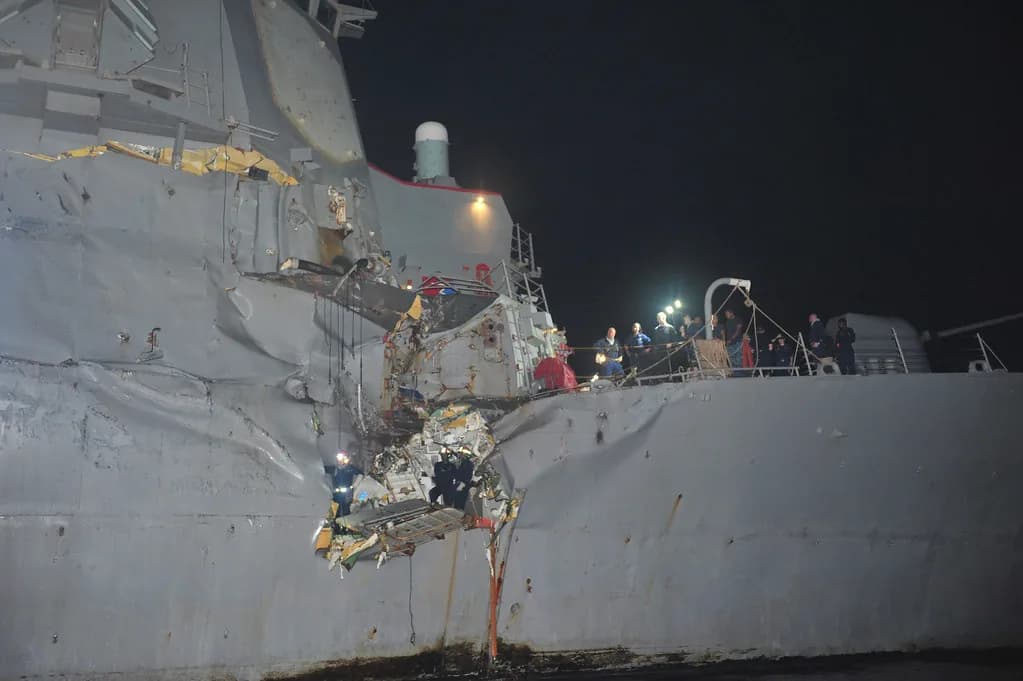
Iran's regime announced an attack on a US military base in Jordan on Wednesday, following US strikes on its ships in the Strait of Hormuz. The Iranian action was presented as retaliation for the launch of ballistic missiles against a US warship. The US Central Command reported that its forces destroyed five Iranian oil tankers on Tuesday, after Iran's Revolutionary Guard fired ballistic missiles at a US Navy warship twice within two days.[S1][S3]
Iran's state news agency IRNA also reported that Tehran announced attacks on tankers off the coasts of Kuwait and Bahrain and urged their crews to abandon the vessels. The US maintains that the targeted ships were part of a 'ghost fleet' used to finance the Islamic Revolutionary Guard Corps and allied groups. US Secretary of State Marco Rubio said the offensive would continue if Iranian forces again tried to attack US Navy units.[S1][S2]
Market fallout
The Strait of Hormuz remains a key flashpoint due to its importance for global oil and gas transport. Iran controls the waterway, while the US pushes a campaign against Iranian ports and economy. The situation also extended to the Red Sea, where Iran-backed Houthis and Saudi Arabia exchanged attacks amid an offensive on oil facilities around the strategic Bab al-Mandab passage, a route that gained importance for Saudi oil transport after the closure of the Strait of Hormuz.[S1]
The rise in energy prices also heightened concerns about global inflation and central bank responses. The increase in oil pressure on monetary authorities to raise borrowing costs, while the European Central Bank prepares its monetary policy decision for Thursday. In the US, markets await the consumer price index release on Friday, seen as key to whether the Federal Reserve will raise interest rates the following week. The possibility of higher borrowing costs weighed on stocks, with Wall Street's three main indices closing lower.[S1]
European markets also fell, with London, Paris, Madrid, Milan, and Frankfurt among the most affected, with declines near 2%. The Euro Stoxx fell 1.94%, Germany's DAX lost 1.51%, and France's CAC dropped 1.97%. In Asia, Tokyo's Nikkei 225 rose 0.4% to 65,495.23, while Shanghai's composite gained 0.2% to 3,949.07. Seoul led gains, with SK hynix up more than 3% and Samsung up over 1%. Hong Kong's Hang Seng fell 0.1% to 25,292.57.[S1][S3]